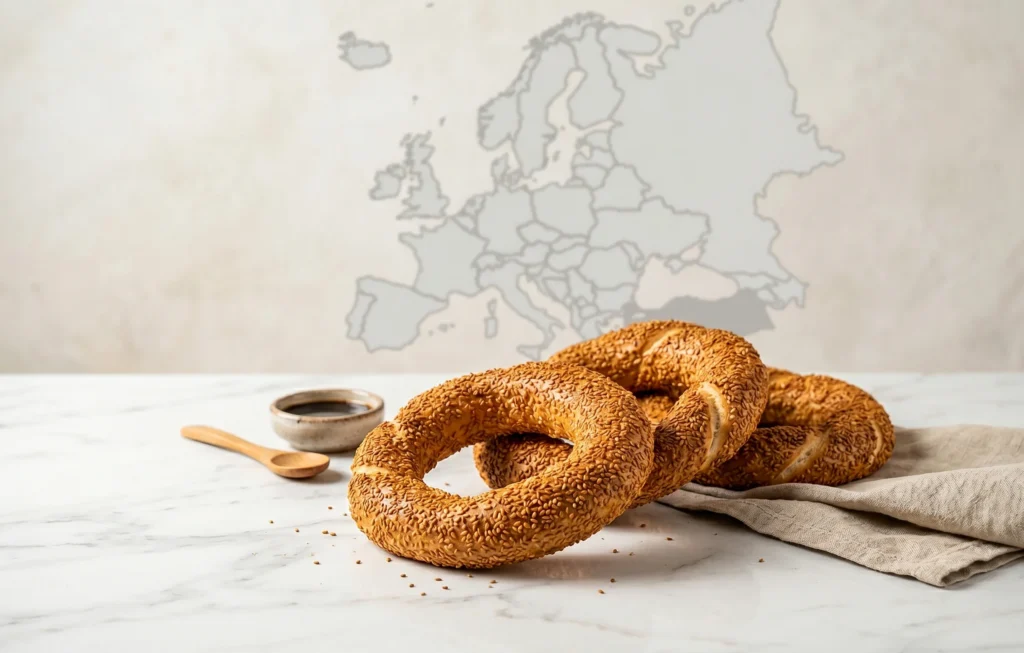
Simit Europe: How the Turkish Sesame Bread Is Conquering European Markets
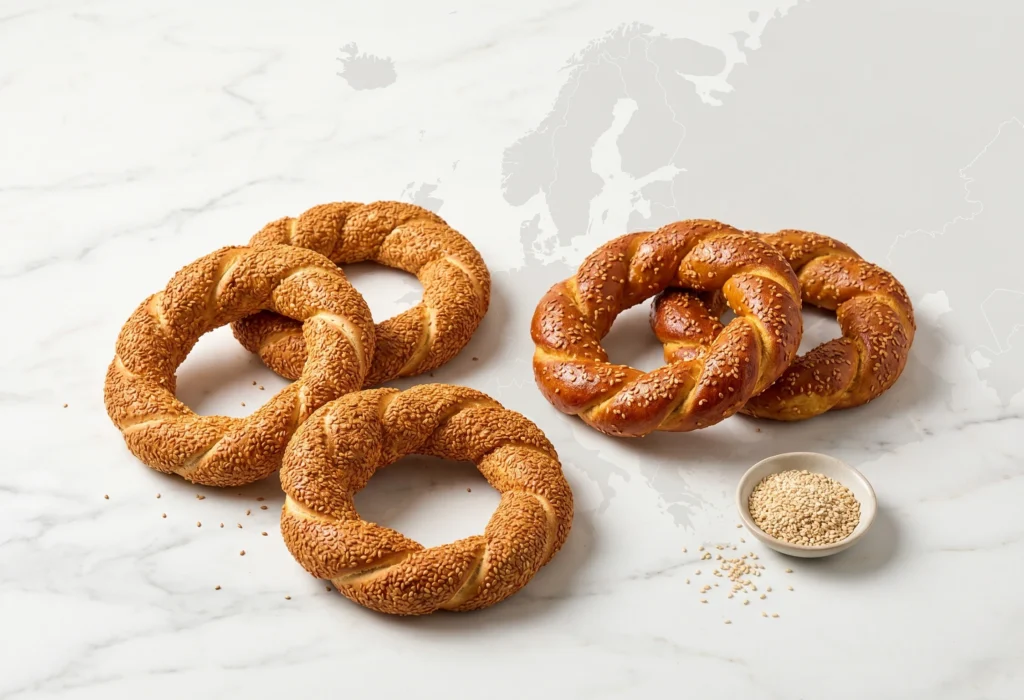
Simit Europe is no longer a niche story. The golden, sesame-coated Turkish bread ring that has been a daily staple for millions of Turks for centuries is establishing itself across European retail shelves, hotel breakfast buffets, and wholesale catalogues — from Amsterdam to Vienna, from Brussels to Berlin.
For European retail buyers, HoReCa procurement managers, and wholesale distributors, simit Europe represents one of the most commercially credible international bakery opportunities of the current decade. The product has authentic provenance, an established consumer base, a distinctive flavour profile, and a frozen-to-bake format that integrates seamlessly into existing European food service and retail infrastructure.
This guide maps the simit Europe opportunity by market, by channel, and by commercial application — giving buyers the full picture of where the category is growing, which markets are leading adoption, and how to position your business to benefit from the expansion that is already underway.
The Rise of Simit Europe — A Market Overview
Simit Europe has followed a path familiar to every successful international food category that has broken into the European mainstream: it started in diaspora communities, moved into specialist retail, and is now crossing into mainstream supermarkets and food service programmes across the continent.
The structural drivers behind simit Europe growth are strong and well-documented. Mediterranean and Middle Eastern food categories have grown consistently across European grocery retail for over a decade. The consumer who regularly buys hummus, pita, halloumi, and baklava is exactly the consumer who is ready for simit — and in 2026, that consumer is not a niche segment. It is the European mainstream premium food shopper, found in every major market from the UK to Germany to France to the Netherlands.
The US market provides a useful signal for the European trajectory. In late 2025, Trader Joe’s — one of the most trend-sensitive mainstream retailers in the American grocery market — launched frozen simit and reported strong consumer response. That mainstream US retail launch confirms what simit Europe data already suggests: the product works in a supermarket environment outside its home market, not just in specialist or ethnic food channels. For European retail buyers, it is a relevant data point that reduces the perceived risk of a first simit Europe ranging decision.
According to simit Europe market growth research on the European bakery sector, the frozen bakery category across Europe continues to expand year-on-year, with international and premium frozen bread formats among the fastest-growing subcategories. Simit Europe sits directly in this growth lane — a premium, internationally provenance-led product in a format that European consumers already understand and use.
For wholesale distributors, the simit Europe opportunity is a distribution play as much as a product play. A product that sells into retail, HoReCa, and food-to-go from a single frozen SKU range, with an EU-based supply chain and a growing mainstream consumer awareness, is exactly the kind of addition that improves catalogue breadth without adding supply chain complexity.
Which European Markets Are Leading Simit Europe Adoption?
Adoption is not uniform across the continent. Each major European market has a different consumer profile, a different food service culture, and a different retail infrastructure — and each is at a different stage of the simit Europe adoption curve. Understanding these differences is essential for distributors and suppliers planning pan-European roll-out, and for retail and HoReCa buyers assessing how quickly the category will establish itself in their specific market.
Germany
Germany is the most advanced simit Europe market outside Turkey itself. With a Turkish diaspora of approximately 3 million people — the largest Turkish community in Europe — Germany has had an established demand base for simit for decades. Turkish bakeries, supermarkets, and specialist food retailers in Berlin, Hamburg, Frankfurt, Cologne, and Munich have been selling fresh and frozen simit to diaspora consumers for years.
What is new in Germany is the mainstream movement. German premium food retailers and discount chains alike are beginning to range international bakery products with a speed that was not seen five years ago. The opportunity in Germany is not just diaspora supply — it is the mainstream German food shopper who has grown comfortable with Turkish and Mediterranean food through years of exposure in Turkish restaurants, holiday travel, and food retail.
For wholesale distributors active in the German market, it is a natural addition to a Turkish or Mediterranean food portfolio that may already include Turkish tea, preserved foods, and Mediterranean snacks. The distribution infrastructure exists; the product category is ready.
Netherlands
The Netherlands is one of the most commercially dynamic markets in 2026. Dutch food retail culture is characterised by openness to international food formats, a well-developed premium frozen bakery category, and a retail infrastructure — anchored by major wholesalers including Hanos — that is efficient at moving new products from supplier to HoReCa account quickly.
The Dutch Turkish diaspora community, centred in Amsterdam, Rotterdam, and The Hague, provides the established demand floor. The broader Dutch consumer — curious, internationally oriented, and willing to pay a premium for authentic food products — provides the growth ceiling. Dutch hotel and café culture, which already embraces international breakfast formats, is a particularly strong environment for the product in the HoReCa channel.
For suppliers, the Netherlands represents one of the most commercially accessible first markets for pan-European expansion. The distribution networks are efficient, the buyer appetite for new international food products is high, and the existing Turkish food community provides immediate commercial traction from day one of any new listing.
Belgium
Belgium occupies a unique position in the simit Europe picture: it is both a significant market in its own right and the hub from which Lezza Foods supplies simit Europe-wide. The Belgian food market combines a sophisticated HoReCa culture — Brussels is one of Europe’s most restaurant-dense cities per capita — with a retail landscape that includes both major international chains and strong independent food retail.
The Belgian simit Europe opportunity is particularly strong in the hotel and café sector. Brussels, Ghent, Bruges, and Antwerp attract millions of international visitors annually, creating a hotel breakfast market that is constantly seeking products that differentiate the guest experience. The product in the Belgian HoReCa sector is positioned at exactly the right moment — an authentic, visually distinctive product that delivers a premium breakfast experience at a competitive input cost.
For distributors, Belgium’s central European logistics position makes it an efficient entry point for distribution into neighbouring markets — France, the Netherlands, Luxembourg, and Germany can all be served with competitive lead times from Belgian distribution infrastructure.
France
France represents one of the larger medium-term simit Europe opportunities, driven by a combination of a significant North African and Middle Eastern food culture that has normalised authentic international ingredients, a premium food retail sector that actively seeks differentiated international products, and a HoReCa culture that values provenance and authenticity above almost any other product attribute.
The The adoption curve in France is slightly behind Germany and the Netherlands — the French Turkish diaspora is smaller, and French food retail has historically been slower to range non-French bakery products. However, the direction of travel is clear. French premium supermarket chains, Parisian café culture, and the growing French interest in Middle Eastern and Eastern Mediterranean food are all structural tailwinds for simit Europe in the French market.
For buyers entering the French simit Europe market, the private label opportunity is particularly strong. French retailers have a deeply embedded private label culture — “marque de distributeur” (MDD) — and the French consumer’s comfort with own-brand premium food products makes it a natural private label development candidate for any French retailer with an active own-label programme.
United Kingdom
The UK simit Europe market has two distinct dynamics. The first is the established Turkish diaspora community in London, Birmingham, and Manchester — a significant and active consumer base that has been buying simit from Turkish bakeries and specialist retailers for decades. The second is the broader UK premium food consumer, who has demonstrated consistent appetite for authentic international bakery products and has made the UK one of the most commercially active markets in Europe for premium frozen bakery innovation.
Post-Brexit, the UK simit Europe supply chain has an additional complexity: sourcing from EU-based simit suppliers avoids the import documentation and customs delays that affect non-EU supply, but the UK’s departure from the single market means that allergen labelling, packaging, and food safety documentation must comply with UK-specific regulations in addition to EU standards. UK buyers sourcing the product should verify that their supplier can provide UK-compliant labelling alongside EU-compliant versions.
Despite these complexities, the UK remains one of the strongest simit Europe markets for long-term commercial development. The combination of a large Turkish diaspora, a premium food retail sector that moves quickly on new international products, and a café culture that actively embraces authentic international breakfast formats makes the UK a high-priority market for any distribution strategy.
Simit Europe in Retail — Channel by Channel
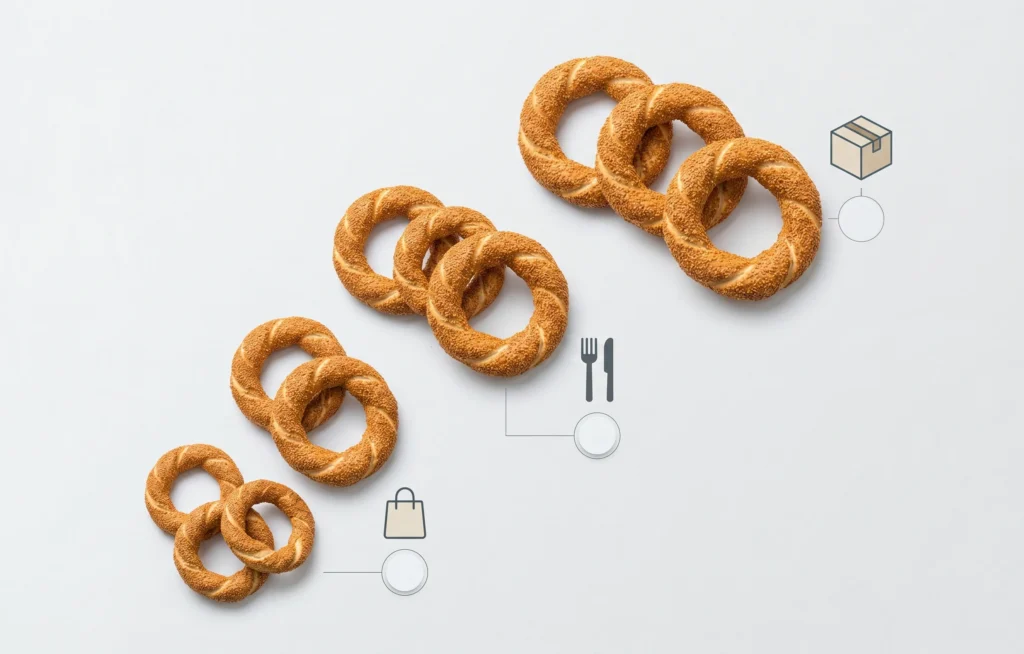
The simit Europe retail opportunity spans three distinct channel positions, each serving a different consumer segment and requiring a different commercial approach. Understanding which position to prioritise — and in what sequence — is one of the most important decisions in any retail strategy.
Frozen Bakery
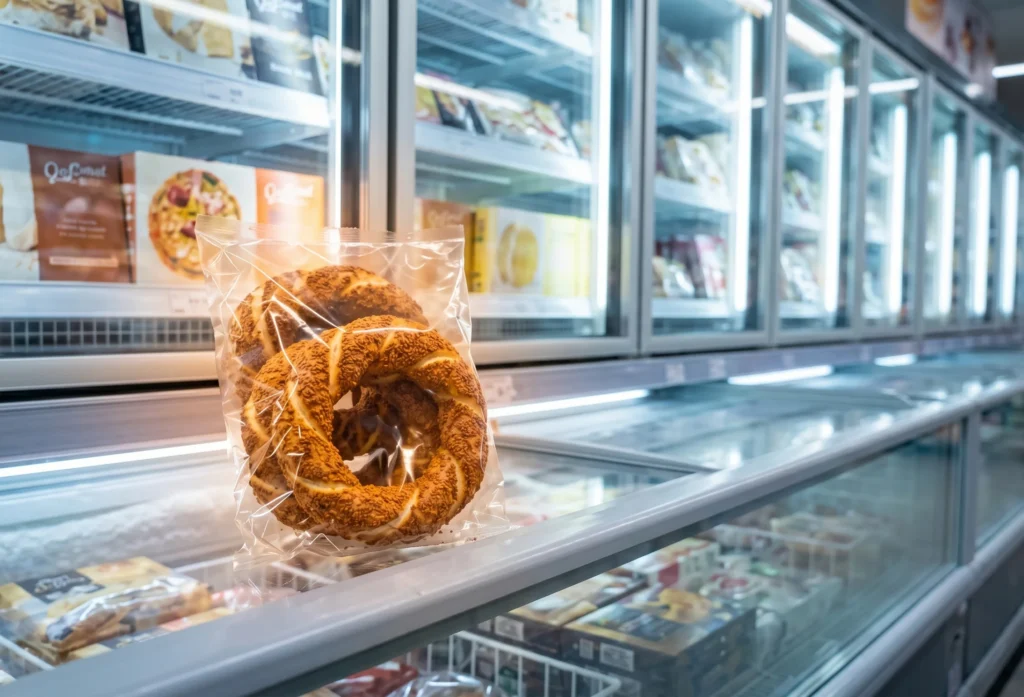
The frozen bakery aisle is the primary and highest-volume retail position for the product across most mainstream European supermarkets. It places the product alongside established frozen-to-bake formats — baguettes, croissants, sourdough rolls — that shoppers already interact with regularly and understand how to use.
In the frozen bakery aisle, simit Europe requires minimal consumer education. The “bake from frozen” occasion is thoroughly established. The differentiation is entirely in the product: its flavour, its visual distinctiveness, and the authentic Turkish origin story that no other product in the frozen bakery fixture can replicate.
For retail buyers building a simit Europe frozen bakery range, the recommended entry strategy is a two-SKU launch — one classic single-serve and one classic multipack — with a sweet variant as a range extension once rate-of-sale data from the first two SKUs is available. This approach limits initial ranging risk while generating the trial and repeat purchase data that justifies a broader range commitment.
World Foods and Mediterranean
The world foods aisle provides an alternative simit Europe retail position that drives high conversion among diaspora consumers and culturally engaged mainstream shoppers. In retailers with a well-developed Turkish or Mediterranean section, the product can be ranged alongside pita, flatbreads, Turkish tea, and preserved foods — contextualised within an authentic cultural environment that reinforces the product’s provenance and drives purchase confidence.
World foods placement for simit Europe typically generates lower absolute volume than frozen bakery — world foods aisles have narrower overall shopper reach — but produces a higher rate of repeat purchase from its consumer base. For retailers in markets with a significant Turkish diaspora presence — Germany, the Netherlands, Belgium, the UK — a secondary world foods placement alongside the primary frozen bakery position can meaningfully increase total category volume.
Private Label
Private label is the highest-margin the retail opportunity. For retailers with an active own-label frozen bakery programme, simit Europe private label development allows the full commercial value of a premium, differentiated product to be captured under the retailer’s own brand — with input costs from a specialist EU manufacturer and selling prices that reflect the product’s authentic premium positioning.
Lezza Foods supplies simit Europe under private label for retail chains across 20+ European countries. Buyers interested in developing a simit Europe private label programme can request specifications, sample packaging formats, and a private label proposal from the Lezza Foods commercial team.
Simit Europe in HoReCa — The Food Service Opportunity
The simit Europe HoReCa opportunity is driven by the same structural forces as the retail opportunity — growing consumer awareness, authentic provenance, and operational simplicity — but delivers its commercial value through a different mechanism: menu differentiation, guest satisfaction, and margin contribution rather than rate of sale and repeat purchase.
Hotel Breakfast
Hotel breakfast is the highest-volume HoReCa application for simit Europe across the continent. A dedicated Turkish breakfast station — simit rings, white cheese, olives, tomatoes, honey, and black tea — is one of the most commercially impactful breakfast innovations available to European hotel operators right now. It costs little to establish, requires minimal kitchen preparation, and delivers a guest experience that is consistently rated as memorable in hotel feedback.
For hotel groups operating across multiple European markets, simit Europe supply through a single EU-based manufacturer simplifies procurement significantly. A unified product, a unified supply chain, and a unified quality standard across all properties — regardless of which country they operate in — is the operational model that specialist simit Europe suppliers make possible.
Café and Grab-and-Go
The café and grab-and-go simit Europe opportunity is strongest in urban markets with high footfall, international visitor profiles, and an established culture of premium morning snacking. Brussels, Amsterdam, Berlin, Paris, and London are all environments where a freshly baked simit at a café counter — warm, aromatic, visually distinctive — is an immediately compelling impulse purchase.
For café operators, the simit Europe proposition is straightforward: a frozen-to-bake product that finishes in a standard oven in under ten minutes, generates strong per-unit margin, and consistently attracts consumer curiosity from guests who have not encountered it before. Once a guest has eaten simit at a café, the repeat purchase rate is high — the flavour experience is distinctive enough to be memorable and the format is accessible enough to become habitual.
Catering and Event Food Service
Simit Europe in the catering and event food service channel is driven primarily by the visual impact and cultural authenticity of the product in a high-presentation context. A Mediterranean food station featuring simit Europe product at a corporate event, hotel banquet, or premium catering operation delivers a premium impression that standard bread rolls and generic bakery items cannot match.
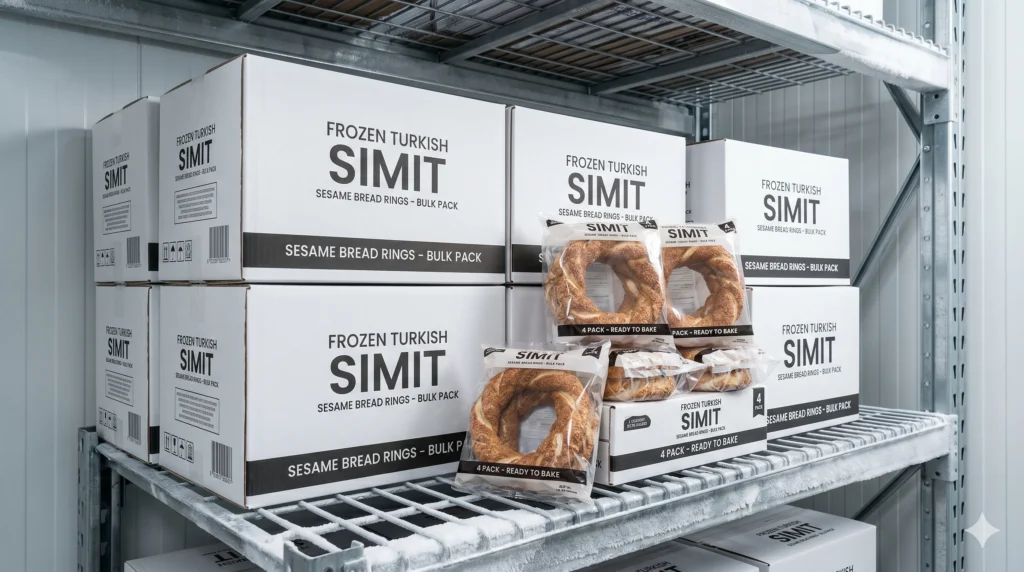
For catering operators sourcing simit Europe product at volume, the frozen carton format — 80 pieces per carton for the standard 125g ring — provides the portion control and batch consistency that event catering demands. Product can be baked in precise quantities for each service, eliminating the waste associated with fresh bakery and the inconsistency associated with multiple supplier sourcing.
Simit Europe and Private Label — The Own-Brand Opportunity
The private label dimension of simit Europe is commercially significant across every major European market. With private label accounting for 40% of FMCG sales by value across the six major European markets and €291 billion in annual revenue, own-brand product development is a structural priority for every major European retailer — and simit Europe is a natural fit for any retailer’s private label frozen bakery programme.
The case for private label simit Europe rests on three pillars. First, visual distinctiveness: a a private label product looks genuinely different from standard own-brand bread, communicating premium and artisan character at point of purchase without requiring additional marketing investment. Second, communicable provenance: the authentic Turkish origin story, the molasses glaze, the sesame coating, the centuries of street food history — all of this fits naturally on a a private label pack and gives the consumer a reason to engage beyond the functional product attributes. Third, scalable specialist production: a a private label programme requires a supplier who can produce consistently to the buyer’s specification, manage multi-market labelling compliance, and deliver across the buyer’s distribution footprint without supply chain disruption.
For brand owners and distributors who want to develop a a private label programme outside the retail channel — in food service, convenience, or travel retail — the same principles apply. The product’s visual and flavour distinctiveness supports premium private label positioning in any channel where consumers are willing to pay for an authentic, experiential bakery product.
Sourcing Simit Europe — What Buyers Need to Know
For buyers entering the simit Europe category for the first time, sourcing decisions determine whether the commercial opportunity is realised or wasted. A product that is correctly positioned, well-merchandised, and competitively priced will still underperform if the simit Europe supplier behind it cannot deliver consistent quality, reliable cold chain logistics, and compliant labelling across all markets.
EU-Based Supply Chain
The most commercially practical the supply chain for European buyers is EU-based production and distribution. An an EU-based supplier eliminates customs complexity, reduces cold chain transit risk, shortens lead times, and simplifies logistics management — particularly for buyers distributing across multiple European markets simultaneously.
For UK buyers specifically, an the supplier requires attention to post-Brexit import documentation — UKCA labelling, customs declarations, and phytosanitary requirements where applicable. Verify that your supplier has active experience supplying UK accounts and can provide UK-compliant labelling alongside EU-compliant versions without requiring the buyer to manage translation and compliance independently.
Certification and Quality Standards
Every simit Europe product entering European retail or HoReCa supply chains must be produced under HACCP compliance at minimum. For retail supply, current BRC Global Standard for Food Safety or IFS Food certification is the industry prerequisite. Request the current certificate — not verbal confirmation — and verify that its scope covers frozen bakery production specifically.
For allergen compliance, all products must declare sesame and gluten (wheat) as regulated allergens under simit Europe allergen compliance requirements established by Regulation (EU) 2021/382. This requirement has been in effect since 2022 — anyany product labelling that predates this must be reviewed and updated before it can legally enter European retail or food service.
Cold Chain and Logistics
Simit Europe product quality is entirely dependent on an unbroken cold chain from production facility to end buyer. Temperature excursions during transit compromise the sesame coating, the dough structure, and the baking performance — and these defects are not visible until the product is baked. Insist on supplier documentation for cold chain management and request temperature monitoring records for at least the first three deliveries of any any new supply relationship.
The Lezza Foods Simit Europe Range
Lezza Foods BV has been supplying simit Europe-wide since 2013. Headquartered in Mechelen, Belgium, with active distribution across 20+ European countries and more than 20 private label brands in current production, Lezza Foods is one of Europe’s established specialists in authentic Anatolian bakery at commercial scale. The client list — including ALDI, Kaufland, Hanos, and Europastry — reflects a simit Europe supply track record that has been verified by some of the continent’s most demanding food retail and wholesale buyers.
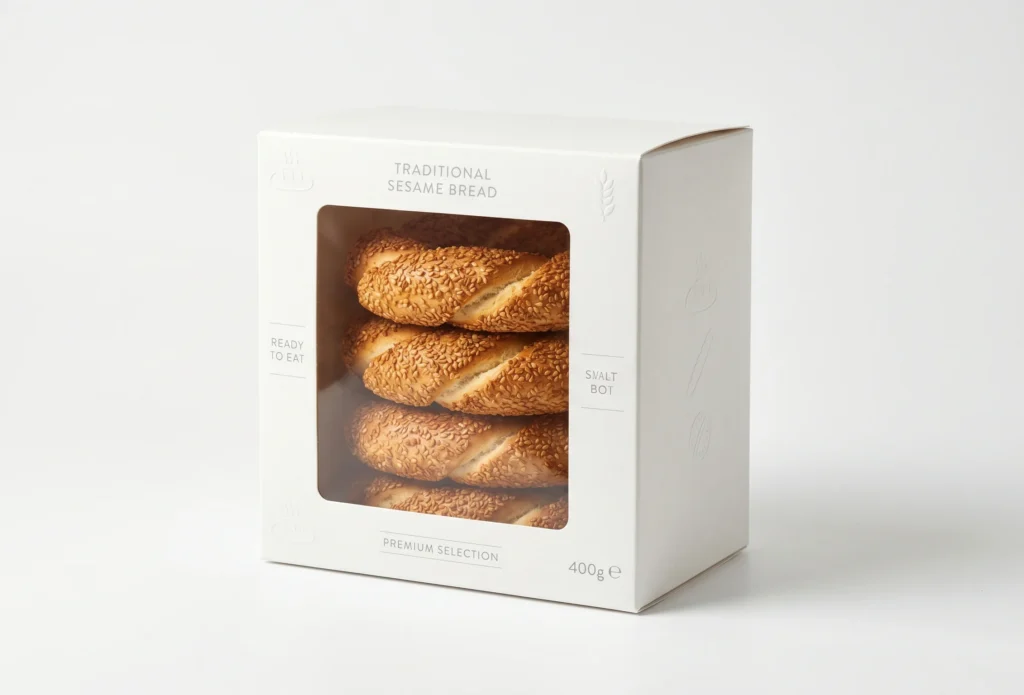
The Lezza Foods simit Europe range covers four SKUs across classic and sweet formats, in pack sizes suited to every channel from retail impulse purchase to HoReCa bulk carton.
Lezza Foods supplies simit Europe in a 125g single-serve classic format — 80 pieces per carton — for supermarket frozen bakery, convenience retail, and HoReCa breakfast supply. This is the core entry-point SKU for buyers building a simit Europe range for the first time.
The simit Europe 4×10⁵g retail multipack puts four classic rings per unit for the weekly grocery shop and repeat purchase occasion. This format is the primary private label development SKU and the volume driver within any established simit Europe retail range.
For buyers who want to offer a sweeter format, the simit Europe sweet 135g single-serve delivers a more indulgent flavour profile suited to café settings, premium retail, and afternoon service. The simit Europe sweet 160g format offers a larger premium portion for food service operators and retailers positioning at the top of the premium frozen bakery price range.
All four SKUs are available for private label across Europe, with full flexibility on packaging specification, multi-market labelling compliance, and production scheduling.
Frequently Asked Questions: Simit Europe
Which European country has the highest demand for simit Europe products?
Germany is currently the most established simit Europe market, driven by the largest Turkish diaspora community in Europe — approximately 3 million people — alongside a growing mainstream premium food consumer base. The Netherlands and Belgium are close behind, with strong HoReCa culture and efficient wholesale distribution infrastructure that accelerates adoption. The UK represents significant long-term simit Europe potential, particularly in the premium retail and urban café sectors.
Is simit Europe available in mainstream supermarkets or only in specialist retailers?
Simit Europe is available in both. Specialist Turkish and Mediterranean food retailers have carried simit for years across European diaspora markets. Mainstream supermarket ranging is the current growth frontier — and it is advancing rapidly. Buyers with frozen bakery ranging authority in major European chains are the primary audience for a first mainstream simit Europe listing, typically in the frozen bakery aisle or world foods section.
What is the best entry point for a wholesale distributor entering the simit Europe category?
For wholesale distributors, the most commercially efficient simit Europe entry point is a frozen carton supply agreement with a specialist EU-based manufacturer — covering at minimum the 125g classic single-serve SKU for HoReCa accounts and the 4×10⁵g multipack for retail accounts. This two-SKU approach serves both channel types from a single supplier relationship and generates the volume data needed to justify a broader simit Europe range commitment within six to twelve months.
How does simit Europe compare to other Turkish food products in terms of mainstream market readiness?
Simit Europe is at a more advanced stage of mainstream market readiness than most other Turkish bakery products. Baklava, börek, and künefe all have strong diaspora demand but face higher barriers to mainstream adoption — complex preparation, short shelf life, or lower consumer familiarity. Simit Europe has none of these barriers: it is simple to prepare from frozen, has a long frozen shelf life, and its ring shape and sesame coating give it immediate visual recognition that no other Turkish bakery product can match.
What allergen declarations are required for simit Europe products?
All simit Europe products contain two regulated allergens that must be declared on packaging under EU food labelling law: gluten (wheat) and sesame. Sesame became a mandatory declared allergen in the EU in 2022 under Regulation (EU) 2021/382. UK-market simit Europe products must comply with equivalent UK food labelling requirements. Always obtain a current product specification sheet from your supplier and verify allergen declarations before listing any simit Europe product in retail or food service.
Can simit Europe be supplied under private label across multiple EU markets simultaneously?
Yes. A specialist simit Europe supplier with genuine multi-market private label capability — such as Lezza Foods, which currently manages 20+ active private label brands — can produce the same simit Europe product in packaging that complies with the labelling requirements of multiple EU markets simultaneously. This requires the supplier to manage language-specific ingredient and allergen declarations, country-of-origin statements, and any market-specific regulatory requirements without requiring the buyer to manage each market’s compliance independently.
Ready to Expand Your Business with Simit Europe?
Simit Europe is a genuine commercial opportunity — not a trend that requires early adoption risk, but a category with established consumer demand, proven product quality, and a growing mainstream retail and food service presence across the continent. The buyers who build their simit Europe position now will have the category experience, the supplier relationships, and the consumer loyalty that later entrants will struggle to replicate.
Lezza Foods has been supplying authentic Turkish and Mediterranean food products across Europe since 2013. The simit Europe range is consistent, EU-sourced, available in formats that serve every channel, and backed by a private label track record of 20+ brands in active production.
Browse the full simit Europe range on the Lezza Foods website, download the simit Europe catalogue for complete SKU specifications and private label capability information, or request a simit Europe quote]directly for wholesale pricing, minimum order quantities, and market-specific supply options.