Frozen Simit for HoReCa: The Turkish Sesame Bread Your Menu Needs
Frozen simit is one of the most operationally simple, commercially compelling bakery additions available to European food service operators today. It arrives in your kitchen pre-baked to 80%, requires no proving, no specialist equipment, and no skill beyond a working oven — and it puts a genuinely authentic Turkish sesame bread on your breakfast menu, café counter, or hotel buffet in under ten minutes.
This guide is written for HoReCa procurement managers, food service buyers, executive chefs, and wholesale distributors evaluating frozen simit as a menu or range addition. It covers the operational case, the commercial case, the quality criteria, the serving occasions, and how to source it reliably at European wholesale scale.
Why HoReCa Operators Are Choosing Frozen Simit
Frozen simit solves a problem most European food service operators have quietly lived with for years: how to offer something genuinely distinctive at breakfast and brunch without adding complexity to the kitchen.
The format makes it operationally accessible to any operation. No dough preparation. No proving time. No specialist baker on the rota. A ring goes from freezer to oven to guest in under ten minutes — looking and tasting as though it came from a dedicated Turkish bakery.
That combination — authentic product, minimal preparation, strong visual impact — is exactly what separates a memorable HoReCa breakfast programme from a generic one. For operators across Europe who have made the switch, frozen simit has become a standing menu fixture rather than a seasonal addition.
What Is Frozen Simit and How Is It Produced?
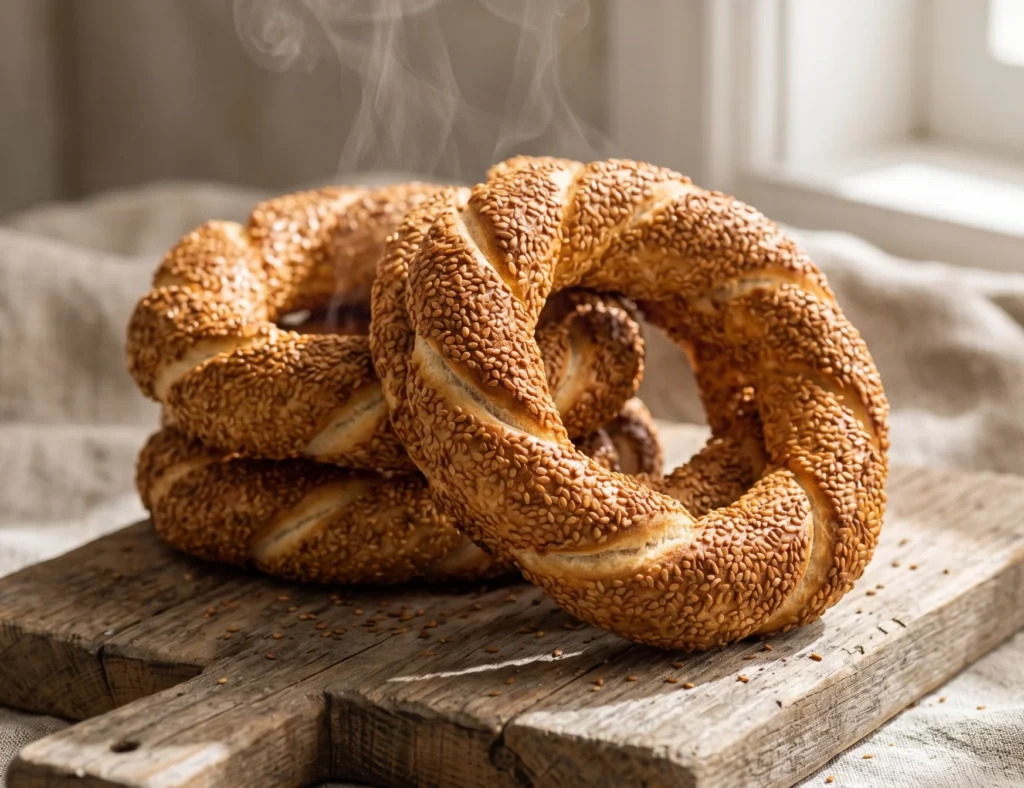
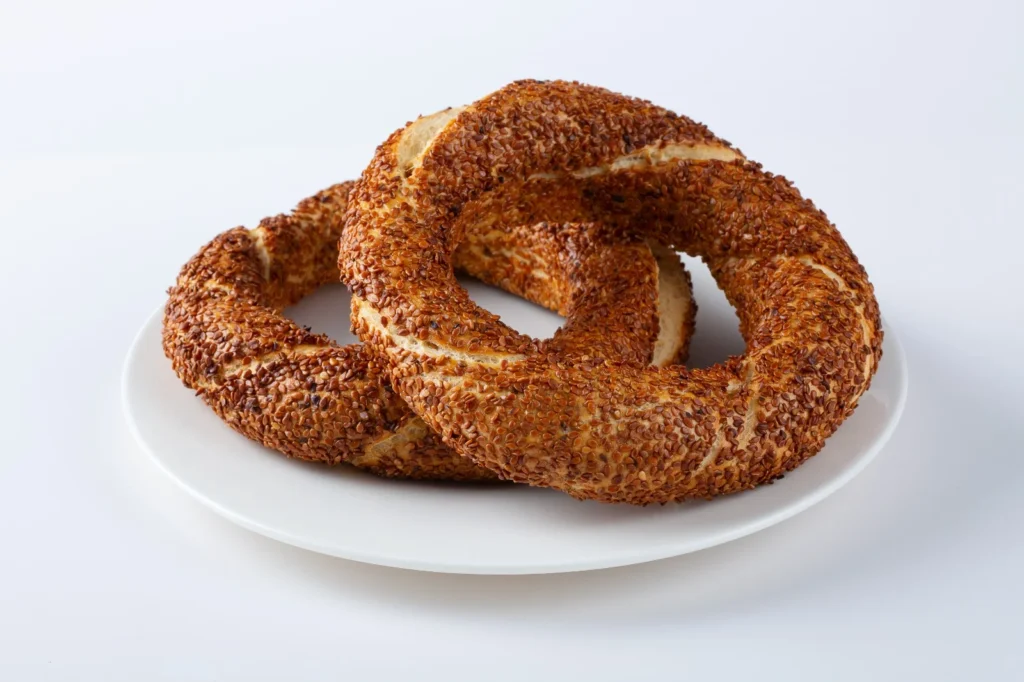
Frozen simit starts as an authentic Turkish sesame bread ring. Each ring is made from a wheat dough shaped into the classic circular form, dipped in a diluted grape molasses solution, and rolled through trays of raw sesame seeds until every surface — top, bottom, and sides — is uniformly coated.
The rings are baked in a deck oven at high heat. The molasses glaze caramelises. The sesame seeds toast to a deep, nutty golden. The characteristic crisp exterior forms while the interior remains soft.
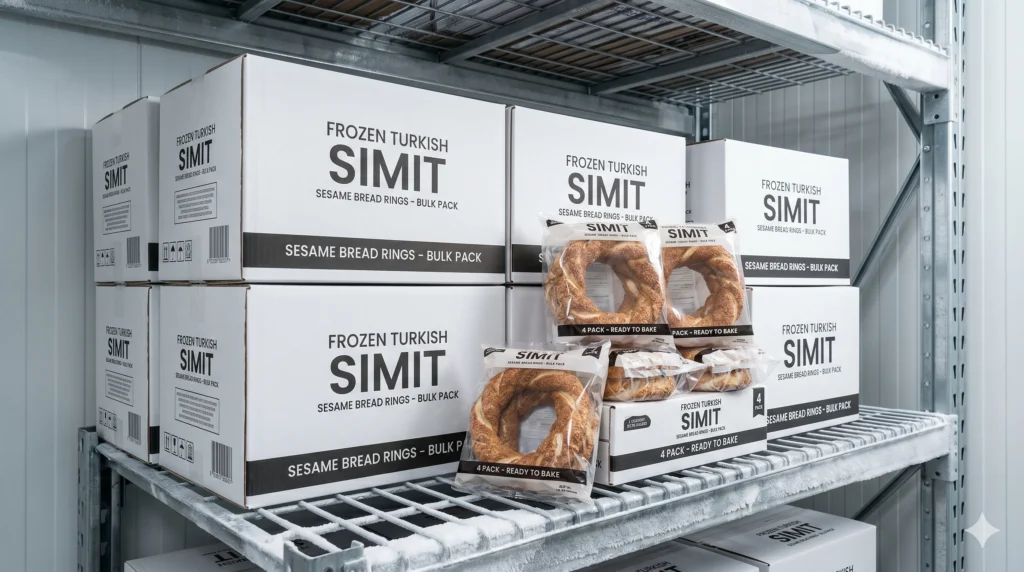
At approximately 80% completion, baking stops. The partially baked rings are blast-frozen immediately, locking in the quality of the sesame coating, the dough structure, and the flavour developed during that initial bake.
When you finish frozen simit in your own oven — typically 5 to 8 minutes at 180–200°C from frozen — the final 20% of baking happens fresh. The molasses reactivates. The sesame finishes toasting. The crust crisps to exactly the texture a Turkish bakery would produce.
This is not a compromise product. Properly produced frozen simit, finished correctly, is indistinguishable in flavour and texture from a freshly baked ring. The 80% partial-bake method is the established standard for premium frozen bakery across Europe — the same logic that underlies premium frozen baguettes, croissants, and sourdough rolls.
The Operational Case for Frozen Simit in HoReCa
For food service operators, the advantages of working with frozen simit are significant and immediate.
No Specialist Equipment Required
Finishing the product requires nothing beyond a standard oven — convection, deck, or combination. No steam injection. No specialist settings. No calibration. Any kitchen that can bake a croissant can produce a perfect frozen simit. This makes it accessible to hotel breakfast operations, café kitchens, restaurant prep teams, and catering operations of any size.
Minimal Preparation Time
From freezer to plate in under ten minutes. There is no defrosting step — rings go directly into the preheated oven from frozen. For breakfast service, this means frozen simit can be baked in batches throughout the morning, ensuring guests always receive a warm, freshly finished product. For grab-and-go counters, the rotation can run continuously without waste.
Controlled Wastage
Unlike fresh bakery, frozen simit carries a shelf life of typically six to twelve months at −18°C. Operators bake only what they need, when they need it. No end-of-day write-off of unsold fresh product. For operations where cover numbers vary — hotel occupancy fluctuations, seasonal café traffic, event catering — this gives procurement teams precise inventory control.
Consistent Quality Across Every Service
The partial-bake method eliminates the variables that affect fresh bakery quality day to day — dough hydration, proving conditions, oven inconsistency. Every frozen simit ring that goes into a properly preheated oven for the correct time produces the same golden crust, the same toasted sesame coating, the same soft interior. For multi-site operators managing quality consistency across locations, that reliability has measurable commercial value.
The Commercial Case: Why Frozen Simit Earns Its Place on the Menu
Operational simplicity alone does not justify a new menu item. The commercial argument for frozen simit is equally strong.
Premium Positioning Without Premium Input Cost
In most European markets, frozen simit is still an emerging product for mainstream food service consumers. That means operators can position it as an artisan, authentically Turkish, or premium bakery item — and price accordingly — without the input cost that premium bakery usually carries.
A freshly finished ring costs your kitchen minutes and a modest per-unit wholesale cost. On a breakfast menu or café counter, the same product can be presented as an authentic Turkish sesame ring with provenance, cultural depth, and a distinctive flavour profile that justifies a price above standard bread. That gap between input cost and achievable selling price is where frozen simit builds margin.
A Differentiator That Guests Notice and Remember
A tray of deeply golden, sesame-encrusted rings on a buffet looks nothing like a standard bread basket. Guests who encounter frozen simit for the first time notice it, ask about it, and — when it is finished correctly — remember it.
In competitive European hotel and food service markets, where breakfast offering increasingly drives guest satisfaction scores and review ratings, this kind of genuine memorability is a commercial asset. It is difficult to quantify and easy to observe.
Repeat Purchase and Menu Loyalty
Once a guest has eaten frozen simit at a hotel breakfast or café, they look for it again. Operators who introduce it as a standing menu item — rather than a one-off special — build a product-specific expectation that keeps guests returning. This is the dynamic that made the croissant indispensable to European hotel breakfast: familiarity becomes expectation.
Wholesale distributors supplying HoReCa accounts benefit from the same pattern. Frozen simit is a reorder product. Once it is embedded in a kitchen programme and the team knows how to finish it, reorder frequency is high and churn is low.
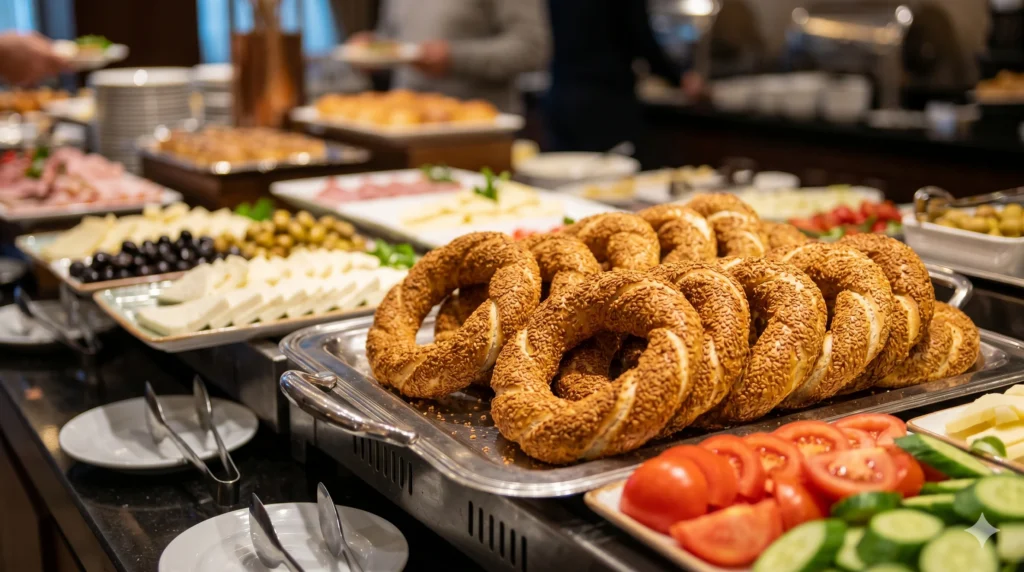
frozen simit rings on a hotel breakfast buffet tray
Frozen Simit Serving Occasions for HoReCa
Understanding where frozen simit fits in the service programme helps operators maximise both operational efficiency and commercial return.
Hotel Breakfast Buffet
The hotel breakfast buffet is the highest-volume serving occasion for frozen simit in European food service. It works perfectly in a buffet context: baked in quantity before service, held in a bread warmer or heated display, and replenished throughout the morning without quality loss.
On the buffet, the product is most effective when positioned as part of a dedicated “Turkish breakfast” or “Mediterranean breakfast” station — alongside white cheese (feta is the most accessible European equivalent), sliced tomatoes, cucumbers, olives, and individual portions of honey. This format elevates frozen simit from a bread item to a destination within the buffet, drawing guest attention and driving genuine engagement.
Hotels with a significant Turkish, Middle Eastern, or Eastern European guest mix will find it delivers immediate satisfaction for those demographics. Hotels serving a broader international audience will find it functions as a premium differentiator that lifts overall breakfast quality perception.
À La Carte Breakfast and Brunch
For restaurants and cafés offering a plated breakfast or brunch menu, frozen simit works as a premium bread item served warm alongside egg dishes, charcuterie boards, or cheese selections. A single warm ring with a small dish of labneh, olive oil, and za’atar is a low-cost, high-impact plate addition.
For brunch menus specifically, it fits the premium, artisan, international character that drives European brunch culture. It brings authenticity and a genuine origin story to the table — both of which brunch customers actively value and increasingly seek out.
Café Counter and Grab-and-Go
For café and bakery operators, frozen simit is a strong grab-and-go product. A freshly baked ring at a café counter — warm, aromatic, visually distinctive — is a natural impulse purchase for the morning coffee occasion.
The ring format is inherently portable. No bag needed, no plate needed. A customer picks it up alongside their coffee and eats it on the move. For operators focused on throughput, it fits naturally into the counter display rotation alongside croissants and pastries.
Pricing a freshly finished frozen simit at a slight premium to a standard croissant is commercially justifiable given its distinctiveness and the cultural story behind it. Research from the European natural and speciality food sector consistently shows that provenance-led products command a price premium in café and bakery settings — particularly in morning snacking occasions where consumers are willing to spend slightly more on something that feels genuinely special.
Catering and Event Food Service
For catering operations — corporate events, weddings, conference hospitality — frozen simit offers the portion control and batch-bake consistency that event catering demands. Rings can be baked in precise quantities for each service, eliminating the waste associated with fresh bakery. The visual impact of a sesame ring on a catering spread — particularly as part of a Mediterranean food station — delivers the premium impression that event clients pay for.
Room Service and In-Room Dining
In hotel operations with room service programmes, frozen simit can be integrated into breakfast menus as a premium bread item accompanying eggs, smoked salmon, or cheese selections. The quick bake time from frozen supports speed-of-service requirements. The product travels well without degrading — the sesame crust holds its structure for the duration of a standard room service delivery.
How to Finish Frozen Simit: A Practical Guide for Kitchen Teams
Getting a consistent result from frozen simit requires the team to understand a small number of critical variables.
Oven Temperature
Preheat fully before loading. The target baking temperature for most frozen simit specifications is 180–200°C in a convection oven. In a deck oven, top and bottom heat settings vary by equipment — request the specific baking specification from your supplier and test on a small batch before committing to service quantities.
Do not bake at too low a temperature. Underbaking produces a pale crust and a doughy interior. The deep golden colour of a correctly finished ring is the visual indicator that the product is ready.
Baking Time
Frozen simit takes approximately 5 to 8 minutes from frozen at the correct temperature. Do not defrost before baking — the direct-from-frozen process is part of what produces the correct crust texture. Defrosting before baking results in a softer, less crisp exterior that does not represent the product at its best.
Time will vary slightly depending on oven type and ring size. Always calibrate with your specific oven and product before service.
Holding After Baking
The product is at its best within 15 to 20 minutes of coming out of the oven. For buffet service, bake in smaller batches more frequently rather than large batches infrequently. A freshly baked ring held in a standard bread warmer for 45 minutes is still acceptable, but crust crispness will soften over time. High-volume buffet operations should establish a baking rotation schedule to maintain quality throughout service.
Training the Kitchen Team
Frozen simit is not a difficult product to finish, but kitchen teams who understand what a correctly finished ring looks like — deeply golden crust, fully toasted sesame, soft interior — will produce consistently better results. A 15-minute product briefing with a demonstration bake at the start of a service launch is sufficient to set a consistent standard across the team.
Frozen Simit on the Breakfast Menu: Serving Ideas That Work
Operators who get the most from this product are those who have thought through how to present and position it — not just how to bake it.
The Turkish Breakfast Plate
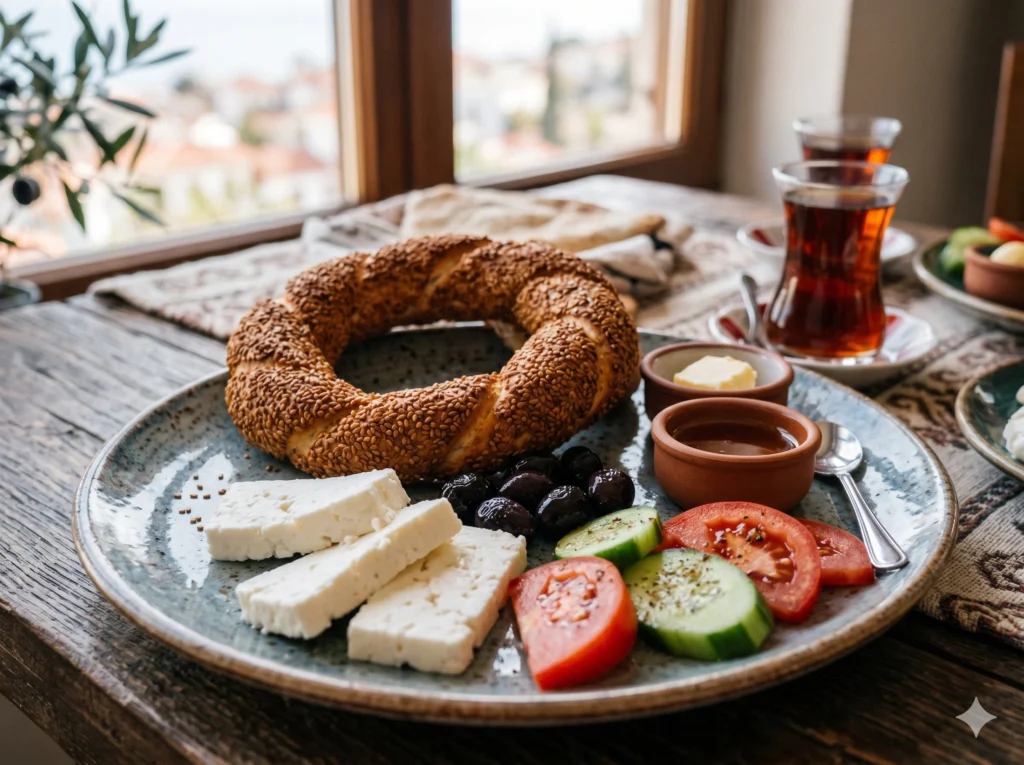
The most impactful concept for frozen simit in European food service is the Turkish breakfast plate — a composed plate or board that contextualises the product within its authentic cultural setting.
A well-executed Turkish breakfast plate includes white cheese, olives, sliced tomatoes and cucumbers, a small portion of honey or fruit preserve, and a glass of strong black tea or Turkish coffee. The plate tells a story. It gives guests context for what they are eating and transforms the breakfast experience from functional to cultural.
For hotels and restaurants, this plate can be offered as a premium breakfast option priced above the standard — the cultural and experiential framing justifies it.
Open-Faced with Spreads
Sliced horizontally and topped, frozen simit works particularly well in café settings as a composed open-faced item. Pairings that perform strongly:
Cream cheese with za’atar, olive oil, and lemon
Labneh with roasted red peppers and fresh herb
Hummus with caramelised onion and coriander
Smoked salmon with cream cheese and dill
Avocado with chilli flakes and a soft-poached egg for premium brunch positioning
Each of these builds a composed dish around frozen simit that carries a menu price well above the bread component alone.
Warm with Butter and Honey
For buffet and room service contexts, the simplest serving concept is also one of the most effective: served warm with good butter and a portion of honey. This format requires no preparation beyond baking and needs no explanation to the guest. The flavour of a correctly finished ring — toasted sesame, caramelised molasses crust — is strong enough to stand on its own with only butter and honey alongside.
This simplicity has commercial value. It means frozen simit can be added to a breakfast programme without significant menu redesign or additional mise en place.
Simit and Cheese Board
For afternoon tea, hotel bar snacks, or event catering, frozen simit works well on a cheese and bread board. Its nutty, sesame-forward flavour pairs well with semi-hard and hard cheeses — aged Gouda, Manchego, Pecorino — as well as softer fresh varieties. The ring shape gives the board an immediate premium visual aesthetic that distinguishes it from a standard bread selection.
Sourcing Frozen Simit: What HoReCa Buyers Need to Know
Evaluating frozen simit suppliers for HoReCa supply requires attention to criteria beyond basic product quality.
Volume Flexibility and Minimum Order Quantities
HoReCa accounts vary enormously in volume. A 200-room hotel group has very different requirements than a 30-seat café. Your supplier must serve both ends of the spectrum with appropriate minimum order quantities and carton configurations.
Ask what the minimum carton order is, what the standard lead time is for repeat orders, and whether supply can run through your existing wholesale distributor relationships or requires direct supply.
Cold Chain Reliability
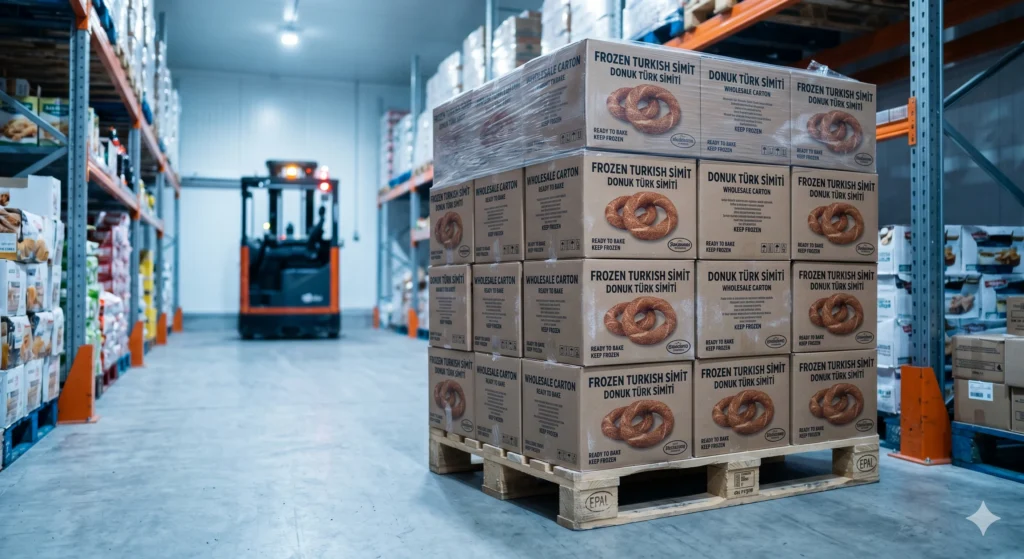
The quality of frozen simit is entirely dependent on an unbroken cold chain from production to your freezer. Any temperature excursion during transit — particularly in summer or in warmer European markets — can compromise the sesame coating and dough structure in ways not visible until the product is baked.
Insist on supplier documentation for cold chain management. Ask specifically how product is packed for transit and what the temperature monitoring process is during delivery.
Consistent Batch Quality
In HoReCa, consistent quality across every delivery is non-negotiable. A product that performs differently from one carton to the next — different sesame coverage, different crust colour, different interior texture — creates operational problems and erodes kitchen team confidence.
Request samples from multiple production runs before committing to a supply agreement. Reliable frozen simit should perform identically regardless of which carton you open.
Private Label and Custom Specifications
For hotel groups, restaurant chains, and catering businesses wanting to serve the product under their own brand — on menus, packaging, or hospitality materials — private label capability is an important supplier criterion. Suppliers who offer this give HoReCa operators the ability to build a branded experience around the product they serve.
Frozen Simit Wholesale: The Distributor Perspective
For wholesale distributors supplying European HoReCa accounts, frozen simit is a category addition with strong commercial logic.
It is a reorder product. Once an operator has introduced it to their programme and trained their team to finish it correctly, reorder frequency is high and churn is low. The product becomes embedded in the service offering — particularly in buffet operations where guests develop expectations around it.
Unlike many HoReCa food products where price is the primary purchasing lever, buyers of frozen simit are influenced significantly by product quality and supply reliability. Distributors who offer consistent quality from a trusted source, with reliable cold chain and appropriate lead times, hold a strong competitive position regardless of marginal price differences.
The product also opens doors to HoReCa accounts that may not have been reachable with an existing bakery range. Hotels, premium cafés, and restaurants seeking authentic Mediterranean and Turkish food products are a growing segment of the European market — and frozen simit is an entry point into that segment that can pull through additional range listings. Industry analysts at organisations such as Euromonitor regularly track this category growth across European food service markets, and the trend data consistently favours authentic international bakery formats.
Allergens, Labelling, and EU Compliance
HoReCa operators have specific legal obligations around allergen communication that apply to frozen simit served in their establishments.
The product contains two regulated allergens under EU food law: gluten (wheat) and sesame. Both must be declared in writing on menus, buffet labels, or allergen information sheets made available to guests on request.
Sesame was added to the EU mandatory allergen list in 2022. Operators who have not reviewed their allergen documentation since before that date should verify that sesame is correctly declared for every frozen simit product in their service.
Suppliers must provide a current product specification sheet with full ingredient declaration and allergen information. Do not accept verbal assurances — obtain written documentation for every SKU you serve. For practical guidance on allergen management frameworks in European food service, the Food Safety Authority of Ireland publishes resources that are recognised across EU member states and are directly applicable to kitchen allergen management procedures.
Your supplier’s product specification sheet is the authoritative document for allergen declaration. Always verify it is current and reflects exactly the product being supplied to your site.
Why Lezza Foods for Frozen Simit Supply
Lezza Foods BV has been supplying authentic Turkish and Mediterranean food products to European HoReCa and retail markets since 2013. Based in Mechelen, Belgium, the company distributes across 20+ European countries and produces for more than 20 private label brands.
The Lezza Foods frozen simit range is engineered for European food service requirements. Every ring is produced to the authentic Turkish recipe — molasses-glazed, uniformly sesame-coated, partially baked to 80% — and blast-frozen to preserve quality through the supply chain.
The 125g classic simit is the core HoReCa SKU: 80 pieces per carton, consistent ring size, reliable performance across oven types. It is the format that hotel breakfast operations, café operators, and catering teams across Europe rely on as their standard supply.
For operators wanting a sweeter format — for afternoon service, dessert buffets, or family-oriented offerings — the sweet simit range is available in 135g and 160g formats. The 160g sweet variant is particularly well-suited to premium plated presentations where a more generous portion size is commercially appropriate.
All SKUs are available for private label, with full flexibility on packaging specification, labelling, and market compliance requirements.
Frequently Asked Questions: Frozen Simit for HoReCa
How long does frozen simit last in the freezer?
Properly stored at −18°C or below, the product typically has a shelf life of 6 to 12 months. Always refer to the best-before date on the specific carton and follow the supplier’s storage instructions.
Can frozen simit be baked in a convection oven?
Yes. It performs well in convection ovens at 180–200°C for 5 to 8 minutes. Preheat fully before loading and do not defrost before baking.
How many rings does a standard carton contain?
The Lezza Foods 125g classic frozen simit is packed at 80 pieces per carton. Other SKUs vary — refer to the product specification sheet for exact configurations.
Do we need to declare sesame on our buffet labels?
Yes. Both gluten (wheat) and sesame must be declared on any buffet label or menu description. Obtain the current allergen declaration from your supplier’s specification sheet and ensure your labelling reflects it accurately.
Is private label available?
Yes. Lezza Foods produces frozen simit under private label for hotel groups, restaurant chains, and catering businesses across Europe. Contact the commercial team to discuss volumes, packaging, and specifications.
What is the minimum order quantity for wholesale supply?
Minimum order quantities vary by SKU and delivery region. Contact Lezza Foods directly to discuss MOQs, lead times, and distributor supply options for your operation.
Can the product be reheated after baking?
Reheating is not recommended as standard practice. Frozen simit is best served immediately after the finishing bake. If baked product has not been served within the holding window, it is better to discard and bake a fresh batch — reheating softens the crust and reduces product quality.
Ready to Add Frozen Simit to Your Menu?
Frozen simit is operationally simple, commercially strong, and genuinely differentiated. For European HoReCa operators who want to offer something at breakfast and brunch that guests will notice, remember, and return for — it is one of the most compelling additions available right now.
Lezza Foods has been producing and supplying to European food service since 2013. The range is consistent, reliably cold-chained, available in formats suited to every HoReCa operation, and ready for private label.
To provide the best experiences, we use technologies like cookies to store and/or access device information. Consenting to these technologies will allow us to process data such as browsing behavior or unique IDs on this site. Not consenting or withdrawing consent, may adversely affect certain features and functions.
Functional
Always active
The technical storage or access is strictly necessary for the legitimate purpose of enabling the use of a specific service explicitly requested by the subscriber or user, or for the sole purpose of carrying out the transmission of a communication over an electronic communications network.
Preferences
The technical storage or access is necessary for the legitimate purpose of storing preferences that are not requested by the subscriber or user.
Statistics
The technical storage or access that is used exclusively for statistical purposes.The technical storage or access that is used exclusively for anonymous statistical purposes. Without a subpoena, voluntary compliance on the part of your Internet Service Provider, or additional records from a third party, information stored or retrieved for this purpose alone cannot usually be used to identify you.
Marketing
The technical storage or access is required to create user profiles to send advertising, or to track the user on a website or across several websites for similar marketing purposes.