Simit Wholesale: How to Source Authentic Turkish Sesame Bread for Your European Business
Simit wholesale is one of the most commercially underdeveloped opportunities in European frozen bakery right now. Demand is rising — from hotel breakfast operations, café groups, retail chains, and wholesale distributors across the continent — but the number of suppliers capable of delivering authentic quality at commercial scale, with EU-based logistics and private label capability, remains small.
For retail buyers, HoReCa procurement managers, and wholesale distributors who are evaluating simit wholesale for the first time, this guide covers the full picture: what to look for in a supplier, which pack formats serve which channels, how private label works in this category, and how to build a business case for adding simit to your range.
Why Simit Wholesale Is a Commercial Opportunity Right Now
Simit wholesale in Europe is being driven by a structural shift in consumer demand that has been building for a decade and is now reaching the mainstream. Turkish and Mediterranean food categories have moved from specialist shops to supermarket shelves across the UK, Germany, the Netherlands, Belgium, and France. Consumers who have eaten hummus, pita, halloumi, and baklava as everyday products are ready for the next authentic item — and simit is it.
The commercial floor for simit wholesale already exists in the form of established diaspora demand. Across Europe’s Turkish, Greek, and Balkan communities — numbering in the millions — simit is not a discovery; it is a staple. Retailers and distributors who have been serving these communities from specialist channels now have an opportunity to move simit into mainstream frozen bakery and world foods ranges with a product that has a proven consumer base and a growing mainstream audience.
The mainstream growth ceiling is where the real commercial upside lies. Social media content featuring Turkish breakfast culture has generated extraordinary organic engagement across European markets, creating active consumer awareness and demand among non-Turkish audiences who are encountering simit for the first time. That awareness is translating into in-store demand — and the retail and food service buyers who move now have a first-mover advantage that will not remain available indefinitely.
For wholesale distributors, simit wholesale fits cleanly into existing frozen bakery distribution infrastructure. The product requires no special handling beyond standard frozen logistics, it sells into multiple end channels from a single SKU range, and once embedded in an operator’s or retailer’s programme, it generates consistent reorder behaviour. That combination of operational simplicity and commercial stickiness is unusual in premium ethnic bakery and represents a genuine distribution opportunity.
What to Look for in a Simit Wholesale Supplier
Evaluating simit wholesale suppliers requires attention to criteria that go beyond basic product availability. In a category where authentic quality is the primary commercial differentiator, the supplier’s production capability, certification status, logistics infrastructure, and private label track record all matter.
Product Quality — The Three Tests
The fastest and most reliable way to evaluate any simit wholesale supplier is to request samples and bake them to the supplier’s stated specification. Three things determine whether a simit has been produced to authentic standard:
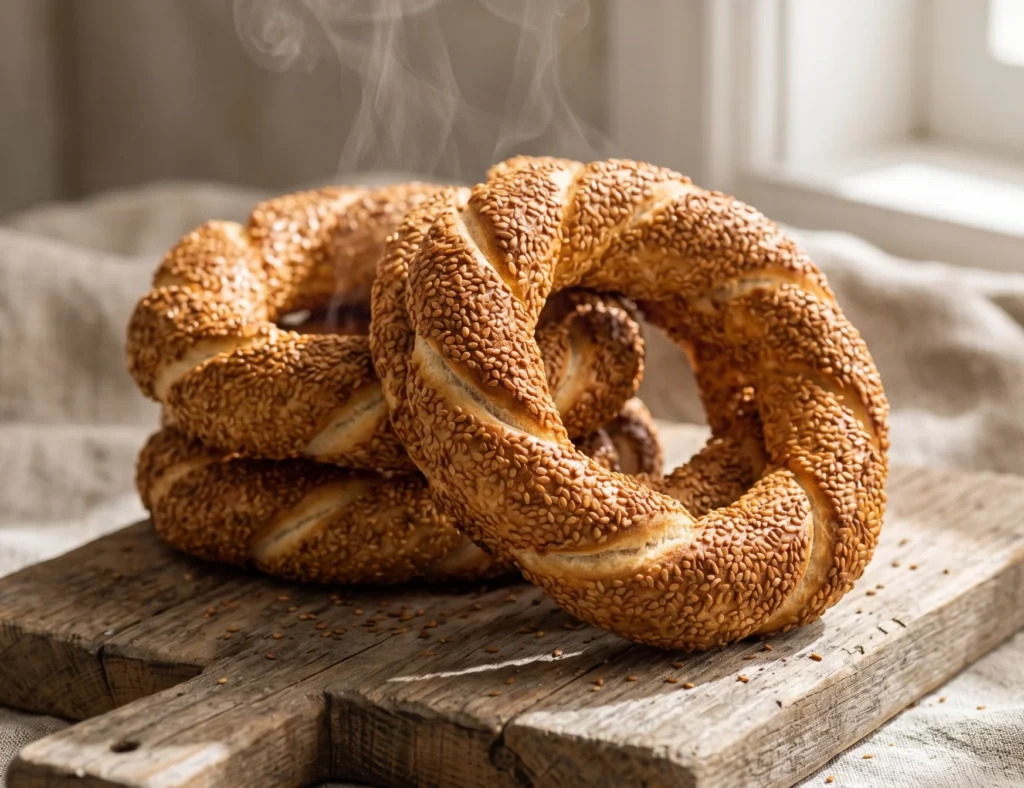
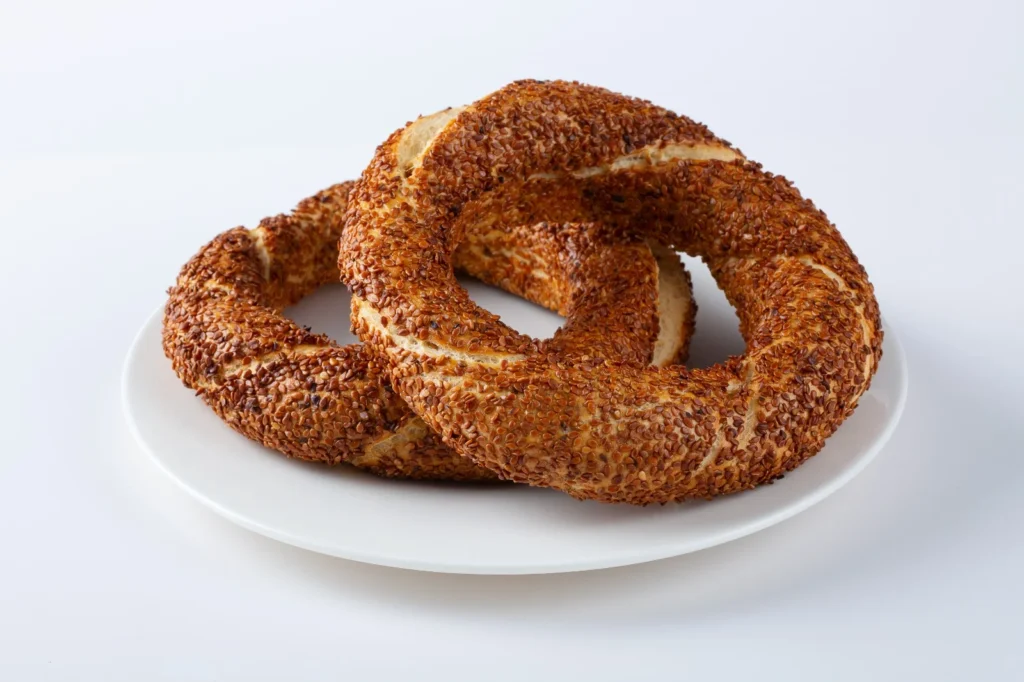
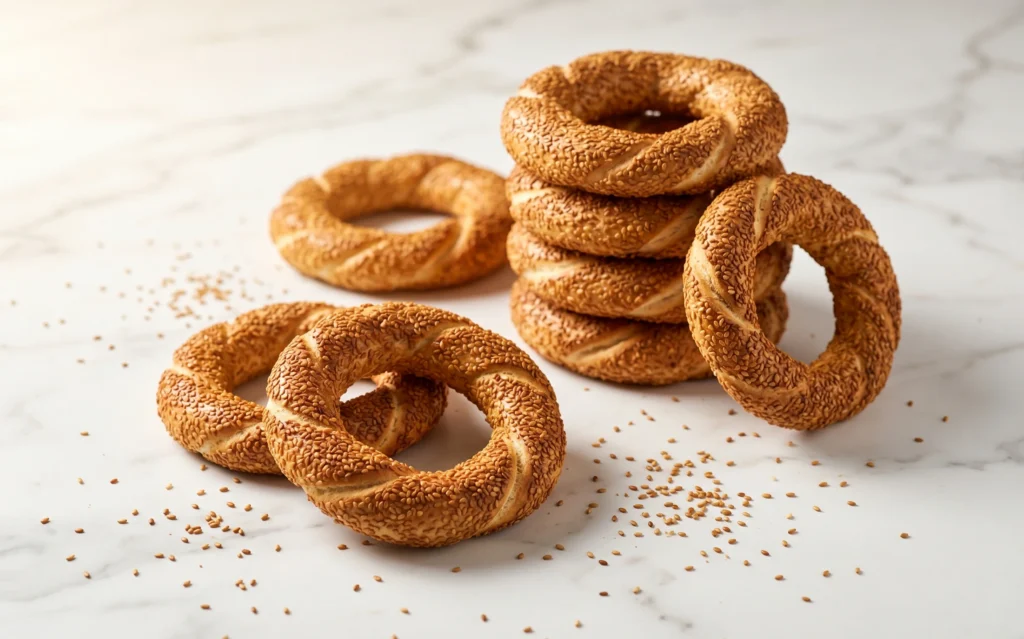
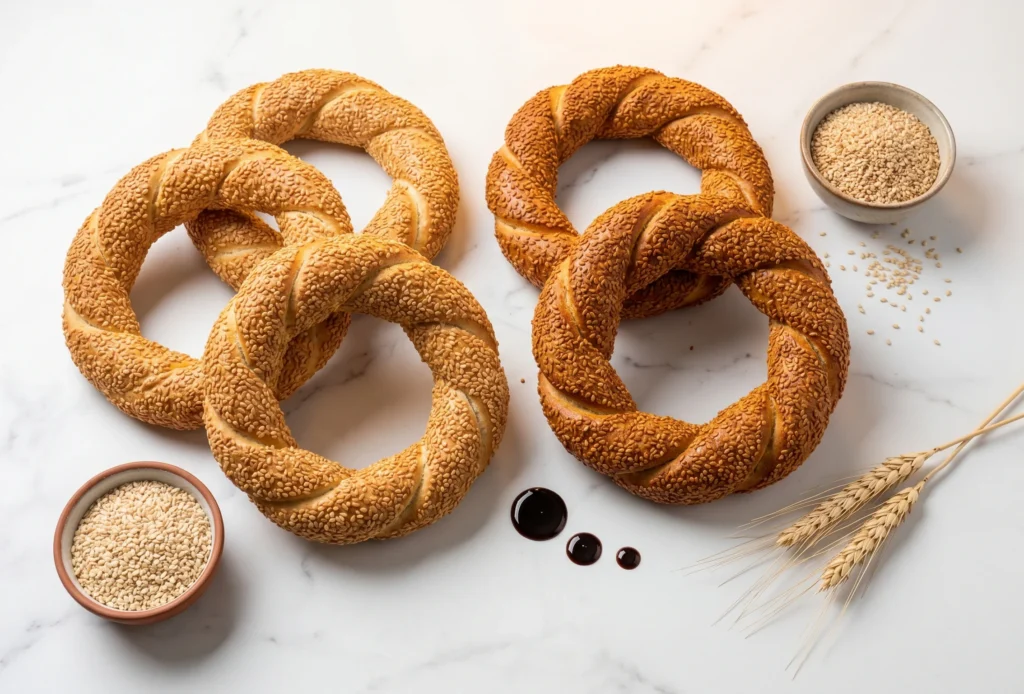
Sesame coverage. Every surface of the ring — top, bottom, sides, and inner circumference — must be uniformly coated in sesame seeds. Any bare patches indicate either an insufficient molasses bath or a poorly calibrated coating process. Well-produced simit has no uncovered areas. A ring with thin or patchy sesame coverage will not perform on shelf or on a buffet, and it will not meet the visual standard that premium retail and food service buyers require.
Crust colour after baking. A correctly finished simit emerges from the oven deeply golden-brown — the molasses glaze caramelises and the sesame seeds toast together to produce a colour that is visually striking and immediately identifiable. Pale simit signals insufficient molasses, incorrect oven temperature, or underbaking at the partial-bake stage. In a retail or buffet context, pale simit simply does not sell.
Crumb texture. The interior of a correctly baked simit is soft and slightly chewy — a clear, satisfying contrast to the crisp exterior. A doughy, gummy, or overly dense interior indicates incorrect dough formulation or insufficient baking at the partial-bake stage. Request samples from multiple production batches to verify that crumb texture is consistent, not just acceptable in a single sample.
EU Food Safety Certification
Any simit wholesale supplier serving European retail or HoReCa channels must operate under full EU food safety standards. The minimum requirement is HACCP compliance. For retail supply specifically, BRC or IFS certification is the industry standard — major European retailers require it as a prerequisite for supplier approval, and buyers who skip this verification risk supply chain disruptions if their retailer’s compliance team flags it later.
For frozen simit specifically, ask the supplier to provide documentation for their blast-freezing process validation and their shelf life testing data. Frozen bakery shelf life claims should be backed by microbiological testing, not simply declared. Suppliers who cannot provide this documentation promptly are a supply chain risk regardless of product quality.
For reference on what simit wholesale covers in frozen bakery production, the BRCGS publishes detailed standard documentation that procurement teams can use as a supplier evaluation checklist.
Pack Format Flexibility
A simit wholesale supplier who can only supply in one pack format is not commercially equipped to serve the range of channels that make up the European simit market. Retail buyers need single-serve and multipack formats. HoReCa buyers need bulk cartons. Private label buyers need the ability to specify packaging to their own requirements.
Ask suppliers what their minimum order quantities are for each format, whether they can supply the same product in different pack configurations simultaneously, and what their lead times are for format changes or new private label specifications. Suppliers who are genuinely set up for commercial-scale wholesale can answer these questions clearly and quickly.
Cold Chain and EU Logistics
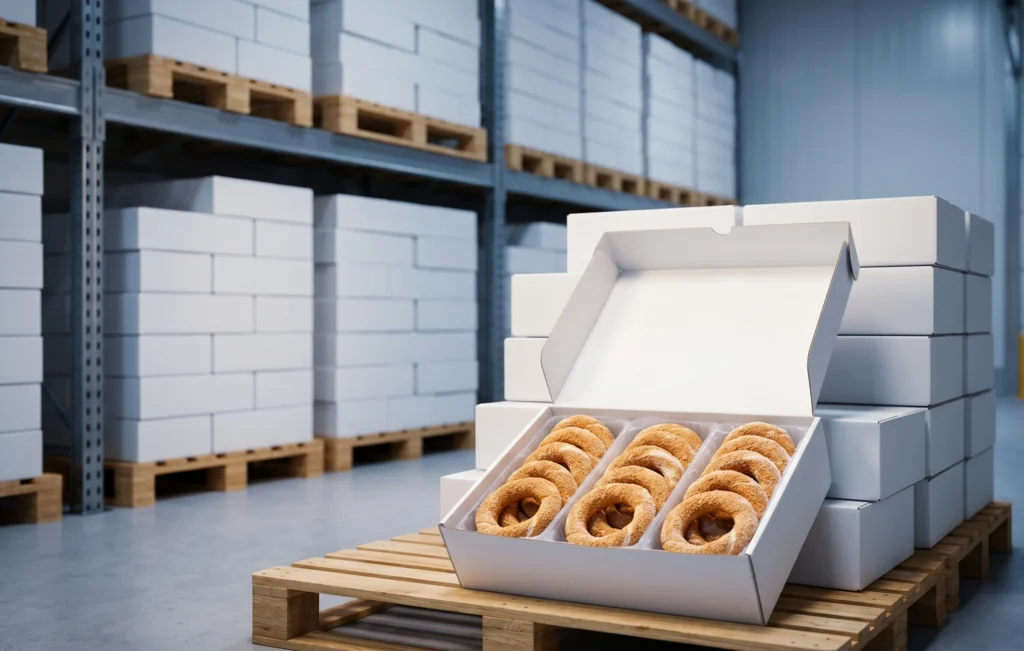
Simit is a frozen product. The quality of the cold chain between the production facility and your freezer determines the quality of the product in your operation. Temperature excursions during transit — particularly during summer months — can compromise the sesame coating adhesion and the dough structure in ways that only become visible when the product is baked.
A supplier based in continental Europe offers a material advantage over suppliers shipping frozen simit from outside the EU: shorter transit times, simpler cold chain management, lower freight costs, no customs complexity, and easier resolution of logistics issues. For buyers building a long-term supply relationship, EU-based production and distribution infrastructure is a supply chain resilience factor as much as a cost consideration.
Private Label Capability
For retail buyers and brand owners evaluating simit wholesale for own-label development, the supplier’s private label track record is the key differentiator. Ask specifically: how many active private label programmes does the supplier currently run, in which markets, and for what types of clients? A supplier with a genuine private label capability — not just a theoretical willingness — will have documented processes for packaging specification, labelling compliance across multiple EU markets, and production scheduling that can accommodate branded runs alongside standard wholesale.
Simit Wholesale Pack Formats — Matching Supply to Channel
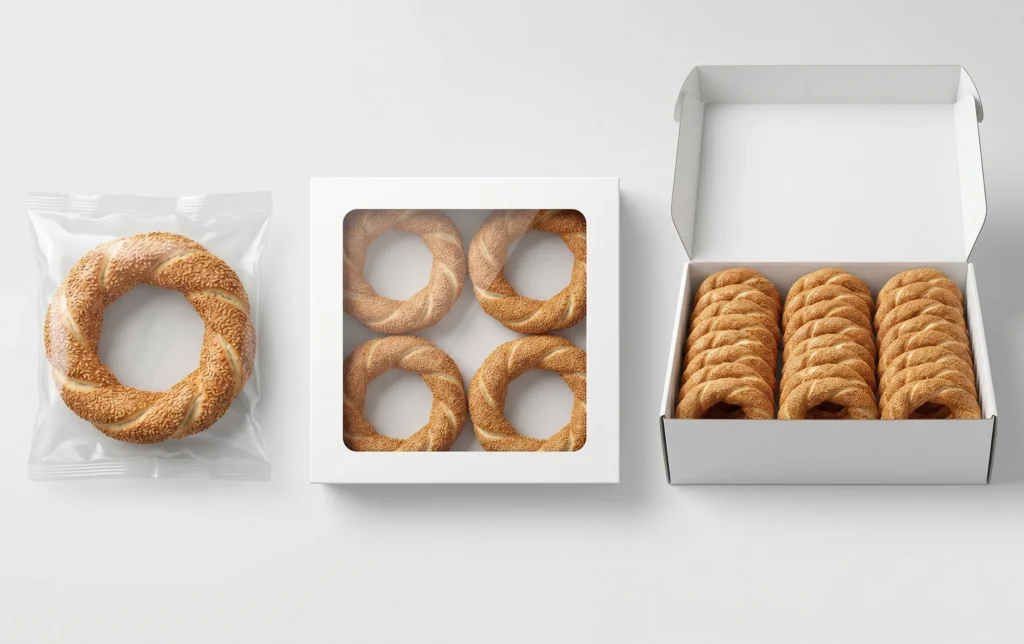
The commercial application of simit wholesale varies significantly by channel, and the right pack format for each channel is not interchangeable. Understanding which format serves which buying occasion is fundamental to building a simit wholesale range that performs commercially.
Single-Serve Retail (100–160g)
Single-serve simit rings are the primary retail format for the frozen bakery aisle, convenience retail, and forecourt settings. The format drives impulse purchase — a consumer who encounters simit for the first time in a supermarket freezer is far more likely to trial a single ring at a modest price point than a multipack at a higher total cost.
For retail category managers building a simit wholesale range, the single-serve format is the entry point. It generates trial, builds consumer familiarity, and creates the repeat purchase behaviour that justifies a multipack listing in the medium term. In a world foods or Mediterranean section, single-serve simit also performs well as part of a curated destination range.
Single-serve simit wholesale is available in both classic and sweet variants, giving retail buyers the ability to offer differentiated products within the category from the outset — a classic ring for the savoury breakfast occasion and a sweet variant for café and patisserie contexts.
Retail Multipack (4×10⁵g)
The retail multipack format — typically four rings per pack — serves the weekly grocery shopping occasion and drives the basket value and repeat purchase metrics that matter most to retail buyers evaluating category contribution. Families, households, and consumers who have trialled single-serve simit and want to incorporate it into their regular breakfast routine are the core audience for the multipack format.
For simit wholesale at retail scale, the multipack is the volume driver. Once established alongside a single-serve SKU, it typically generates a higher proportion of repeat purchases and delivers better per-unit margins for the retailer through the higher pack price. For private label buyers specifically, the multipack format is the most commercially impactful own-label opportunity — it occupies more shelf space, delivers a stronger visual brand presence, and commands a price point that makes private label investment worthwhile.
Bulk HoReCa Carton
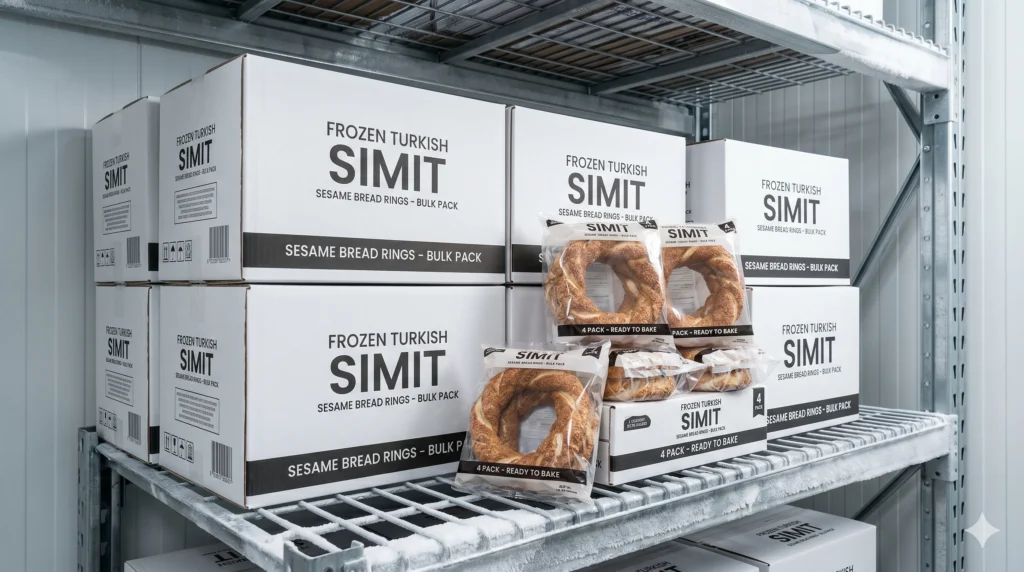
The bulk carton format — typically 80 pieces per carton for standard ring sizes — is the primary simit wholesale format for HoReCa accounts: hotel breakfast operations, café groups, restaurant chains, and catering businesses. At this scale, per-unit cost, consistent ring size, and batch-to-batch quality consistency are the primary purchasing criteria.
For HoReCa procurement managers, the bulk carton format simplifies inventory management and reduces per-unit cost to the level where simit can be offered at a price point that delivers strong menu margin without positioning it out of the accessible premium bracket. A hotel breakfast operation that runs 100 covers per morning can manage simit wholesale supply at carton level with simple reorder cycles and predictable stock rotation.
Simit Wholesale for Retail Buyers
For retail category managers and buying teams, simit wholesale offers a frozen bakery range extension with genuine product differentiation, a built-in consumer story, and versatile placement options across the frozen bakery aisle, world foods section, and premium ambient bakery.
The frozen-to-bake format is the critical commercial enabler. European consumers already understand and regularly use frozen-to-bake bakery products — frozen baguettes, croissants, and part-baked rolls have been mainstream for years. Simit enters this format with zero need for consumer education about how to use it. The differentiation is entirely in the product itself: its flavour, its sesame coating, and its authentic Turkish origin story.
For retailers who have built a private label bakery programme, simit wholesale represents one of the strongest own-label opportunities in the international frozen bakery category. The product is visually distinctive enough to stand apart from standard own-label bread, the origin story is culturally credible and consumer-communicable, and the production quality of simit wholesale from a specialist EU manufacturer is consistent enough to sustain a private label brand without the quality variability that undermines less established categories.
In terms of shelf placement, simit wholesale product works across three distinct retail positions: frozen bakery alongside baguettes and croissants, world foods alongside Turkish and Mediterranean staples, and premium bakery in retailers who curate an artisan-adjacent frozen range. Each position serves a different consumer segment and can be tested independently — a retail buyer can start with one placement and expand based on rate of sale data.
Category managers evaluating the broader context of simit wholesale market data in Europe will find consistent data pointing to sustained expansion in the international and premium frozen bread subcategory — the structural backdrop that makes simit wholesale a category addition rather than a category experiment.
Simit Wholesale for HoReCa Buyers
For HoReCa procurement teams, simit wholesale addresses a specific operational challenge: how to offer something genuinely distinctive at breakfast and brunch without adding complexity to the kitchen or the supply chain.
The operational case is straightforward. Simit wholesale in frozen format requires no specialist equipment — a standard convection oven at 180–200°C for 5 to 8 minutes from frozen produces a correctly finished product. No proving time, no dough handling, no specialist baker. The same kitchen team that produces croissants from frozen can produce simit from frozen with a 15-minute training briefing.
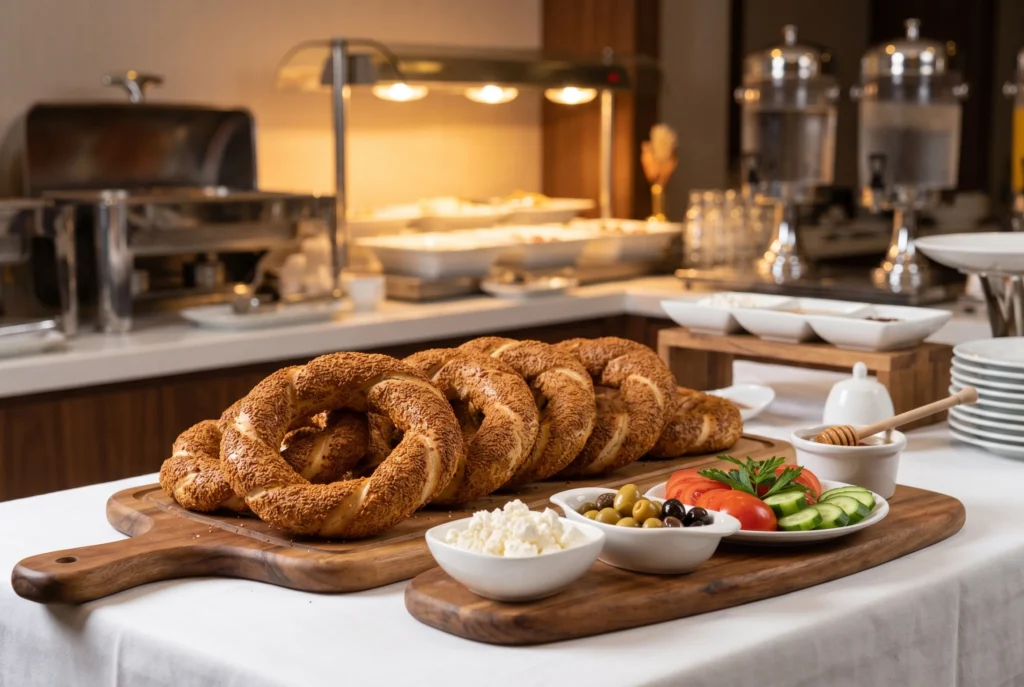
The commercial case is equally direct. Because simit remains unfamiliar to many mainstream European food service consumers, operators who introduce it can position it as a premium, artisan, or authentically Turkish product and achieve menu pricing above standard bread items. The input cost of simit wholesale at bulk carton pricing is competitive with equivalent premium frozen bakery products. The margin gap between input cost and achievable menu price is where simit wholesale delivers commercial value for HoReCa operators.
For multi-site operators — hotel groups, café chains, catering businesses — batch consistency across simit wholesale deliveries is a non-negotiable requirement. A product that performs differently from one carton to the next creates operational problems across sites and erodes the confidence of kitchen teams. When evaluating simit wholesale suppliers, request batch quality documentation and, where possible, samples from multiple production runs before committing to a supply agreement.
Private Label Simit Wholesale — Building Your Own Brand
Private label simit wholesale is a commercially underexploited opportunity in European retail and food service. While several food categories have seen significant private label development in Mediterranean and Turkish products — olive oil, hummus, pita — simit wholesale has not yet seen the same level of own-brand investment. That gap is a commercial opportunity for retailers and brand owners who move ahead of the mainstream.
The case for private label simit is straightforward. The product is visually distinctive — a private label simit on shelf is immediately recognisable as something different from standard own-label bread. The origin story is communicable and credible in a way that resonates with premium food consumers. And the product is produced by specialist manufacturers whose quality infrastructure supports consistent own-label delivery at commercial scale.
For retailers, private label simit wholesale allows the product to be positioned at a price point that is competitive with branded equivalents while delivering better margin than a straight branded resale. For food service operators, a private label simit — served on hotel menus or café chalkboards under a branded house name — creates a product-specific identity that supports the operator’s own premium positioning.
The key criteria for evaluating a private label simit wholesale supplier are the same as for standard wholesale, plus three additional requirements: the ability to pack to the buyer’s packaging specification, the capability to manage labelling compliance across multiple EU markets if the buyer sells into more than one country, and the production scheduling discipline to run private label lines without compromising standard wholesale supply. Ask for evidence of existing private label clients — the number of brands currently in production is the most reliable indicator of genuine private label capability.
The Lezza Foods Simit Wholesale Range
Lezza Foods BV has been manufacturing and supplying authentic Turkish and Mediterranean food products to European retail, HoReCa, and private label customers since 2013. Based in Mechelen, Belgium, with distribution across 20+ European countries and more than 20 private label brands currently in production, Lezza Foods is one of Europe’s established specialists in simit wholesale at commercial scale.
Every ring in the Lezza Foods range is produced to the authentic Turkish recipe: molasses-glazed, uniformly sesame-coated, partially baked to 80%, and blast-frozen to preserve quality through the supply chain. The production process is engineered for European commercial requirements — consistent ring size, consistent sesame coverage, consistent crust colour after baking, and consistent crumb texture across every carton in every delivery.
Lezza Foods supplies simit wholesale in a 125g single-serve format — 80 pieces per carton — designed for supermarket retail, convenience, and impulse purchase. It is the core entry-point SKU for retail buyers introducing the category to their range for the first time.
The simit wholesale 4×10⁵g retail multipack packs four classic rings per unit for the weekly grocery occasion. Pre-baked to 80% and designed for consumer finishing at home in a standard oven, this format drives repeat purchase and basket value in frozen bakery sections.
For operators and retailers who want to offer a sweeter simit alongside the classic, the simit wholesale sweet 135g variant delivers a more indulgent flavour profile suited to café settings, premium retail, and afternoon service occasions. A larger portion format is available as the simit wholesale sweet 160g ring, designed for premium plated presentations and food service settings where portion generosity is commercially appropriate.
All four SKUs are available for private label. Wholesale and private label enquiries are welcome from retail buyers, HoReCa procurement teams, wholesale distributors, and brand owners across Europe.
Frequently Asked Questions: Simit Wholesale
What is the minimum order quantity for simit wholesale in Europe?
Minimum order quantities for simit wholesale vary by supplier, SKU, and delivery region. For buyers evaluating Lezza Foods as a simit wholesale partner, contact the commercial team directly to discuss MOQs, carton configurations, and whether supply can be arranged through an existing wholesale distributor relationship. Initial trial quantities for range testing are available — request a quote to discuss specifics.
Is simit wholesale available for private label in Europe?
Yes. Lezza Foods produces simit wholesale under private label for retail chains, HoReCa groups, wholesale distributors, and brand owners across Europe. Private label simit wholesale includes full flexibility on packaging specification, labelling in multiple EU languages, and compliance management for different national markets. Contact the Lezza Foods team with your packaging requirements and target markets to receive a private label proposal.
What certifications should a simit wholesale supplier hold?
A simit wholesale supplier serving European retail or HoReCa channels should hold HACCP compliance as a minimum, and BRC or IFS certification for retail supply. Cold chain documentation — including blast-freezing process validation and shelf life testing data — should be available on request. Buyers sourcing simit wholesale for markets with specific import or food safety requirements should verify certification status before placing a first order.
Where can I buy simit in bulk in Europe?
Simit wholesale in bulk carton quantities is available from specialist Turkish and Mediterranean food manufacturers based in continental Europe. EU-based suppliers offer shorter lead times, simpler cold chain logistics, and no customs complexity compared to suppliers shipping from outside the EU. Lezza Foods BV, headquartered in Mechelen, Belgium, supplies simit wholesale in bulk to HoReCa operators, retail chains, and wholesale distributors across 20+ European countries.
How long does frozen simit last in storage?
Properly stored at −18°C or below, frozen simit typically has a shelf life of 6 to 12 months, depending on the specific product specification and production date. Always refer to the best-before date on the product carton and store in accordance with the supplier’s storage instructions. Buyers should request shelf life data from their supplier’s product specification sheet rather than relying on general category estimates.
What is the difference between simit and a regular bagel?
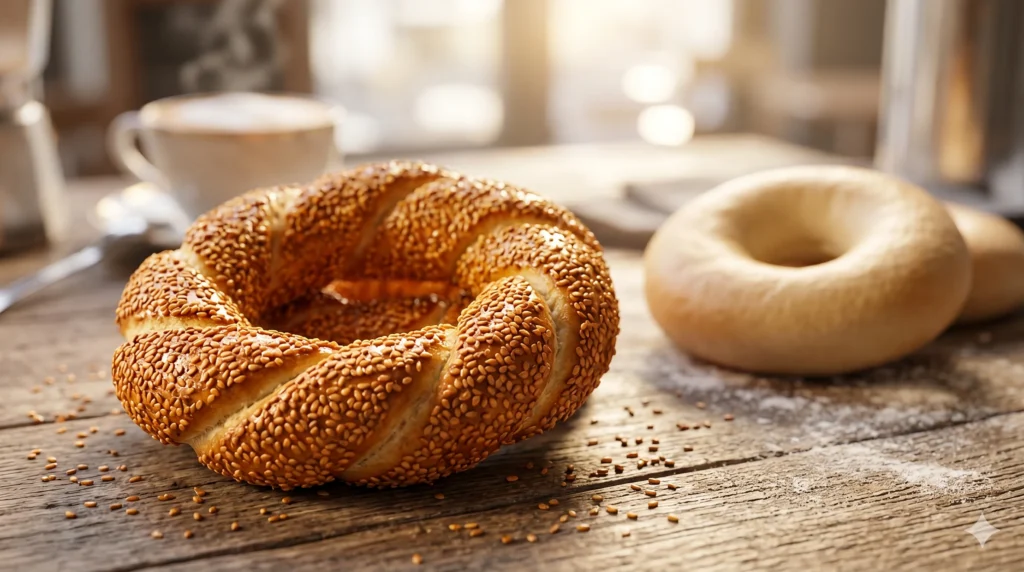
Simit and the bagel are both ring-shaped breads, but they are produced differently and taste completely different. A bagel is boiled before baking, producing a dense, chewy crumb and a glossy crust. Simit is dipped in grape molasses and rolled in sesame seeds before baking, producing a crisp, caramelised crust with a lighter, airier interior and a distinctly nutty, mildly sweet flavour. The two products are commercially complementary rather than competitive — they serve different eating occasions and attract different consumer purchase motivations.
Ready to Source Simit Wholesale for Your Business?
Simit wholesale is open for European buyers who are ready to act ahead of the mainstream. The demand is established, the product quality from specialist EU manufacturers is proven, and the commercial window for first-mover advantage in retail and food service is genuinely available right now.
Lezza Foods has been producing authentic Turkish and Mediterranean food products for European markets since 2013. The simit wholesale range is consistent, EU-sourced, available in formats that serve retail, HoReCa, and private label channels, and backed by a private label track record of 20+ brands in active production.
Browse the full simit wholesale range on the Lezza Foods website, download the simit wholesale catalogue for carton specifications and product data, or request a simit wholesale quote directly for pricing, minimum order quantities, and private label enquiry.