Turkish Bagel vs. Regular Bagel: Why Simit Is Winning European Menus
The Turkish bagel and the classic bagel look, at a glance, like the same product. Both are ring-shaped. Both have a hole in the centre. Both are baked, bread-based, and sold in bakeries and supermarkets across Europe. But put them side by side — in flavour, preparation, cultural depth, and commercial potential — and they are entirely different products serving entirely different purposes.
This post is a detailed commercial comparison for European retail buyers, HoReCa procurement managers, wholesale distributors, and private label brand owners who want to understand exactly what separates the Turkish bagel from its American counterpart, and why a growing number of European operators are choosing to range both.
What Is a Turkish Bagel?
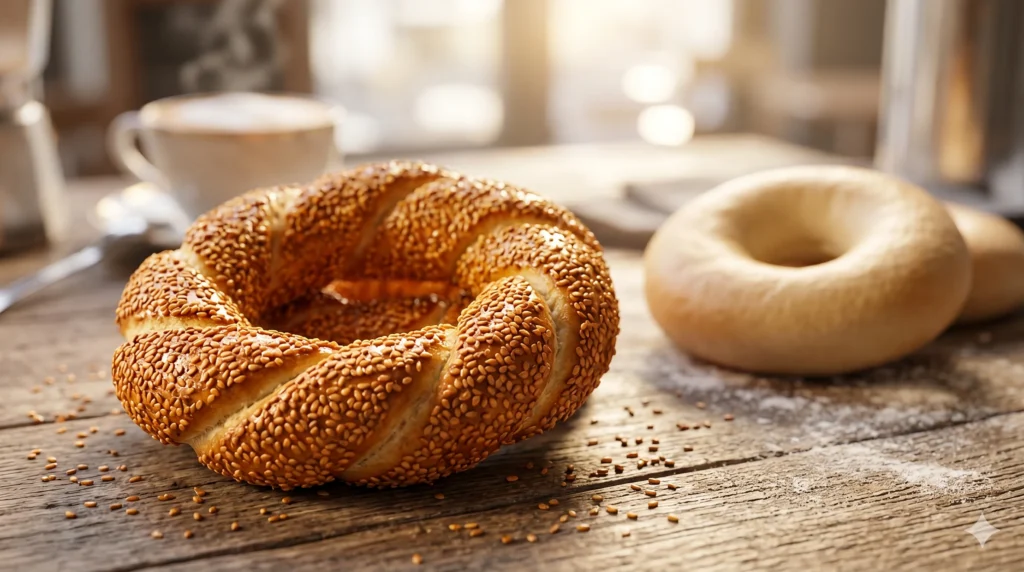
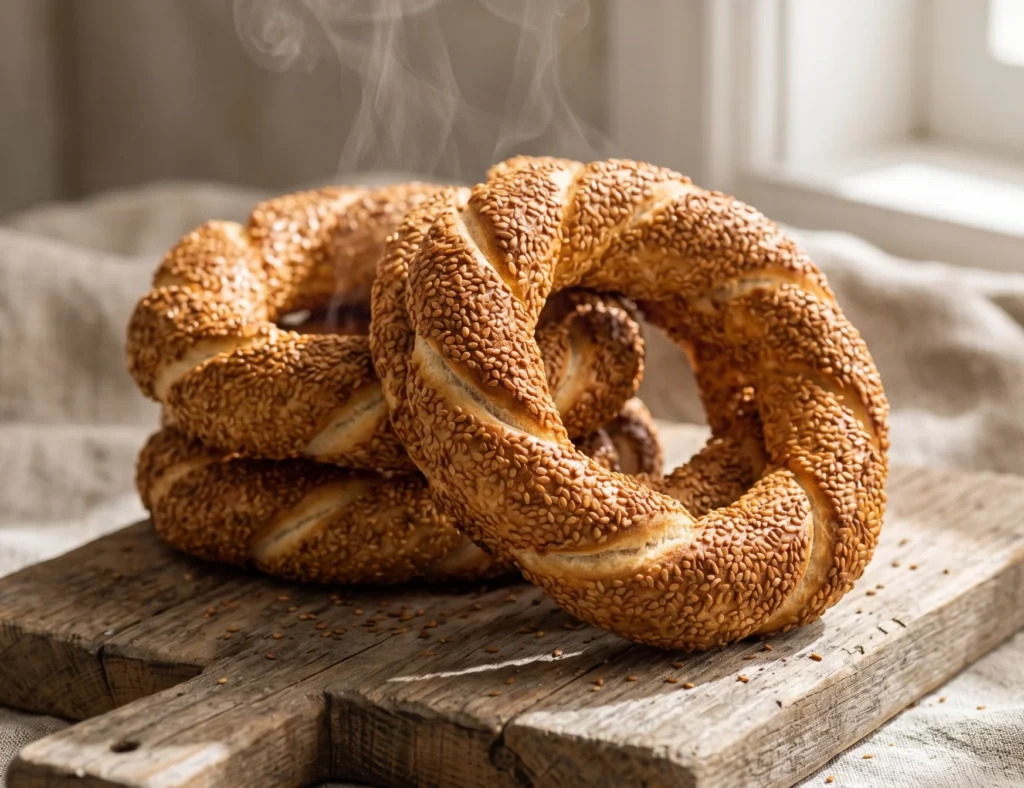
A Turkish bagel — known in Turkey as simit — is a circular sesame bread ring made from a wheat dough that is dipped in diluted grape molasses and rolled through raw sesame seeds before baking. The result is a bread with a crisp, deeply caramelised crust, a soft and slightly chewy interior, and a completely uniform coating of toasted sesame seeds across every surface of the ring.
The Turkish bagel has been a staple of Turkish street food culture for centuries, sold from pushcarts in Istanbul and eaten daily by millions of people as breakfast, a mid-morning snack, or a light lunch. It is Turkey’s most widely consumed bread product — the cultural equivalent of the baguette in France or the pretzel in Germany.
In European markets, the Turkish bagel is increasingly sold under its Turkish name — simit — or under the English descriptor “Turkish sesame ring.” Both terms refer to the same product. “Turkish bagel” is the term that resonates most immediately with European buyers and consumers who are familiar with the bagel format and looking for a point of reference.
What distinguishes the Turkish bagel from every other ring-shaped bread on the European market is the combination of three things: the molasses glaze, the full sesame coating, and the distinctive bake that produces a flavour and texture profile that no other product replicates.
What Is a Regular Bagel?
The regular bagel — most commonly the New York-style bagel that dominates European retail — is a ring-shaped bread made from a high-gluten wheat dough that is boiled in water before baking.
The boiling step is the defining characteristic of the classic bagel. It gelatinises the exterior of the dough, creating the tight, glossy crust and extremely dense, chewy crumb that bagel enthusiasts recognise and expect. The interior of a classic bagel is compact and filling — it can hold substantial toppings without tearing or becoming soggy.
Classic bagels are typically plain or topped with a light scattering of seeds — sesame, poppy, everything blend — on their upper surface only. The flavour is mild and wheaty, with a slight tang in sourdough varieties. Cream cheese, smoked salmon, and cured meats are the conventional European accompaniments.
The bagel arrived in European retail primarily through American food culture and has established a strong position in the frozen and ambient bakery categories across the UK, Germany, the Netherlands, and France. It is a well-understood product with an established consumer base and clear brand associations.
Turkish Bagel vs. Regular Bagel: A Full Comparison
Understanding the differences between the Turkish bagel and the classic bagel across every relevant dimension is essential for buyers making ranging decisions and operators building menus.
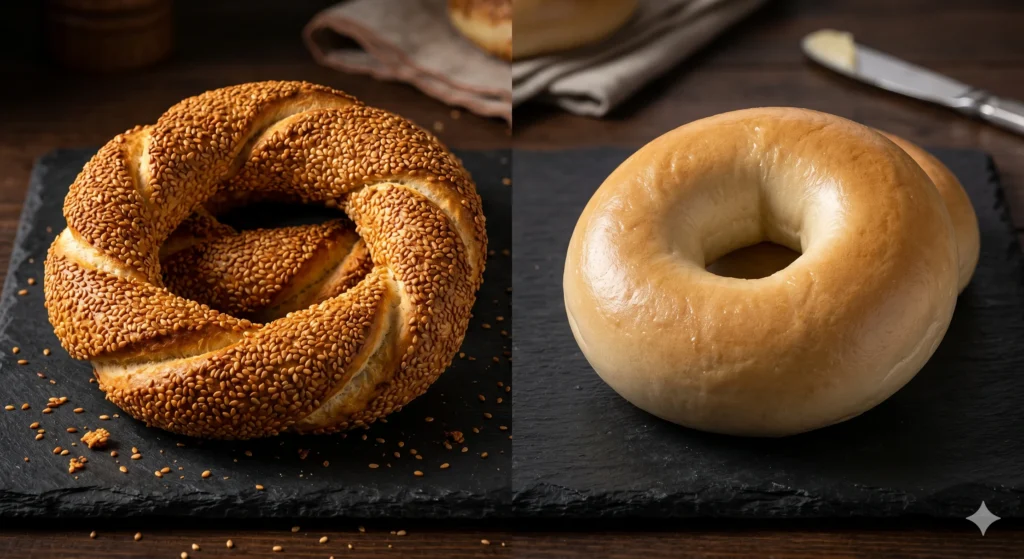
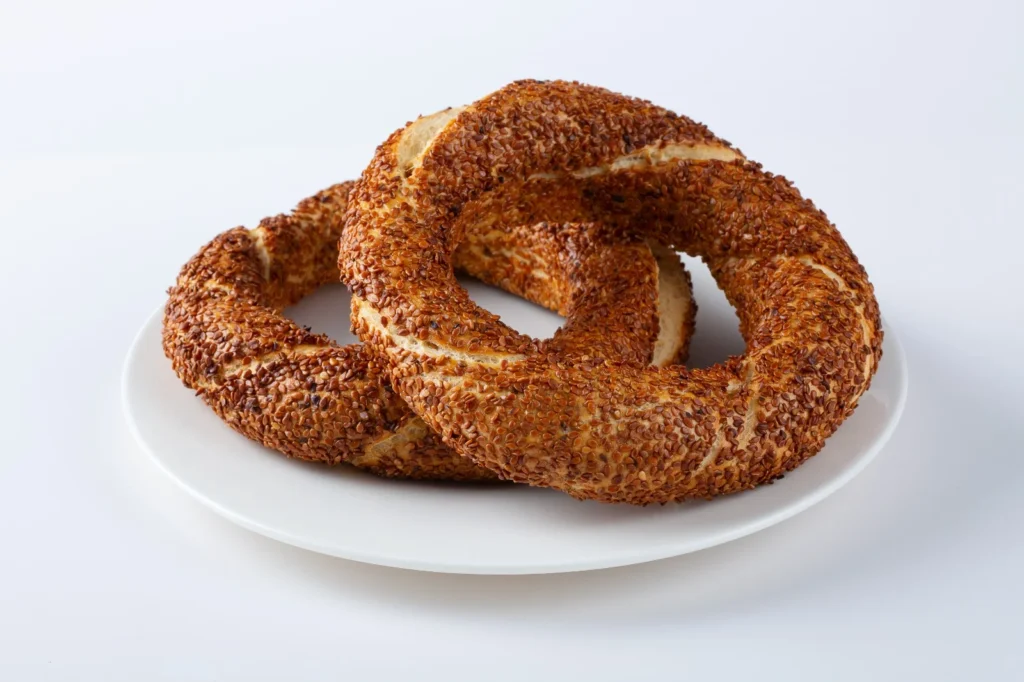
Turkish bagel simit next to a regular bagel — side by side comparison
Shape and Appearance
Both the Turkish bagel and the classic bagel are circular rings with a central hole. At a glance — particularly in packaging or photography — the visual similarity is strong enough that consumers unfamiliar with either product might not immediately distinguish them.
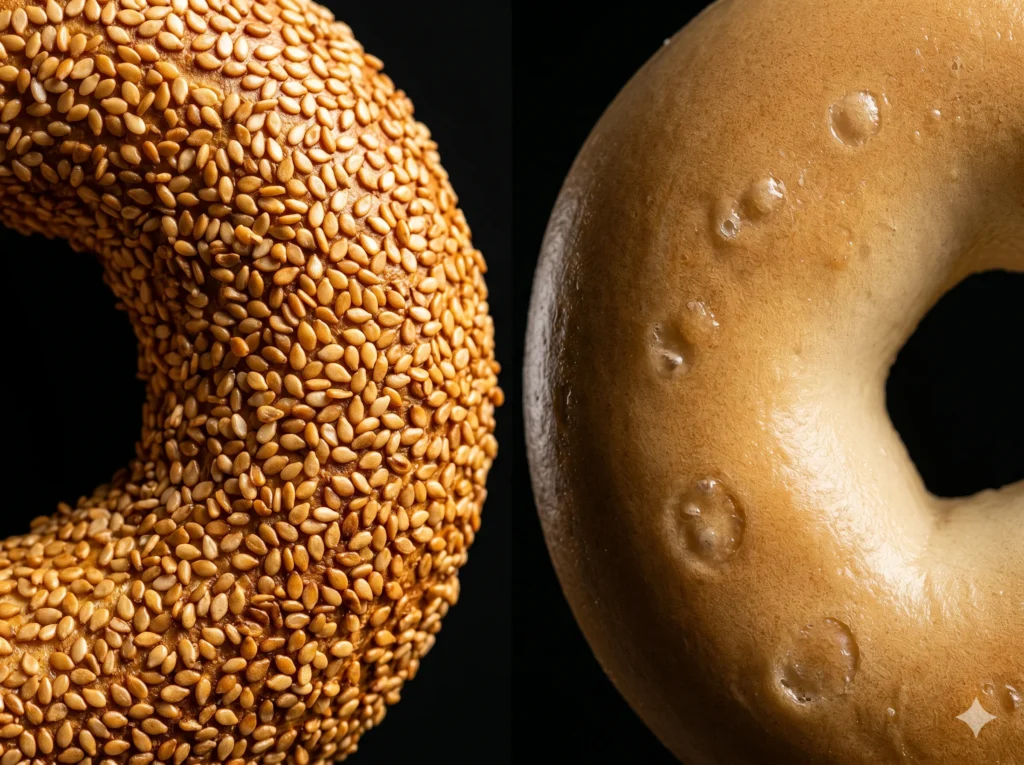
On closer inspection, the differences are clear. The Turkish bagel is lighter in construction, with a thinner ring profile than the dense, full-bodied classic bagel. Most significantly, the exterior appearance is completely different: the Turkish bagel is entirely encased in sesame seeds from top to bottom and around the inside of the ring. A classic bagel has a smooth, glossy, lightly seeded top surface. The Turkish bagel has no smooth surface at all — every millimetre is covered.
The colour of a correctly baked Turkish bagel is deeper than a typical bagel — the caramelised molasses glaze produces a rich, dark golden-brown that makes the product immediately visually distinctive on shelf, on a buffet, or in a counter display.
Preparation Method
This is the most fundamental difference between the two products, and the one that drives every other distinction in texture, flavour, and commercial application.
The classic bagel is boiled. Each shaped dough ring is lowered into simmering water — sometimes with malt syrup or baking soda added — for a period of 30 seconds to several minutes depending on the desired chewiness. This boiling step creates the gelatinised exterior that becomes the bagel’s characteristic glossy crust. The interior, having been partially cooked before baking, remains extraordinarily dense and compact.
The Turkish bagel is not boiled. Instead, each ring is dipped in a solution of grape molasses diluted with water. The molasses solution coats the exterior of the dough, adds flavour complexity through caramelisation during baking, and provides the adhesive surface that holds the sesame seed coating in place. The ring is then pressed through or rolled over trays of raw sesame seeds until uniformly coated, and baked at high heat in a deck oven.
The result is a bread whose exterior is crisp and caramelised — genuinely crunchy in a way that a bagel’s crust never quite achieves — while the interior is soft, slightly airy, and distinctly less dense than a classic bagel. The Turkish bagel eats lighter than a bagel despite being comparable in size. It is satisfying and filling without the heaviness that some consumers associate with the classic format.
The Sesame Coating
The sesame coating is not a detail — it is a defining characteristic of the Turkish bagel, and understanding it properly matters for buyers communicating product value to consumers.
On a classic bagel, seeds are a topping — an optional addition applied to one surface of the bread before baking. A sesame bagel has seeds on the top. The bottom, sides, and interior ring are seed-free. The seeds are a garnish.
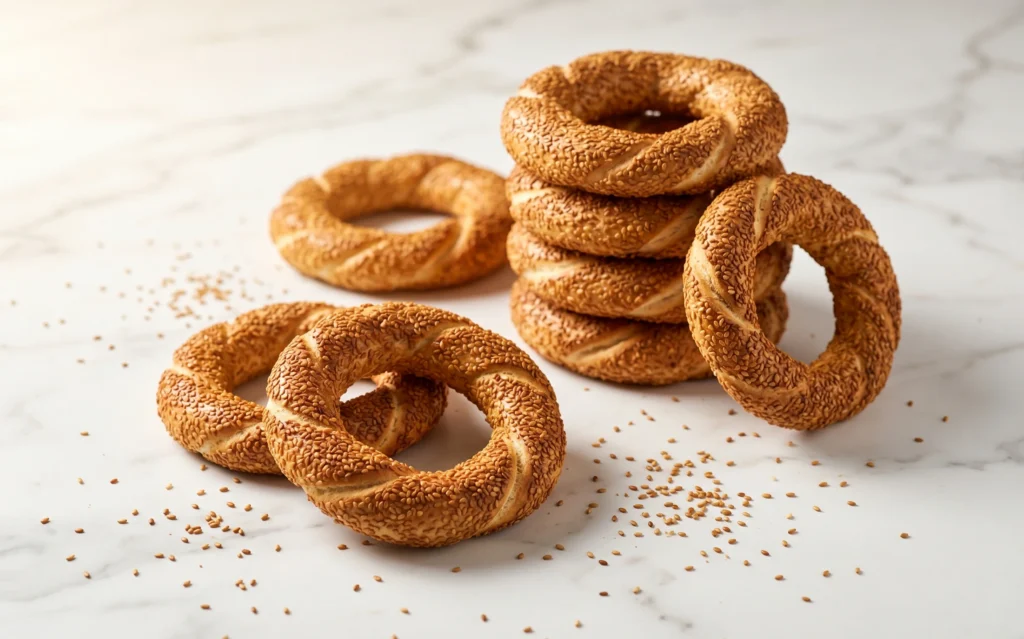
On a Turkish bagel, sesame is structural. The entire ring — top, bottom, sides, and the inner circumference — is uniformly coated in sesame seeds that are pressed firmly into the molasses-glazed dough before baking. During baking, the sesame seeds toast against the hot dough surface and caramelise in the molasses, creating a coating that is integral to the bread rather than applied to it. There is no way to eat a Turkish bagel without eating sesame — they are inseparable.
This distinction matters commercially. The sesame coating of the Turkish bagel contributes an intensity of flavour — deep, nutty, slightly sweet from the caramelised glaze — that a classic bagel simply cannot offer. It is also what gives the product its distinctive visual character: that unmistakable all-over golden-brown seed coverage that makes a tray of Turkish bagels one of the most visually striking bakery products on any European shelf or buffet.
Flavour Profile
The flavour difference between the Turkish bagel and the classic bagel is significant and commercially important. It is the reason these two products do not compete — they occupy different flavour territories and serve different consumer occasions.
The classic bagel is mild. Its flavour is primarily wheaty, with a subtle tang in sourdough or long-fermented varieties. It is designed to carry strong toppings — cream cheese, smoked salmon, pastrami — without competing with them. The bagel’s mildness is a feature: it is a platform for other flavours rather than a flavour statement in itself.
The Turkish bagel is a flavour statement. The molasses glaze caramelises during baking, creating a deep sweetness and roasted complexity that permeates the crust. The sesame seeds, toasted across the entire surface, contribute a powerful nuttiness. The result is a bread that is genuinely satisfying to eat on its own — without toppings, without spreads, without accompaniment. A Turkish bagel eaten warm, with nothing else, is already a complete flavour experience.
This flavour independence has important commercial implications for food service operators. A Turkish bagel on a breakfast buffet needs no accompaniment to earn its place. It performs. A classic bagel on the same buffet needs cream cheese, smoked salmon, or similar to justify its presence. The Turkish bagel reduces the cost and complexity of the plate build while delivering stronger sensory impact.
Texture
Classic bagel texture is defined by density and chew. The boiled-then-baked process produces a crumb that is compact and tight, with a resistance to the bite that bagel fans actively seek. It is a substantial bread — eating a classic bagel is a committed experience.
The Turkish bagel offers a different textural experience: a crunchy exterior — not merely crusty, but genuinely crunchy from the toasted sesame and caramelised glaze — against a softer, airier interior. The contrast between the crisp outer surface and the tender crumb is more pronounced in a Turkish bagel than in almost any other European bread product. It is this contrast that makes the first bite of a correctly baked Turkish bagel memorable.
For operators, this texture profile has practical advantages. The robust exterior of the Turkish bagel holds up to toppings, spreads, and transportation better than softer bread formats. It does not become soggy under wet toppings as quickly as standard bread or rolls. For grab-and-go food service contexts, this structural integrity matters.
Nutritional Profile
Both products are wheat-based breads and share a broadly similar macronutrient profile as staple bakery items. However, the Turkish bagel carries a meaningful nutritional distinction: the full sesame seed coating adds a significant contribution of protein, healthy unsaturated fats, calcium, iron, and B vitamins compared to a standard bagel with light seed topping.
Sesame seeds are nutritionally dense — a fact increasingly recognised by European consumers interested in ingredient provenance and nutritional quality. For retailers positioning the Turkish bagel in a premium or natural food category, the sesame content is a genuine on-pack communication point that adds value to the product description.
Buyers should always verify nutritional information with their supplier’s current product specification sheet and should not rely on general category claims for regulatory or consumer communication purposes.
Allergens
Both the Turkish bagel and the classic bagel contain gluten (wheat) as a regulated allergen. The Turkish bagel additionally contains sesame — a regulated allergen under EU food labelling law since 2022 under Regulation (EU) 2021/382. This is an important compliance distinction for retail buyers and food service operators: any menu, buffet label, or retail packaging that includes the Turkish bagel must declare sesame as well as gluten.
Classic bagel products with sesame topping also carry the sesame declaration, but plain or alternative-topped classic bagels do not. This is a difference buyers should factor into their allergen management and labelling processes when ranging both products together.
Turkish bagel sesame coating close-up — full surface coverage versus a plain bagel
Why the Turkish Bagel Is Winning European Menus
The commercial case for the Turkish bagel in European retail and food service is built on several structural advantages that are becoming more apparent as the product gains mainstream visibility.
It Fills a Gap the Classic Bagel Cannot Fill
The classic bagel is a strong product with an established European consumer base. But it has a flavour ceiling — its mildness, which makes it versatile, also limits its ability to function as a premium, differentiated, or experiential product. It is a platform, not a destination.
The Turkish bagel is a destination. Its flavour is complete, distinctive, and memorable without any accompaniment. That independence makes it function differently on a menu — it earns attention, generates conversation, and creates the kind of guest experience that drives word-of-mouth and repeat visits.
For retail buyers, this distinction translates into shelf differentiation. A Turkish bagel in the frozen bakery aisle next to classic bagels is not competing with them — it is adding something new, giving the consumer a reason to buy both rather than choosing between them.
It Carries a Cultural Story That European Consumers Want
Turkish and Mediterranean food culture has a powerful moment in European consumer awareness right now. The authentic provenance of the Turkish bagel — centuries of Ottoman street food history, the iconic Istanbul simitçi with their red carts, the Turkish breakfast tradition — is a story that European premium food consumers actively engage with.
This cultural depth is a commercial asset. Products with genuine provenance and heritage stories consistently command higher price points and stronger consumer loyalty than generic equivalents. The Turkish bagel is not a category invention — it is a genuine cultural product with roots that go back to the sixteenth century. That authenticity is difficult to replicate and easy to communicate.
It Performs Across Multiple Channels
The Turkish bagel is versatile in a way that strengthens its commercial case across different buyer types. In retail, it works in frozen bakery, world foods, and premium ambient bakery. In food service, it works at breakfast, brunch, café counter, grab-and-go, and catering. In private label, it works as a premium own-brand product with a strong visual identity and a clear consumer communication.
Few single bakery products can credibly serve all of these channels. The Turkish bagel does — and it does so with consistent quality and a supply chain that, in frozen format, is entirely practical for European wholesale distribution.
European Consumers Are Ready for It
A decade of Mediterranean and Middle Eastern food category growth has prepared the European consumer for the Turkish bagel. Hummus, falafel, halloumi, baklava, pita — these products have moved from specialist shops to mainstream supermarkets to premium positioning without losing consumer confidence. The Turkish bagel follows the same trajectory and benefits from the same consumer openness.
Social media has accelerated this preparation. Turkish breakfast culture, in particular, has attracted extraordinary organic engagement across European markets on Instagram and TikTok — and the Turkish bagel is always prominently featured. European consumers who discover simit through social media content are actively looking for it in retail and food service when they encounter it.
How to Position the Turkish Bagel Alongside the Classic Bagel
For buyers ranging both products, the positioning question is important. Handled correctly, the Turkish bagel and the classic bagel reinforce each other. Handled incorrectly, they can create consumer confusion or cannibalise each other’s sales.
Retail Positioning
In a frozen bakery fixture, position the Turkish bagel as a distinct product rather than a sub-variant of the bagel range. Separate shelf positioning, separate signage, and a clear product descriptor — “Turkish sesame bread ring” or “authentic Turkish simit” — helps consumers understand they are choosing between two different products, not two versions of the same thing.
Avoid positioning the Turkish bagel as a premium version of the classic bagel. It is not a premium bagel — it is a different bread entirely. Framing it as a bagel variant undersells its distinctiveness and conflates two products that serve different occasions.
In world foods or Mediterranean aisles, the Turkish bagel can also stand independently of the classic bagel entirely — contextualised within a Turkish or Mediterranean food section rather than a bagel category.
Food Service Positioning
On a café or restaurant menu, the Turkish bagel should be listed under its own name — either “Turkish bagel,” “simit,” or “Turkish sesame ring” — with a brief descriptor that contextualises it for consumers unfamiliar with the product. Something as simple as “traditional Turkish sesame bread, molasses-glazed, baked fresh” is sufficient to establish what it is and signal its premium character.
Do not list it as “sesame bagel” or “Turkish sesame bagel” — these terms create the impression that it is a variant of the classic bagel rather than a standalone product with its own identity.
On a breakfast buffet, the Turkish bagel should be labelled at the point of display with its name and a brief serving suggestion. Guests who understand what they are looking at are significantly more likely to try it than guests who see an unlabelled bread ring and cannot identify it.
Private Label Positioning
For retailers developing private label Turkish bagel products, the naming convention matters. “Turkish Sesame Bread Ring” or “Traditional Turkish Simit” are both strong options that convey authenticity without requiring the consumer to already know what simit is. Including the Turkish name in parentheses — “Turkish Sesame Bread Ring (Simit)” — bridges familiarity and authenticity effectively.
On-pack communication should lead with the authentic origin story, the sesame and molasses preparation method, and clear baking instructions. Secondary messaging can address serving suggestions, nutritional highlights (sesame content), and the brand’s sourcing credentials.
The Turkish Bagel in European Retail: Category Performance
The Turkish bagel is entering European retail at a point of structural advantage in the frozen bakery category. Several category dynamics favour its introduction.
Frozen Bakery Growth
The European frozen bakery category has grown consistently across key markets for the past decade, driven by convenience, product quality improvements, and the mainstream adoption of formats once considered premium or artisan. Frozen baguettes, croissants, and sourdough rolls are now standard items in European supermarket freezers.
The Turkish bagel enters this category as a proven format — it is not a category experiment, it is an established product with a century-long commercial track record in its home market, now available in a frozen format that meets European distribution requirements. For category managers evaluating frozen bakery range extensions, the Turkish bagel brings both heritage credibility and genuine product novelty.
Premiumisation and International Bakery
European retail category managers across the UK, Germany, the Netherlands, Belgium, and France have been actively developing their premium and international bakery ranges for several years. The Turkish bagel fits both dimensions simultaneously — it is premium in character and international in origin. That dual positioning is increasingly valuable in frozen bakery ranges where differentiation is difficult to achieve with standard product formats.
Private Label Development
For retailers with own-label frozen bakery programmes, the Turkish bagel is an attractive private label candidate. It is visually distinctive, it has a clear and communicable product story, and it is produced by specialist manufacturers with the capability to supply to retailer specification at scale.
Lezza Foods has been producing Turkish bagel products for more than 20 private label brands across Europe since 2013. The capability, quality infrastructure, and supply chain to support private label Turkish bagel development at retail scale is established and operational.
The Turkish Bagel in European Food Service: Menu Performance
In European food service, the Turkish bagel has demonstrated strong performance across three primary service contexts.
Breakfast and Brunch
The Turkish bagel’s natural home in European food service is the breakfast and brunch occasion. In its authentic Turkish context — served as part of a kahvaltı spread with white cheese, olives, tomatoes, cucumbers, and black tea — it represents one of the most compelling premium breakfast concepts available to European food service operators.
Hotels, all-day café restaurants, and brunch-focused operators who have introduced the Turkish bagel as part of a Turkish or Mediterranean breakfast concept report strong guest engagement and positive review impact. The visual distinctiveness of the product on a plate or buffet drives curiosity, the flavour delivers on expectation, and the cultural story provides conversation — three elements that together produce memorable guest experiences.
Café Counter and Grab-and-Go
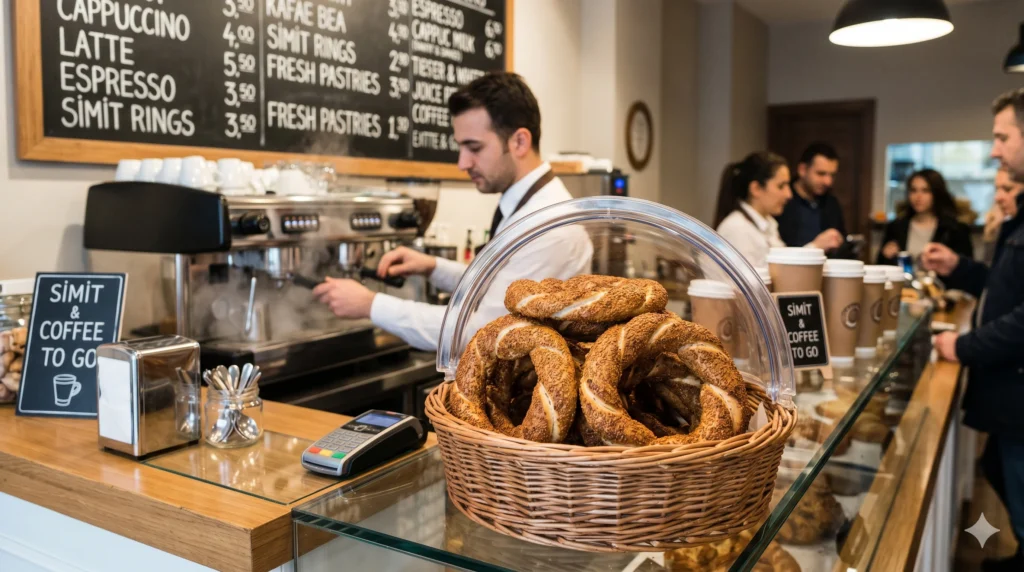
The Turkish bagel performs strongly at café counters and in grab-and-go formats. Its robust sesame crust holds up well during transit and display — it does not become stale or soggy as quickly as plain bread formats, and it retains its visual appeal in a heated display for longer than most fresh pastry items.
Priced at a slight premium to a standard croissant or plain roll, the Turkish bagel generates strong margin for café operators. Its distinctiveness justifies the premium in the consumer’s mind — they are buying something demonstrably different, not merely a more expensive version of something familiar.
HoReCa Wholesale Supply
For wholesale distributors supplying European HoReCa accounts, the Turkish bagel represents a reliable reorder product once it is established in an operator’s service programme. The frozen format, standard oven finishing, and long frozen shelf life make it operationally straightforward for any kitchen — removing the barriers to adoption that more complex international bakery products often face.
Turkish bagel displayed on a café counter alongside coffee — grab-and-go breakfast
The Lezza Foods Turkish Bagel Range
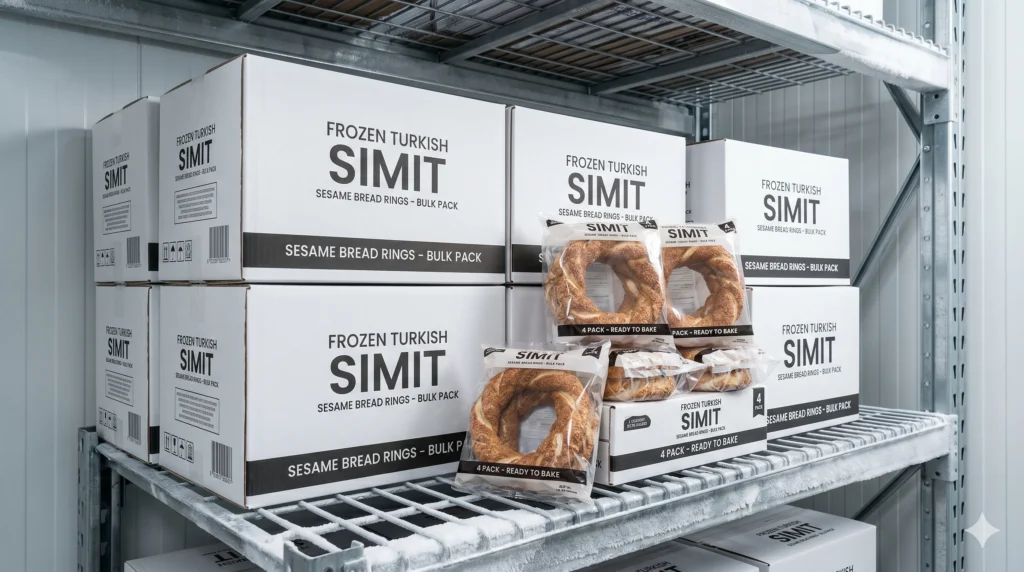
Lezza Foods BV has been manufacturing and supplying authentic Turkish bagel products to European retail, HoReCa, and private label customers since 2013. Based in Mechelen, Belgium, with distribution across 20+ European countries and more than 20 private label brands in production, Lezza Foods is one of Europe’s established Turkish bagel specialists at commercial scale.
The Lezza Foods range covers both classic and sweet formats, in pack sizes suited to retail and food service channels.
The 125g classic Turkish bagel is the core retail and HoReCa SKU — a single classic sesame ring at 125g, 80 pieces per carton, reliable across all standard oven types. It is the format that retail buyers entering the Turkish bagel category typically list first, and that HoReCa operators rely on as their standard breakfast supply.
The 4×10⁵g retail multipack packs four classic rings per retail unit for weekly grocery shopping occasions. Four rings at 105g each — 420g total — 80% pre-baked and designed for easy consumer finishing at home. This format is particularly effective in supermarket frozen bakery ranges where family pack formats drive volume and repeat purchase.
For buyers seeking a sweeter variant, the sweet Turkish bagel is available in 135g and 160g formats. Sweet simit incorporates additional sweetness into the dough and molasses glaze, producing a more indulgent flavour profile suited to café, patisserie, and premium retail settings.
All Turkish bagel SKUs are available for private label. Wholesale and private label enquiries are welcome from retail buyers, HoReCa procurement teams, wholesale distributors, and brand owners across Europe.
Frequently Asked Questions: Turkish Bagel vs. Regular Bagel
Is the Turkish bagel really a bagel?
The “Turkish bagel” name is an English-language descriptor used to help European buyers and consumers understand the format — a ring-shaped bread. Technically, the Turkish bagel (simit) and the classic bagel are distinct products with different origins, different preparation methods, and different flavour profiles. They share a shape; they do not share a recipe or a tradition.
Which is healthier — the Turkish bagel or the classic bagel?
Both are staple bread products with similar macronutrient profiles. The Turkish bagel carries a nutritional advantage from its full sesame seed coating, which adds protein, healthy fats, calcium, and iron compared to a lightly seeded or plain classic bagel. Always verify specific nutritional values with your supplier’s product specification sheet.
Can the Turkish bagel replace the bagel on a menu?
No — and it should not try to. The Turkish bagel and the classic bagel serve different occasions and deliver different flavour experiences. The strongest commercial approach is to range both as complementary products: the classic bagel as a versatile platform for toppings, the Turkish bagel as a distinctive, flavour-forward option for consumers seeking something different.
How is the Turkish bagel baked from frozen?
Lezza Foods Turkish bagel products are 80% pre-baked. Finish in a preheated oven at 180–200°C for approximately 5 to 8 minutes directly from frozen. No defrosting required. Always follow the baking instructions on the specific product packaging.
What allergens does the Turkish bagel contain?
The Turkish bagel contains gluten (wheat) and sesame — both regulated allergens under EU food labelling law. Always obtain a current product specification sheet from your supplier and ensure your labelling reflects the most current allergen declaration.
Is the Turkish bagel available for private label?
Yes. Lezza Foods produces all Turkish bagel SKUs under private label for retail chains, wholesale distributors, and brand owners across Europe.
Where can I source Turkish bagel wholesale in Europe?
Lezza Foods BV supplies Turkish bagel products wholesale across 20+ European countries from Mechelen, Belgium. Request a quote for pricing, minimum order quantities, lead times, and private label specifications.
Ready to Add the Turkish Bagel to Your Range?
The Turkish bagel is not competing with the classic bagel for European shelf space or menu position — it is creating new space, serving new occasions, and reaching consumers who are actively looking for something more distinctive, more authentic, and more memorable than what they have been buying.
For retail buyers, it is a frozen bakery range extension that differentiates without cannibalising. For HoReCa operators, it is a breakfast and brunch product that guests notice and return for. For wholesale distributors, it is a reorder product with strong account retention. For private label brand owners, it is a visually striking, culturally credible product with a clear and communicable story.
Lezza Foods has been producing authentic Turkish bagel products for European markets since 2013. The range is established, the supply chain is EU-based, and the private label capability is proven across 20+ brands.
To provide the best experiences, we use technologies like cookies to store and/or access device information. Consenting to these technologies will allow us to process data such as browsing behavior or unique IDs on this site. Not consenting or withdrawing consent, may adversely affect certain features and functions.
Functional
Always active
The technical storage or access is strictly necessary for the legitimate purpose of enabling the use of a specific service explicitly requested by the subscriber or user, or for the sole purpose of carrying out the transmission of a communication over an electronic communications network.
Preferences
The technical storage or access is necessary for the legitimate purpose of storing preferences that are not requested by the subscriber or user.
Statistics
The technical storage or access that is used exclusively for statistical purposes.The technical storage or access that is used exclusively for anonymous statistical purposes. Without a subpoena, voluntary compliance on the part of your Internet Service Provider, or additional records from a third party, information stored or retrieved for this purpose alone cannot usually be used to identify you.
Marketing
The technical storage or access is required to create user profiles to send advertising, or to track the user on a website or across several websites for similar marketing purposes.