What Is Simit? Europe’s New Favourite Turkish Sesame Bread
Simit is one of the oldest and most beloved breads in the world — a golden, sesame-coated ring that has fed Istanbul’s streets for centuries. Today, this iconic Turkish bread is breaking into European retail shelves, hotel breakfast buffets, and HoReCa menus from Amsterdam to Vienna.
For retail buyers, wholesale distributors, and food service procurement managers evaluating simit as a commercial opportunity, this guide covers everything you need: what simit is, where it comes from, how it is produced, why European demand is rising, and how to source it reliably at scale.
What Is Simit? A Complete Definition
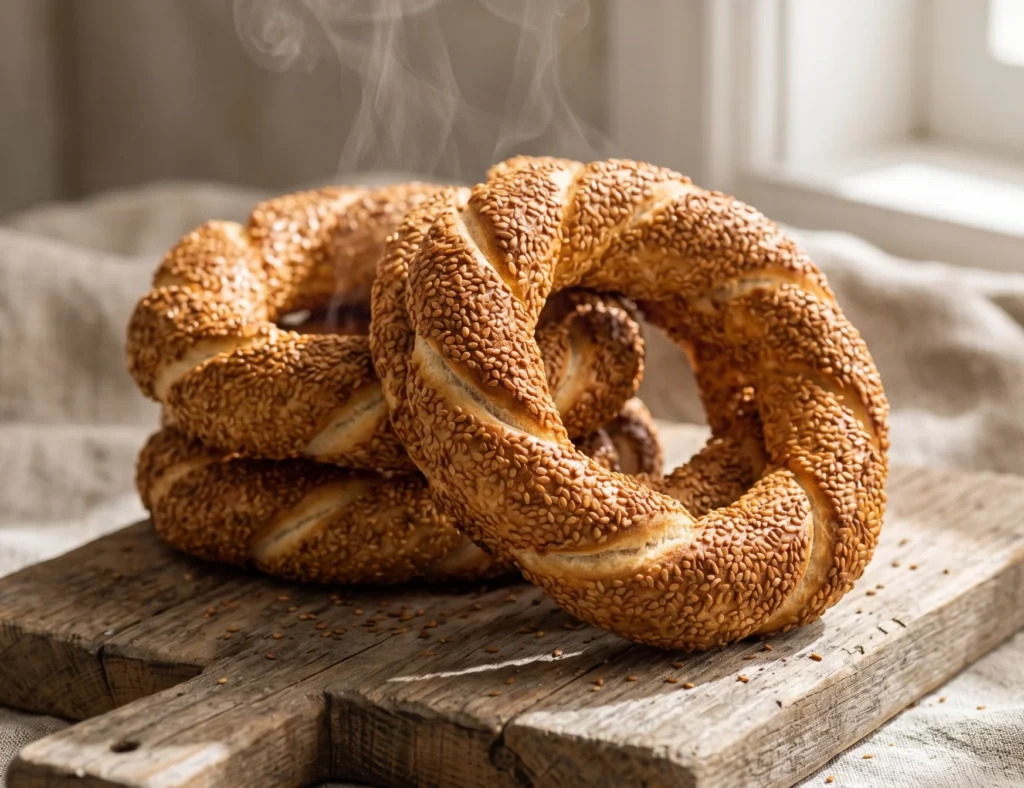
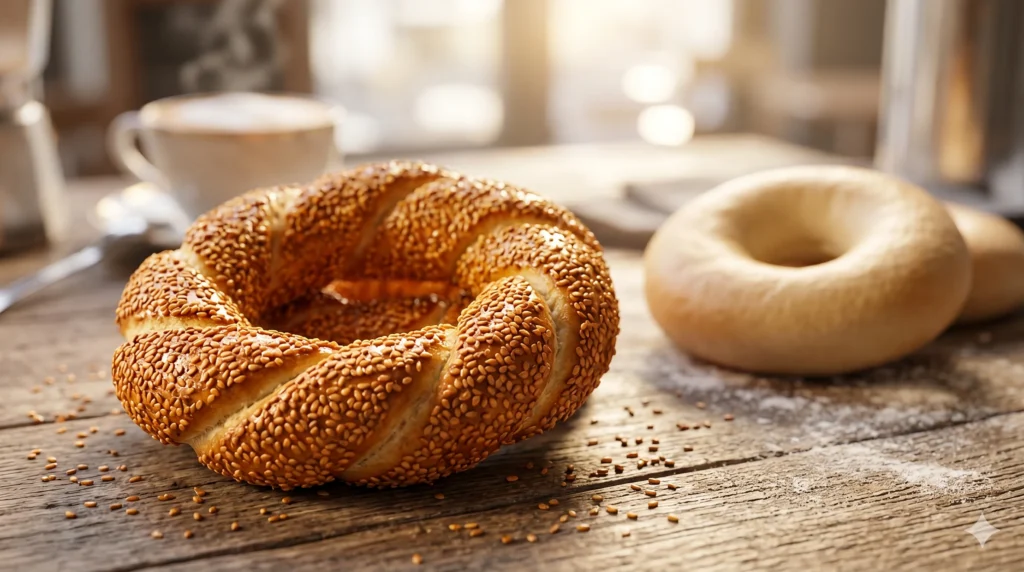
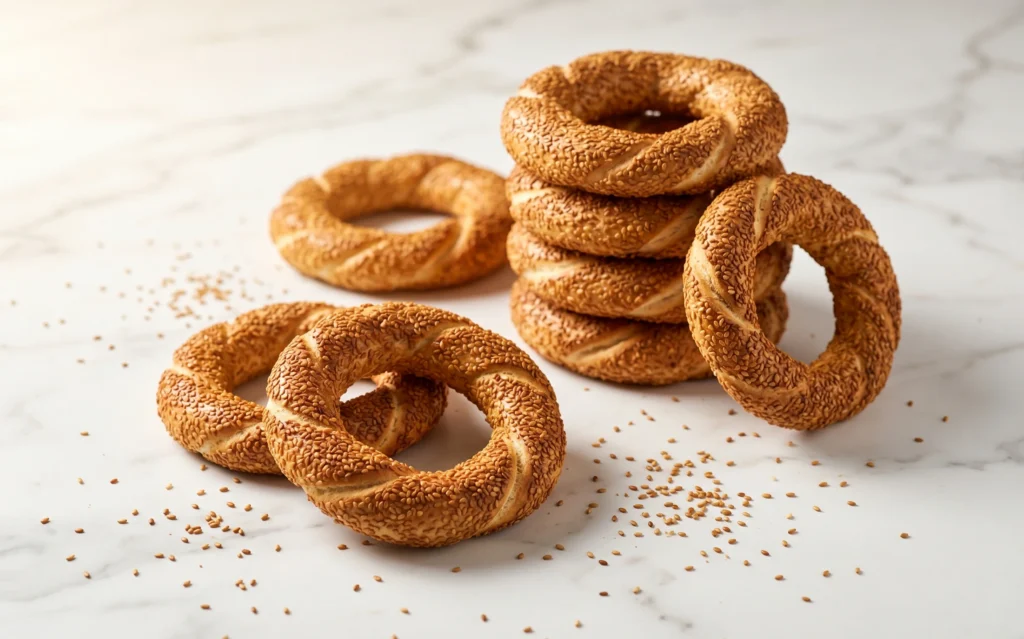
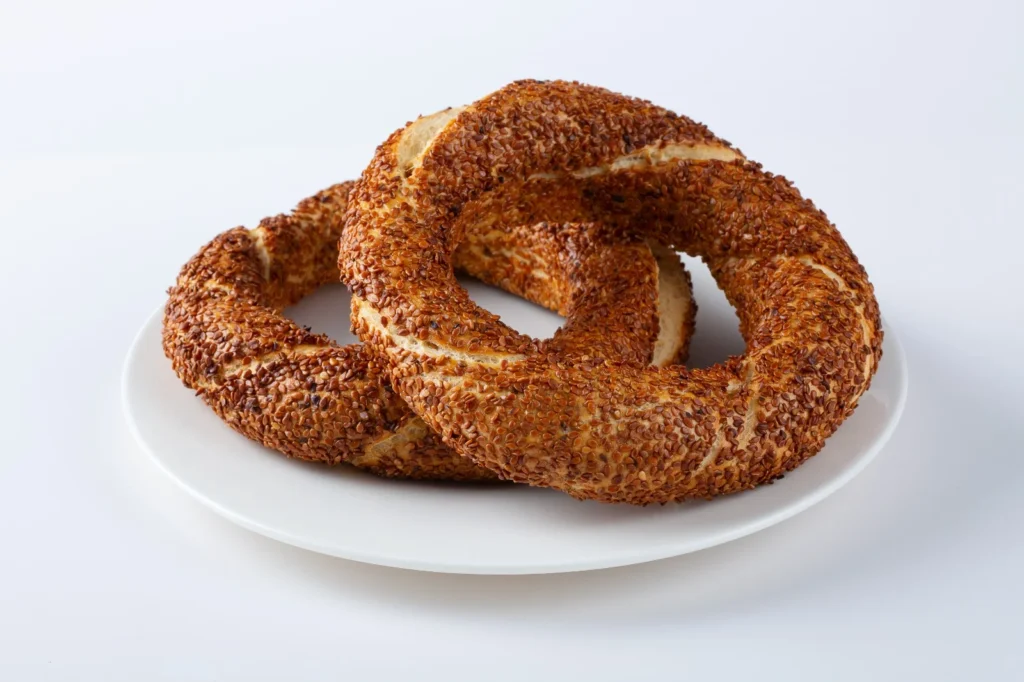
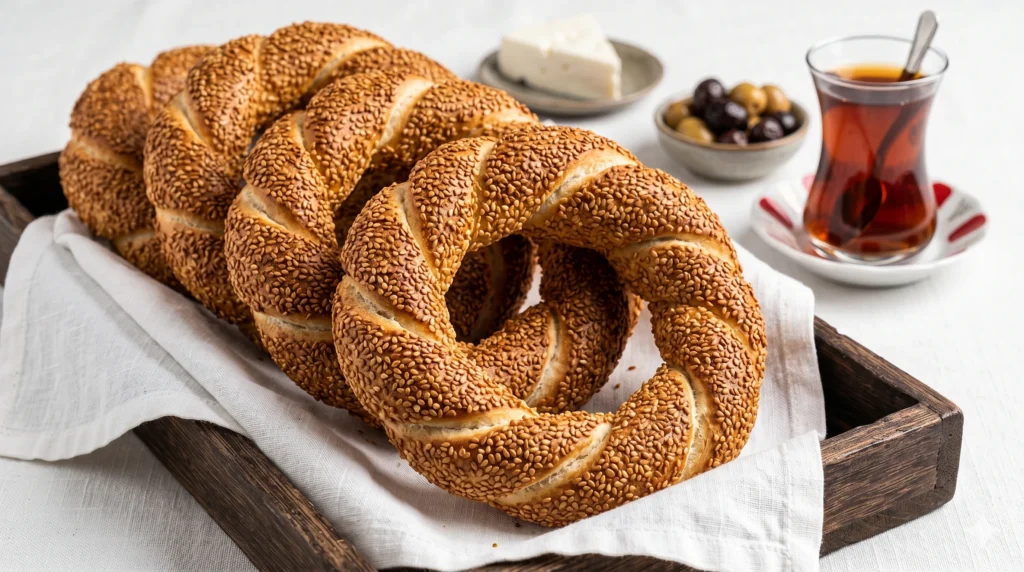
Simit (pronounced see-meet) is a circular sesame bread ring that originated in Turkey. It is defined by three characteristics: its distinctive ring shape, its thick and uniform sesame seed coating, and the molasses-based glaze that bonds the sesame to the dough and produces the crust’s deep golden colour.
The dough behind simit is simple — wheat flour, water, yeast, salt, and a small quantity of oil. What transforms it is the preparation method. Each shaped ring is dipped in diluted grape molasses, rolled through raw sesame seeds, and baked at high heat. The exterior turns crisp and caramelised. The interior stays soft and slightly chewy.
The flavour of simit is nutty, mildly sweet, and distinctly its own. It is not a pastry. It is not a plain roll. Simit occupies a flavour and texture category that no other European bread product fills — and that gap is precisely where its commercial strength lies.
In English-language markets, simit is most often described as a “Turkish bagel” or a “sesame bread ring.” Neither term fully captures it, but both give buyers and consumers an accurate first impression of what to expect.
The Origins of Simit: Centuries of Street Food History
Understanding the cultural depth behind simit helps buyers communicate its value authentically — and gives the product the kind of provenance story that European premium food buyers actively seek.
Ottoman Roots
Simit traces its origins to the Ottoman Empire. Historical records place simit in Istanbul’s markets and bazaars as early as the sixteenth century, where it was sold as an affordable, portable, nutritious staple for the city’s working population.
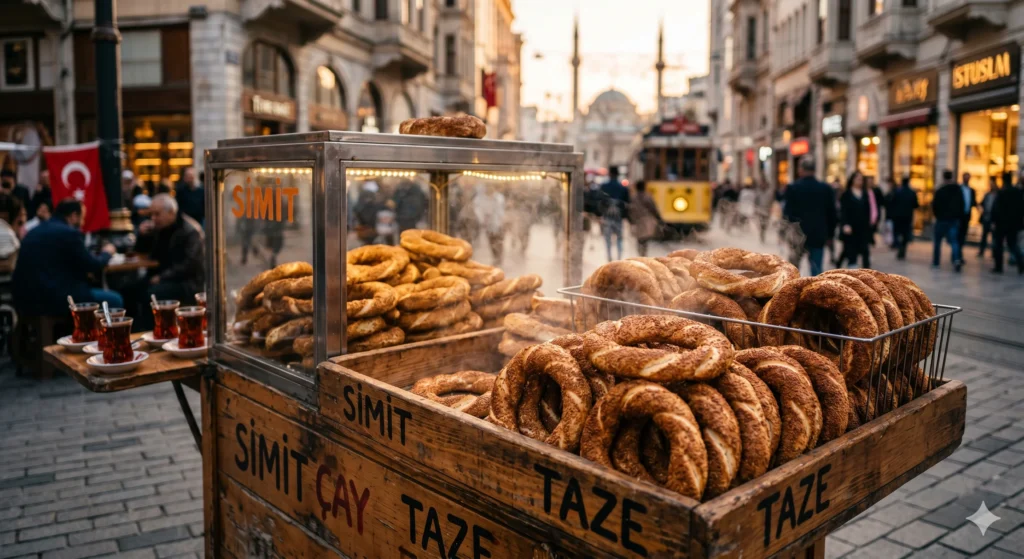
For generations, simit was carried through Istanbul’s streets by vendors known as simitçi, who balanced stacked trays of fresh-baked rings on their heads or wheeled them on distinctive red carts. That image — the simitçi and their golden cargo — remains one of the most recognisable symbols of Turkish street food culture.
Simit as a National Institution
Today, simit is far more than a street food in Turkey. It is a daily staple eaten at breakfast alongside white cheese, olives, tomatoes, and black tea. It is the mid-morning snack on the commuter train, the desk lunch, the afternoon bite in the park. National bakery chains built entirely around simit serve millions of portions every day.
In Turkey, simit holds the same cultural position that the croissant holds in France or the pretzel holds in Germany — a baked good so embedded in everyday life that it transcends food trends entirely.
Regional Connections Relevant to European Buyers
Simit is not limited to Turkey alone. In Greece, koulouri is a near-identical sesame-coated bread ring sold by street vendors across Athens and Thessaloniki. Similar sesame rings appear across the Balkans and former Ottoman territories.
This regional spread is commercially significant: simit already has strong organic familiarity among Turkish, Greek, Balkan, and Middle Eastern diaspora communities across Germany, the Netherlands, Belgium, France, and Austria. For these consumers, simit is not a discovery — it is a connection to home. That existing emotional bond gives simit a commercial demand floor that most new product launches simply do not have.
Simit vs. Bagel: What Every European Buyer Needs to Know
The question European buyers most often ask when they first encounter simit is how it compares to the bagel. It is a fair question, and understanding the answer is essential for product positioning.
The Shape
Both simit and the bagel are circular ring-shaped breads. Both have a hole in the centre. The visual similarity at a glance is undeniable.
The Preparation
This is where simit and the bagel diverge completely. The New York-style bagel is boiled in water before baking — a process that creates the dense, chewy crumb and tight, glossy crust the bagel is known for. Simit is not boiled. It is dipped in a molasses solution and coated in sesame seeds before baking, which produces a crust that is far crispier, more caramelised, and more deeply flavoured.
The dough of simit is lighter than bagel dough. The finished product is crunchy on the outside but soft and airy inside — closer in texture to a good artisan roll than to the dense chew of a classic bagel.
The Sesame Coating
The sesame coating on simit is not optional or decorative. It is definitional — every surface of the ring, top, bottom, and sides, is completely encased in sesame seeds that toast during baking and contribute an intense, nutty flavour. A bagel might carry a light scattering of seeds on its top surface. Simit is covered entirely.
The Flavour Profile
Bagels are mild, wheaty, and mildly tangy. Simit delivers something richer and more complex — the molasses glaze adds depth and a very subtle sweetness that makes the bread satisfying on its own, without needing strong toppings to carry it.
The Commercial Insight
For retail buyers and HoReCa procurement teams, the key point is this: simit does not compete with the bagel. It complements it. Simit occupies a distinct position on shelf and menu, serves different eating occasions, and brings a cultural authenticity story that the bagel cannot offer. Shoppers who already buy bagels regularly will also buy simit — they are different products for different moments.
Why Is Simit Growing Across Europe Right Now?
The rise of simit in European retail and food service is not accidental. It is driven by several structural trends that are reshaping the European food market.
The Mediterranean and Middle Eastern Food Boom
Mediterranean and Middle Eastern food categories have been growing consistently across European grocery retail for over a decade. Products that were once specialist-shop items — hummus, falafel, pita, baklava, halloumi — are now fixtures in mainstream supermarkets across Europe.
Simit is the logical next step in that progression. It brings strong cultural roots, a distinctive flavour, and a format — portable, hand-held, immediately recognisable — that fits naturally into modern European eating occasions. The AIBI (Association Internationale de la Boulangerie Industrielle) publishes European bakery market data that gives buyers useful context when building the category business case internally.
The Premiumisation of Breakfast
European consumers across the UK, Germany, the Netherlands, Belgium, and France are spending more on breakfast and brunch than at any point in the past decade. Premium bakery concepts, artisan formats, and international breakfast products have all benefited from this structural shift.
Simit fits squarely into the premium breakfast category. It delivers an authentic, distinctively flavoured experience that mainstream sliced bread or standard rolls cannot replicate — but at a price point that is genuinely accessible. For retailers, simit attracts the premium consumer without requiring a premium input cost.
The Turkish Diaspora as a Commercial Foundation
With a Turkish diaspora of several million people across Germany, the Netherlands, Belgium, France, and Austria, a substantial and active market for simit already exists in Europe. These communities have been purchasing simit from specialist shops for decades.
What is new is the broader European mainstream consumer discovering simit — and retail and food service channels recognising that the audience now extends well beyond a single diaspora community.
Social Media and the Visual Food Discovery Economy
Simit is extraordinarily photogenic — perfectly circular, deeply golden, densely seeded. It performs strongly in the social media food discovery culture that has driven numerous new category launches in European retail. Turkish cuisine content, including Turkish breakfast spreads featuring simit, has attracted massive organic engagement across Instagram, TikTok, and YouTube from non-Turkish European audiences.
That online visibility is converting into real in-store demand. European retail buyers are responding.
How Is Simit Made? The Production Process Explained
Understanding how simit is produced helps buyers evaluate supplier quality accurately and communicate product value effectively to consumers.
Step 1 — The Dough
Simit dough is made from wheat flour, water, yeast, salt, and a small amount of oil. It is mixed until smooth and elastic, then divided into portions and rolled into long ropes. Each rope is shaped into a ring — either twisted or plain, depending on the regional tradition.
Step 2 — The Molasses Bath
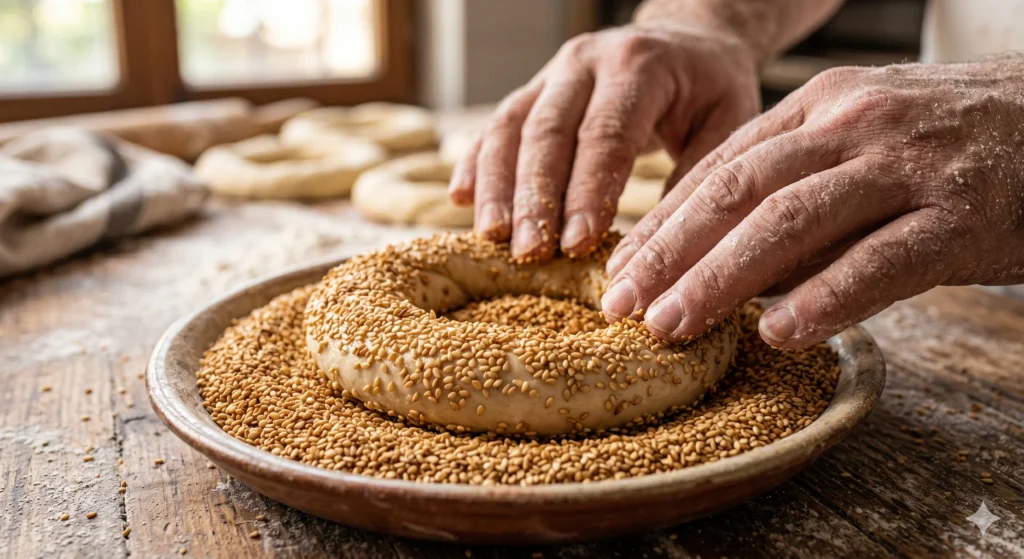
The shaped rings are dipped into a solution of grape molasses (pekmez) diluted with water. The molasses serves three functions: it adds flavour depth to the finished simit, it acts as the adhesive that holds the sesame coating in place, and it is responsible for the deep caramelised colour of the finished crust.
Step 3 — The Sesame Coating
Immediately after the molasses bath, the rings are pressed into or rolled through trays of raw sesame seeds. The seeds must adhere uniformly across the entire surface — top, bottom, and sides. Uneven coverage is a clear quality indicator: well-produced simit has no bare patches.
Step 4 — Baking
The coated rings are baked at high temperature in a deck oven. The heat caramelises the molasses glaze, toasts the sesame seeds to a deep golden colour, and creates the characteristic crisp outer crust. The interior of the simit ring remains soft throughout.
Step 5 — Partial Baking for Frozen Wholesale Supply
For frozen simit produced for retail and HoReCa supply chains — including the Lezza Foods range — the rings are baked to approximately 80% completion before being blast-frozen. This process preserves both the sesame coating integrity and the dough structure. When the buyer finishes the simit in their own oven, the result is as close as possible to freshly baked.
Partial baking to 80% is the industry standard for premium frozen bakery products and is what makes it possible to deliver authentic simit quality consistently at European wholesale and retail scale.
Types of Simit: A Product Guide for Buyers
Not all simit is the same. Understanding the product variations available helps buyers select the right SKUs for their specific channel and customer.
Classic Simit
Classic simit is the original format — a plain wheat ring, molasses-glazed, fully coated in sesame seeds. This is the simit that has defined the product for centuries. It is the everyday breakfast simit, the street food simit, the format that drives the highest volume in frozen wholesale and retail across Europe.
For most retail buyers entering the simit category for the first time, classic simit in single-serve format is the natural starting point.
Sweet Simit
Sweet simit incorporates additional sweetness into both the dough and the glaze. The result is slightly softer, with a more indulgent flavour profile that sits closer to the patisserie end of the bakery spectrum. Sweet simit performs particularly well in café settings, premium retail environments, and food service contexts where a sweeter bakery offer rounds out the range.
Sweet simit also appeals strongly to families and younger consumers, making it an effective range extension once the classic simit is established.
Pack Formats by Channel
Simit is produced in formats tailored to different commercial applications:
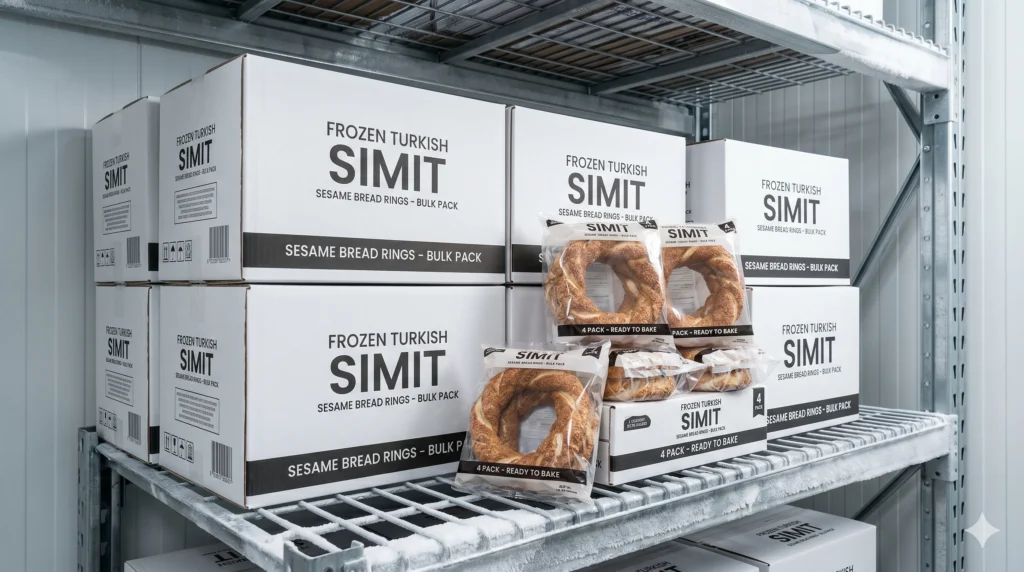
- Single-serve retail packs (individual rings, typically 100–135g) — ideal for supermarket retail, convenience formats, forecourt, and impulse purchase occasions.
- Multipacks (e.g., 4 rings per pack) — designed for family consumption, weekly grocery shopping, and promotional mechanics. Multipacks improve basket value and reduce the per-unit cost to the consumer.
- Bulk foodservice cartons — large-quantity supply for HoReCa operators: hotels, restaurant groups, café chains, and catering businesses where volume consistency and competitive per-unit cost matter most.
Simit in European Food Service: The HoReCa Opportunity
For HoReCa buyers, simit represents a compelling menu addition that requires minimal kitchen infrastructure and generates strong gross margin potential.
Breakfast and Brunch
Simit is fundamentally a breakfast bread. In Turkey, it is eaten every morning alongside white cheese, sliced tomatoes, cucumbers, olives, and black tea — a format known as kahvaltı that has been gaining attention across European food service as a premium brunch concept.
A hotel breakfast buffet that incorporates simit alongside standard European items delivers a genuine point of differentiation. The visual impact of a tray of golden sesame rings on a buffet counter is immediate. Guests notice it. They remember it.
Café operators can serve simit open-faced with cream cheese, labneh, or hummus. The crispy exterior of simit holds toppings without becoming soggy — a functional advantage over softer bread formats that operators who have tested it appreciate immediately.
Grab-and-Go Snacking
Beyond breakfast, simit works as a premium grab-and-go snack. Baked from frozen in under ten minutes, a freshly finished simit at the counter is a visually distinctive, high-margin impulse product that stands apart from standard panini, wraps, and croissants.
Margin Positioning
Because simit remains relatively unfamiliar to mainstream European food service consumers, operators can position it as a premium, artisan, or authentically Turkish product and price accordingly. The input cost of simit in frozen wholesale format is competitive. That gap between input cost and achievable menu price makes simit an attractive contributor to gross margin for HoReCa operators.
Simit in European Retail: Where It Fits on the Shelf
For retail buyers, simit has a clear path into several existing category positions — none of which require major range restructuring.
Frozen Bakery
The largest immediate opportunity for simit in European retail is the frozen bakery fixture. The frozen-to-bake format maps directly onto the consumption occasions already established by frozen baguettes, part-baked rolls, and frozen croissants — categories with a long, consistent performance record in European supermarkets.
Frozen simit requires no new consumer behaviour to drive trial. The “bake from frozen” occasion is well understood. The differentiation is the product itself: its flavour, its visual impact on shelf, and the cultural story behind it.
World Foods and Mediterranean Aisle
In retailers with a dedicated world foods or Mediterranean section, simit is a logical addition. It can be ranged alongside other Turkish and Mediterranean staples — pita, flatbreads, Turkish tea, preserved vegetables — to create a coherent destination section for the growing segment of European shoppers seeking authentic international products.
Private Label Development
For grocery retailers and food service operators looking to elevate their private label bakery programmes, premium simit represents a high-growth, lucrative opportunity. As a distinct alternative to standard bakery offerings, this traditional sesame-crusted bread ring allows retailers to differentiate their in-store ranges, capture emerging consumer trends, and drive long-term loyalty.
As a leading wholesale bakery supplier, we offer scalable, high-quality private label simit solutions—available in pre-proved, frozen (bake-off), or fully baked formats. Partnering with us enables retailers to introduce a culturally authentic, premium own-brand product that delivers exceptional value to consumers while securing superior profit margins against branded competitors.
Sourcing Simit in Europe: What to Look For in a Supplier
Whether you are building a retail range or a food service offering, these are the criteria that determine whether a simit supplier can meet your commercial requirements.
Product Quality — The Three Non-Negotiables
Always request baked samples before committing to a supplier. Evaluate three things after baking to the supplier’s stated specification:
Sesame coverage — the entire ring surface must be uniformly coated. Bare patches indicate either an insufficient molasses bath or a poorly calibrated coating process. Well-produced simit has no bare areas.
Crust colour — deep golden-brown after baking. Pale simit signals an insufficient molasses glaze, under-baking, or incorrect oven temperature specification. Correct simit colour is visually striking and immediately distinguishable from an underperforming product.
Crumb texture — soft and slightly chewy inside, with a clear and satisfying contrast to the crisp exterior. Doughy, dense, or gummy interiors indicate incorrect dough formulation or underbaking at the partial-bake stage.
EU Food Safety Certification
The production facility must operate under HACCP compliance and hold current BRC or IFS certification. Request documentation. For frozen simit specifically, verify that the blast-freezing process is validated and that shelf life claims are supported by testing data.
Pack Format Flexibility
A capable supplier offers simit in the formats your business needs — single-serve, multipack retail, and bulk foodservice carton — with minimum order quantities appropriate for initial range trials.
Private Label Capability
If private label is part of your plan, ask for evidence of existing private label clients in the food sector. Verify the supplier’s ability to meet your specific packaging, labelling, and market compliance requirements.
European Logistics Infrastructure
Simit is a frozen product. Cold chain consistency across your distribution footprint is non-negotiable. A supplier based in continental Europe will offer materially shorter lead times, simpler cold chain logistics, and lower freight costs than one shipping from outside the EU.
Why Lezza Foods for Simit Wholesale
Lezza Foods BV has been manufacturing and supplying premium Turkish and Mediterranean food products to European retail and HoReCa markets since 2013. Based in Mechelen, Belgium, with active distribution across 20+ European countries and more than 20 private label brands in production, Lezza Foods is one of Europe’s established specialists in authentic Anatolian bakery at commercial scale.
The Lezza Foods simit range is designed to deliver authentic quality in a frozen format engineered specifically for European commercial applications — from supermarket frozen bakery fixtures to hotel breakfast operations.
The Lezza Foods Simit Range
Lezza Foods currently supplies four simit SKUs, spanning both classic and sweet formats and the pack sizes needed for retail and HoReCa channels.
The 125g single-serve classic simit is the core retail SKU — 80 pieces per carton, ideal for supermarket frozen bakery and impulse purchase settings. This is the 125g simit pack designed for retailers entering the simit category for the first time.
The 4×10⁵g retail multipack packs four classic simit rings at 105g each — 420g total per pack — for the weekly grocery shop. It is pre-baked to 80% and designed for easy consumer finishing at home. The 4×10⁵g multipack is suited to family repeat purchase and value positioning.
For buyers seeking a sweeter format, the 135g sweet simit delivers a more indulgent flavour profile — ideal for café and premium retail settings. The 160g sweet simit offers a larger portion format for food service operators where a more generous serve is the right commercial call.
All four simit SKUs are available for private label. Wholesale enquiries are welcome from retail chains, HoReCa procurement teams, wholesale distributors, and private label brand owners across Europe.
How to Serve Simit: Practical Ideas for Food Service and Retail Buyers
For buyers building consumer communications or menu concepts, these are the serving occasions that resonate most strongly with European audiences.
The Turkish Breakfast Board
The traditional simit occasion is the Turkish breakfast spread: the sesame ring served alongside white cheese (feta is the most accessible European equivalent), sliced tomatoes, cucumbers, olives, and strong black tea. This translates directly to European food service as a premium breakfast or brunch plate.
Hotels, cafés, and all-day dining restaurants can implement a Turkish breakfast board with minimal operational complexity. The cultural story behind simit does much of the marketing work independently.
Simit with Spreads and Dips
The crispy, sesame-coated exterior and the soft, slightly chewy interior of simit make it an ideal vehicle for spreads and dips. In European food service, these pairings work particularly well:
- Cream cheese with chives, dill, or za’atar
- Labneh with olive oil and chilli flakes
- Hummus with roasted peppers
- Butter and honey — especially effective with sweet simit
- Avocado, smoked salmon, or soft-boiled egg for premium brunch positioning
Simit as a Standalone Grab-and-Go Snack
A freshly baked simit served warm at a café counter is an immediately compelling impulse product. The ring format is naturally portable — it can be eaten without a plate or bag in most contexts. For food-to-go operators, simit baked fresh from frozen is a differentiated, high-margin item.
On-Pack Guidance for Retail
For retail listings, on-pack communication should clearly convey:
- The authentic Turkish origin of simit
- The sesame and molasses preparation method
- Baking instructions from frozen (typically 5–8 minutes at 180–200°C)
- One or two serving suggestions that make simit immediately accessible to consumers encountering the product for the first time
Simit, EU Allergens, and Labelling Compliance
Allergen compliance is non-negotiable for any buyer sourcing simit for European retail or food service.
Simit contains two regulated allergens: gluten (wheat) and sesame. Sesame was added to the EU mandatory allergen list under Regulation (EU) 2021/382, amending Annex II of Regulation (EU) No 1169/2011. This change is particularly relevant for any buyer who last reviewed their simit product labelling before 2022.
All simit product labelling must comply with current EU requirements in every market where the product is sold. Buyers must obtain a current product specification sheet from their supplier — one that includes the full ingredient declaration, allergen statement, and nutritional values per 100g and per portion. General category descriptions are not sufficient for regulatory compliance.
For reference nutritional data on sesame seeds, the USDA FoodData Central database is a reliable source when preparing product specification sheets or consumer-facing nutritional content.
The Commercial Case for Simit in Europe
The argument for adding simit to your range or menu rests on five points that are reinforcing each other simultaneously in the European market:
Growing structural category support. Turkish and Mediterranean food in Europe is not a trend — it is a sustained category shift. Simit benefits from this as the category moves beyond its entry-level products.
Genuine product differentiation. In a crowded frozen bakery fixture, simit earns its own space on visual, flavour, and provenance grounds. It does not need to compete for position within an existing subcategory.
Cross-channel versatility. Retail, HoReCa, food-to-go, private label — simit works across all four channels from the same SKU range.
Established demand base with mainstream upside. The diaspora market provides a reliable demand floor. The growing European mainstream consumer interest provides the growth ceiling.
Operational simplicity. Frozen-to-bake from 80% pre-baked. No specialist equipment. No complex preparation. Any oven, any kitchen, any operator can finish simit successfully.
For wholesale distributors specifically, simit can be sold into multiple end channels from a single SKU range sourced from one EU-based manufacturer — a logistics and margin efficiency that few imported bakery products can match.
Frequently Asked Questions About Simit
What is simit?
Simit is a Turkish sesame bread ring — circular in shape, glazed with grape molasses, and entirely coated in sesame seeds before baking. It is Turkey’s most widely consumed street food and is now available in frozen wholesale format for European retail and HoReCa buyers.
How is simit different from a bagel?
Bagels are boiled before baking, producing a dense and chewy crumb. Simit is dipped in molasses and coated in sesame seeds before baking, producing a crisper, lighter, and nuttier bread. The two products are complementary rather than competitive.
Is simit sweet or savoury?
Classic simit is savoury, with a very subtle background sweetness from the molasses glaze. Sweet simit variants incorporate additional sweetness into the dough and glaze, positioning them for more indulgent or café-style occasions.
How do you bake frozen simit?
Lezza Foods simit is 80% pre-baked. Finish in a preheated oven at 180–200°C for approximately 5–8 minutes directly from frozen. No defrosting required. Always follow the baking instructions on the product packaging.
What allergens does simit contain?
Simit contains gluten (wheat) and sesame, both of which are regulated allergens under EU food labelling law. Always obtain a current product specification sheet from your supplier before listing simit in any market.
Is simit available for private label?
Yes. Lezza Foods produces simit under private label for retail chains, wholesale distributors, and brand owners across Europe. Contact the Lezza Foods commercial team to discuss specifications, volumes, and timelines.
Where can I source simit wholesale in Europe?
Lezza Foods BV supplies frozen simit wholesale across 20+ European countries from Mechelen, Belgium. Request a quote for pricing, carton specifications, lead times, and private label options.
Ready to Add Simit to Your Range?
Simit has earned its place at the European table — and the commercial window for first-mover advantage in mainstream European retail and food service is open right now.
The authentic origin story, the outstanding flavour, the visual impact on shelf and buffet, and the operational simplicity of the frozen-to-bake format make simit one of the most commercially compelling frozen bakery opportunities available to European buyers today.
Lezza Foods has been supplying authentic Turkish and Mediterranean food products to European retail and HoReCa since 2013. The simit range is produced to consistent quality standards, available in formats that serve every channel, and ready for private label development.
Browse the full Lezza Foods product range to explore all available bakery SKUs, download the Lezza Foods wholesale catalogue for full product specifications, or request a quote directly for simit wholesale pricing and private label enquiries.