Spinach Borek: The Turkish Filo Pastry European Menus Are Missing
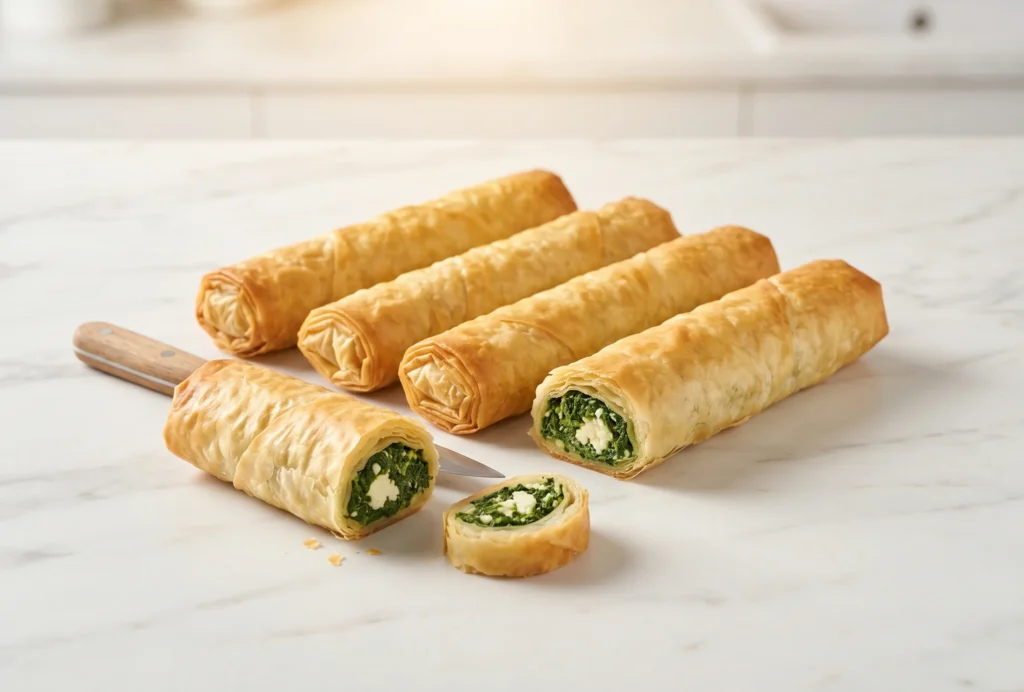
Spinach borek is the second most popular variety in the Turkish pastry family — and one of the most commercially underserved products in European food service and retail. While cheese borek has been building mainstream visibility across European hotel breakfast programmes and café counters, its counterpart has been largely absent from wholesale catalogues and retail shelves. That absence is a commercial opportunity.
For HoReCa procurement managers, retail category buyers, and wholesale distributors building a borek range, spinach borek is the natural range extension after cheese. It captures a different consumer — the flexitarian, the vegetarian, the health-conscious premium shopper — while maintaining the same operational simplicity and the same authentic Turkish provenance that makes the category commercially compelling.
What Is Spinach Borek?
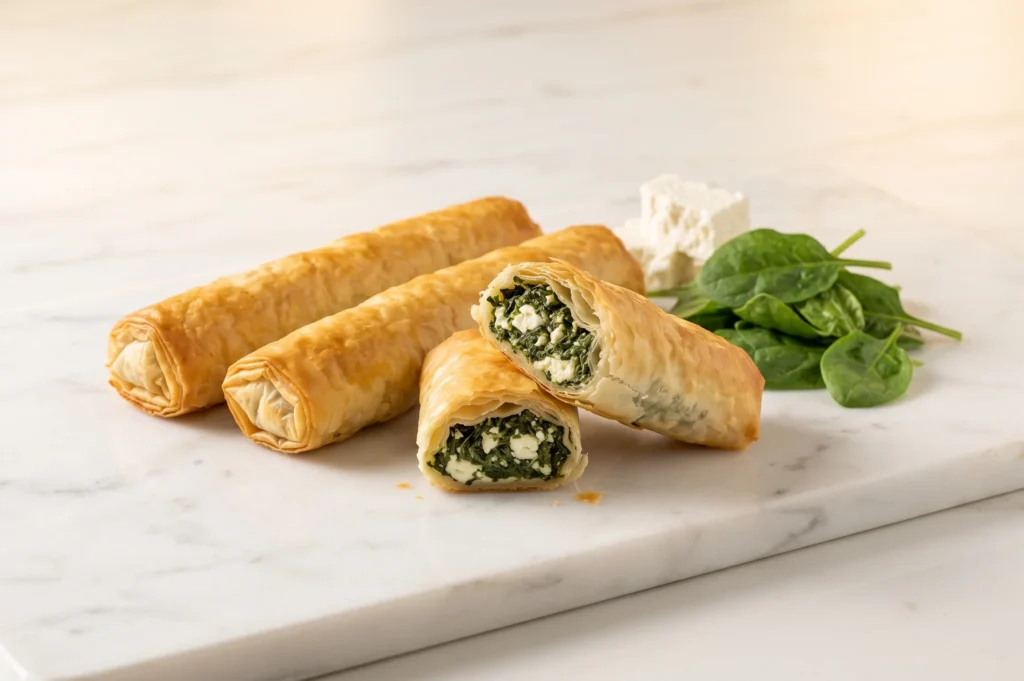
Spinach borek is a Turkish filo pastry made from thin sheets of yufka dough wrapped or layered around a filling of spinach and white cheese — typically beyaz peynir or feta — seasoned with onion, salt, and pepper. The filling is the defining characteristic: the spinach is cooked down to remove excess moisture before combining with the cheese, producing a dense, flavourful, and well-structured filling that holds its shape and distributes evenly through the pastry during baking.
The result is a pastry that is distinctly earthier and more complex in flavour than its cheese-only counterpart. It adds a vegetable depth that makes the product feel more substantial and more nutritionally credible to the health-conscious consumer, while the white cheese maintains the mild, savoury character that makes borek immediately accessible across European palates.
Like all borek varieties, spinach borek can be produced in multiple formats — rulo (roll), tray, spiral — each suited to different commercial applications. The rulo format is the most commercially versatile for European buyers: individually portioned, hand-held, and easy to batch-bake from frozen for café counter or grab-and-go service.
Spinach Borek vs. Cheese Borek — A Commercial Comparison
| Spinach Borek | Cheese Borek | |
|---|---|---|
| Primary filling | Spinach + white cheese | White cheese + parsley |
| Flavour profile | Earthy, savoury, mildly salty | Rich, mildly salty, mildly herbal |
| Vegetarian | ✅ Yes | ✅ Yes |
| Consumer segment | Vegetarian, flexitarian, health-conscious | Broad — all segments |
| Allergen profile | Gluten, milk, eggs | Gluten, milk, eggs |
| Menu positioning | Vegetarian option, premium snack | Mainstream bakery, breakfast staple |
| Retail positioning | Premium, vegetarian, health-adjacent | Broad, mainstream, family |
For buyers who already range cheese borek, spinach borek is the natural companion — it expands the range into a different consumer occasion without requiring a different supply chain or preparation process.
Why Spinach Borek Is the Right Product for European Markets Right Now
The timing of spinach borek’s European commercial moment is driven by two converging trends that have been building for years and are now reaching the point of mainstream retail and food service impact.
The Vegetarian and Flexitarian Consumer Shift
European consumers are reducing meat consumption at a rate that has no precedent in modern food market history. The flexitarian movement — consumers who eat predominantly plant-based or vegetable-forward food without fully eliminating meat — is now the largest and fastest-growing dietary segment across UK, German, Dutch, Belgian, and French food retail.
For retail buyers and HoReCa operators, this shift creates a structural demand for premium, flavourful, vegetable-forward products that are genuinely satisfying rather than compromise alternatives. It fits this need precisely: a product with deep cultural authenticity, outstanding flavour, and a spinach-forward filling that communicates nutritional credibility without requiring health claims or specialised positioning.
According to spinach borek market data on European bakery trends, vegetable-filled pastry formats are among the fastest-growing subcategories within frozen international bakery — driven directly by the flexitarian and vegetarian consumer shift across European markets.
The Diaspora Demand Floor
The Turkish, Balkan, and Middle Eastern diaspora communities across Germany, the Netherlands, Belgium, France, and Austria already know and love it. For these communities, spinach borek is a regular purchase from specialist Turkish bakeries — the product they reach for when they want something lighter than cheese borek but equally authentic. That demand provides the same commercial floor that makes other borek varieties lower-risk range additions than most new international food products.
What is new is the connection between that established diaspora demand and the growing mainstream European vegetarian and flexitarian consumer — two groups whose product needs now overlap precisely in this format. For buyers building a range, this overlap is a commercial multiplier.
Spinach Borek for HoReCa — Serving Occasions
For hotel operators, café groups, and food service businesses, the product solves a specific and recurring operational problem: how to offer a credible, genuinely tasty vegetarian hot food option without building a separate preparation process or training kitchen staff on a new recipe.
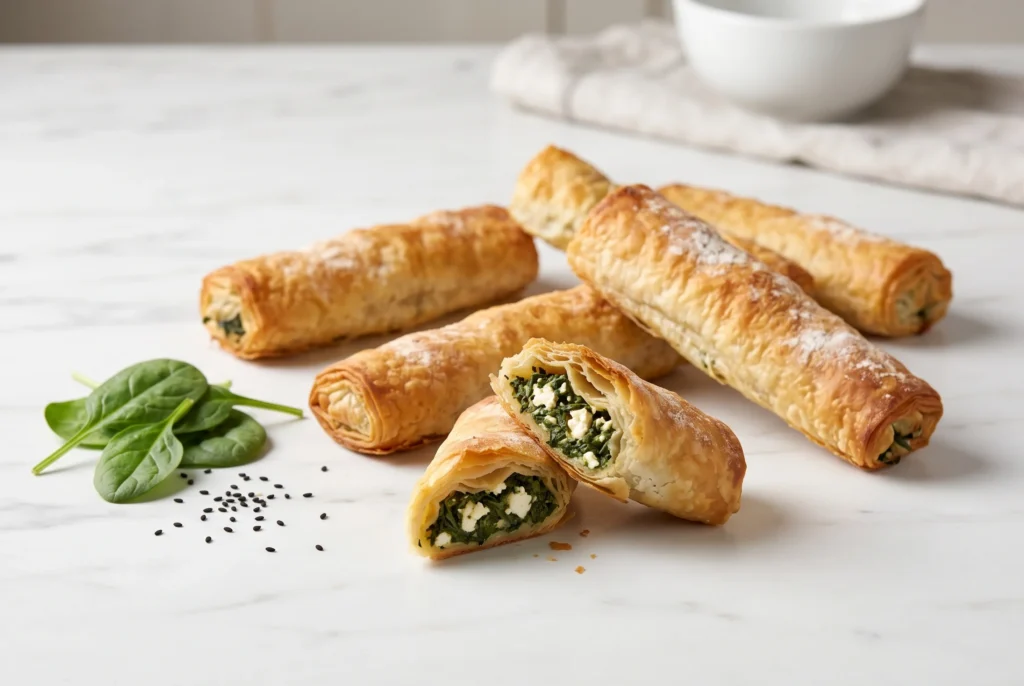
It finishes from frozen in a standard oven in 12 to 15 minutes. No preparation skill required. The product arrives at the guest warm, golden, and aromatic — with a vivid green spinach and cheese filling that communicates freshness and quality at first sight.
Hotel Breakfast Buffet
On a hotel breakfast buffet, spinach borek occupies a commercial position that cheese borek does not cover: the clearly labelled vegetarian hot pastry. Guests who avoid cheese-heavy options, guests who are reducing meat intake, and guests who simply want a more vegetable-forward breakfast item all engage with it in a way that a plain cheese pastry will not capture.
Positioned alongside its cheese counterpart on a Turkish or Mediterranean breakfast station, it gives operators a two-SKU offering that covers the full spectrum of guest dietary preferences — without adding complexity to the buffet setup or the kitchen prep.
Baking Spinach Borek from Frozen
| Format | Weight | Oven Temp | Time from Frozen | Result |
|---|---|---|---|---|
| Rulo borek rolls | 150g | 190°C | 12–15 min | Crisp exterior, melted spinach filling |
Always follow the baking specification from your supplier’s product sheet. Test one batch in your specific oven before committing to service quantities.
Café Counter and Grab-and-Go
At a café counter, spinach borek in rulo format is a premium snack that performs strongly with the growing segment of café customers actively seeking vegetable-forward options. Warm, hand-held, and visually distinctive from standard pastries, it appeals to the mid-morning and lunchtime snacker who wants something filling and flavourful without a meat filling.
À La Carte and Brunch Menus
For restaurants and all-day cafés, it works as a plated vegetarian starter — two or three rulo rolls served warm with a side of labneh or yogurt dip, a green salad, and a wedge of lemon. The presentation is simple and the preparation time is minimal, but the resulting plate has genuine restaurant quality and authentic cultural character.
Spinach Borek for Retail — Category Positioning
For retail category managers, spinach borek extends the borek range into a consumer segment that cheese borek alone does not fully capture — the vegetarian and flexitarian shopper who specifically seeks products with a vegetable-forward filling and a premium, authentic character.
Shelf Positioning
It has the same natural shelf positions as other borek varieties — frozen bakery and world foods — but with an additional opportunity in the vegetarian or free-from freezer section where it exists. On pack, spinach borek should carry a clear vegetarian label where the recipe qualifies, giving the product an additional searchability advantage with the target consumer segment.
Private Label
For retailers with active own-label frozen pastry programmes, it is a strong private label candidate alongside cheese borek. The two products can be developed together as a private label borek range — a classic and a spinach variant — with consistent pack design that signals both authenticity and range coherence. This dual private label approach gives retailers more shelf presence and more consumer occasion coverage from a single supplier relationship.
Spinach Borek vs. Spanakopita — What European Buyers Need to Know
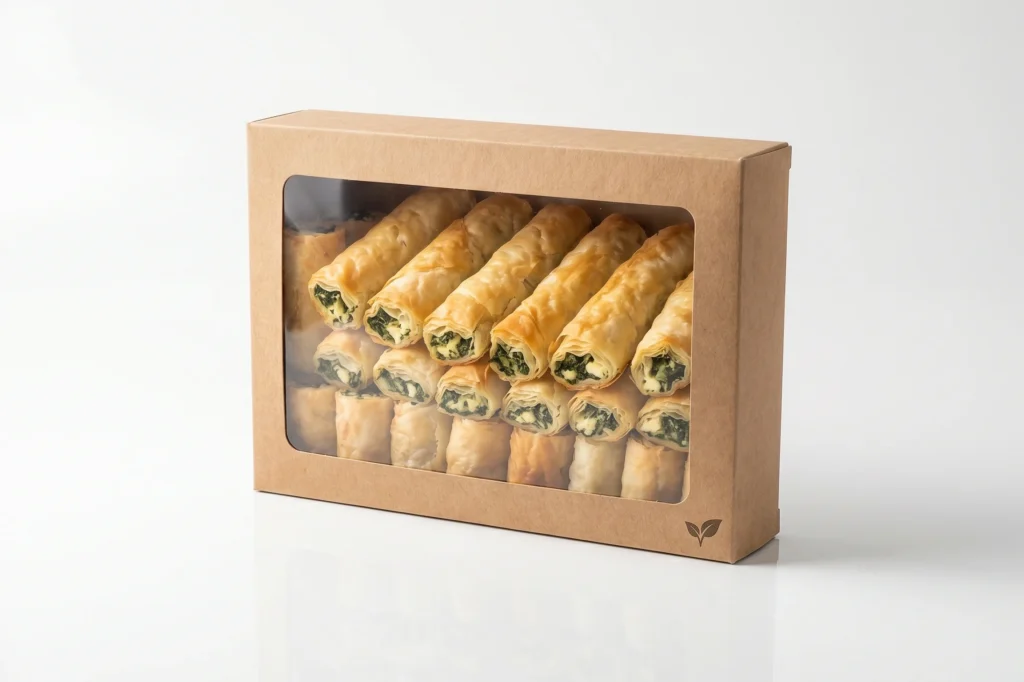
The most common reference point European buyers use when first encountering spinach borek is spanakopita — the Greek spinach and feta pastry that has been in European retail and food service for years. Understanding the differences is important for product positioning, consumer communication, and category differentiation.
| Spinach Borek | Spanakopita | |
|---|---|---|
| Origin | Turkey | Greece |
| Dough | Yufka — slightly thicker, more pliable | Thin phyllo — delicate, multiple layers |
| Filling | Spinach + white cheese (beyaz peynir) | Spinach + feta |
| Flavour | Earthy, mildly salty, slightly creamy | Sharper, tangier (feta-forward) |
| Formats available | Roll, tray, spiral, individual | Triangles, tray slices, spiral |
| Wholesale availability EU | Growing — specialist suppliers | Well-established |
| Commercial opportunity | First-mover advantage available | Competitive, mature category |
The commercial case for ranging spinach borek alongside spanakopita is strong. They serve the same dietary occasion but deliver a different flavour experience and a different cultural story. A retail buyer who ranges both gives the vegetarian consumer a genuine choice. The cultural novelty of this product relative to spanakopita is also a commercial asset — a consumer who already buys spanakopita regularly has no specific reason to trial it again. A consumer who has never encountered it before has every reason to try something new, and the lower competitive noise in the spinach borek category means no overcrowding at the shelf position.
How to Source Spinach Borek in Europe
Sourcing from a reliable European wholesale supplier requires the same core criteria as other borek varieties — with specific attention to the quality of the spinach filling, which is more variable between producers than the simpler white cheese filling of cheese borek.
The three quality tests are:
Filling moisture content. A correctly produced product has a filling with very low residual moisture — the spinach has been fully cooked down and excess water removed before mixing with the cheese. A product that releases liquid during baking has been produced with insufficiently drained spinach — a common quality failure in lower-specification products.
Filling distribution. The spinach and cheese filling should be evenly distributed throughout the roll or tray — not concentrated at one end or insufficiently present. For the rulo format specifically, the filling should extend to within a centimetre of both ends of the roll.
Flavour balance. The spinach and cheese should be clearly present and in balance — the earthy depth of the spinach complemented by the mild saltiness of the white cheese, with no off-notes from the pastry.
For allergen compliance, the product contains gluten (wheat), milk, and eggs as regulated allergens under EU food labelling law. Full compliance with spinach borek allergen compliance requirements under Regulation (EU) 2021/382 is mandatory for all EU retail and food service listings. Always request a current product specification sheet from your supplier before listing.
For buyers who want to explore the full borek wholesale category, detailed sourcing guidance is available in the borek wholesale guide on this site.
The Lezza Foods Spinach Borek Range
Lezza Foods BV has been manufacturing and supplying authentic Turkish pastry to European retail, HoReCa, and private label buyers since 2013. Based in Mechelen, Belgium, with active distribution across 20+ European countries and more than 20 private label brands in current production, Lezza Foods is one of Europe’s established specialists in authentic Turkish borek at commercial scale — including this format that is now attracting growing interest from vegetarian-aware retail and food service buyers across the continent.
Every product in the range is made to authentic Turkish specification with quality filling ingredients, genuine yufka-style filo layers, and a blast-frozen production process that delivers consistent results across every carton and every delivery.
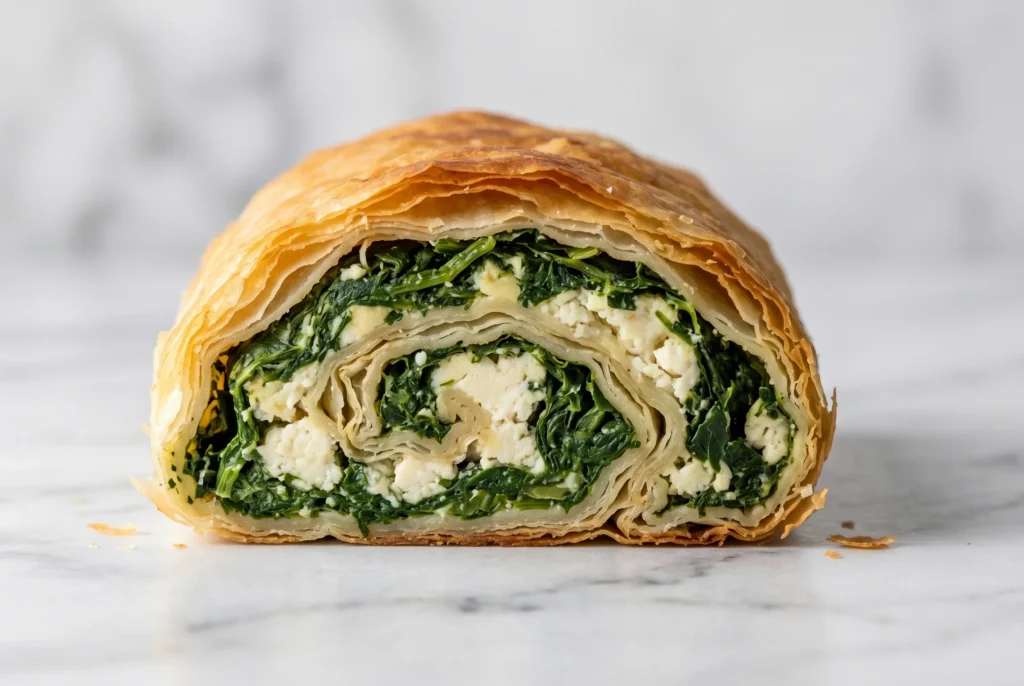
Lezza Foods supplies spinach borek in a 150g rulo format — a rolled filo pastry with a spinach and white cheese filling, individually portioned and sized for both retail and café counter applications. This is the recommended SKU for buyers introducing the product to their range for the first time: the rulo format is the most operationally accessible, the most visually appealing at a counter display, and the most commercially versatile across retail, café, and hotel food service channels.
For buyers who want to offer a classic layered format alongside the spinach rulo, the spinach borek su borek 500g format can be ranged as a complementary product — giving buyers a full layered and roll format borek offering from a single supplier.
All spinach borek SKUs are available for private label across Europe. Download the spinach borek catalogue for full product specifications, baking instructions, allergen declarations, and carton data, or request a spinach borek quote for wholesale pricing, minimum order quantities, and private label enquiry.
Frequently Asked Questions: Spinach Borek
What is the best spinach borek format for hotel menus?
The rulo (roll) format is the most practical for hotel food service contexts. At 150g per individual roll, it is sized for both buffet service and à la carte plating. For buffet operations, rulo rolls can be batch-baked and held in a heated display throughout service without significant quality loss. For à la carte, two or three rolls plated with a yogurt dip and salad create a complete and visually impressive vegetarian starter or light lunch dish.
Is spinach borek suitable for vegetarian menus?
Yes — spinach borek contains no meat and is suitable for vegetarian menus. The filling is spinach and white cheese, with eggs and butter typically present in the pastry. It is not vegan. For food service operators and retailers who carry vegetarian menu labelling, the product qualifies as a vegetarian item and should be labelled accordingly. Always verify the full ingredient declaration with your supplier’s current specification sheet before making any dietary claims.
Is spinach borek available for private label in Europe?
Yes. Lezza Foods produces the product under private label for retail chains, HoReCa groups, and wholesale distributors across Europe. The rulo spinach borek format is available for own-label development with full flexibility on packaging specification, multi-language allergen labelling, and production scheduling.
What is spinach borek made of?
It is made from thin sheets of yufka or filo dough wrapped around a filling of cooked spinach, white cheese (typically beyaz peynir or feta-style), onion, salt, and pepper. The filled pastry is rolled into a cylinder and baked until the exterior is crisp and golden. In frozen wholesale format, it is partially baked and blast-frozen, then finished in a preheated oven at 190°C for 12–15 minutes from frozen. It contains gluten (wheat), milk, and eggs as regulated EU allergens.
How do you bake frozen spinach borek?
It bakes directly from frozen — no defrosting required. Preheat your oven to 190°C. The 150g rulo format takes approximately 12–15 minutes. The product is ready when the exterior is deeply golden and the filo layers are visibly crisp. Do not underbake — a pale exterior indicates insufficient baking and results in a doughy pastry. Always follow the baking specification on the supplier’s product sheet.
What is the difference between spinach borek and spanakopita?
Both are filo-based spinach pastries, but spinach borek uses yufka — a slightly thicker, more pliable Turkish dough — and combines spinach with mild white cheese (beyaz peynir), producing an earthier, creamier flavour. Spanakopita uses thinner Greek phyllo dough and combines spinach with feta, which has a sharper, tangier profile. Spinach borek is also available in a wider range of formats, giving buyers more commercial flexibility across retail and food service applications.
Ready to Add Spinach Borek to Your Range or Menu?
Spinach borek is the borek variety for the European buyer who wants to extend their Turkish pastry range into the vegetarian and flexitarian consumer segment — with a product that is operationally simple, commercially credible, and genuinely differentiated from the spanakopita alternatives that already occupy that shelf position.
Lezza Foods has been producing authentic Turkish pastry for European retail and HoReCa since 2013. The range is consistent, EU-sourced, available in formats suited to retail and food service, and ready for private label development.
Browse the full spinach borek range on the Lezza Foods website, download the spinach borek catalogue for complete product specifications, or request a spinach borek quote for wholesale pricing and private label enquiry.