Baklava Place of Origin: The Complete Guide to Where Baklava Comes From and Why It Matters
The baklava place of origin is one of the most debated questions in food history — and one of the most searched. Turks, Greeks, Lebanese, Syrians, Iranians, Armenians, and Serbians have all claimed baklava as their own, with varying degrees of historical justification. The baklava place of origin debate has generated diplomatic incidents, academic papers, and more heated arguments than almost any other question in the food world.
The honest answer to the baklava place of origin question is that it cannot be reduced to a single country or a single moment in history. The product as we know it today is the result of culinary threads from multiple civilisations converging over centuries — in the kitchens of ancient Assyria, in the Byzantine palaces of Constantinople, in the nomadic food traditions of Central Asia, and most decisively in the imperial kitchens of the Ottoman Empire, from which baklava spread across three continents in something close to its modern form.
What is not in dispute — and what is officially recognised — is where the finest baklava in the world is produced today. The baklava place of origin, in its highest commercial and culinary expression, is Gaziantep, Turkey: a city whose Antep pistachios, generational production expertise, Protected Geographical Indication, and UNESCO recognition make it the undisputed global capital of authentic baklava production.
This guide traces the baklava place of origin from its earliest documented roots to the present day, explains the competing national claims and what is historically valid about each of them, and explores why the question of origin is not just a matter of culinary pride but a commercially relevant consideration for B2B buyers building baklava ranges in European markets.
What Is the Place of Origin of Baklava?
The baklava place of origin question is complicated by the fact that “baklava” as a specific named product with a documented recipe appears relatively late in culinary history — but the techniques and ingredient combinations that define it appear much earlier, in multiple cultures, without a clear line of descent from a single point of origin.
The baklava place of origin is therefore best understood not as a specific country or city but as a culinary convergence zone: the intersection of Anatolian, Central Asian, and Eastern Mediterranean food traditions, formalised in the institutional kitchens of the Ottoman Empire and then dispersed across the empire’s vast geographic range. The core technique of baklava — layering thin dough with fat and a sweet filling, then baking and finishing with syrup — appears in culinary traditions across a broad arc stretching from Central Asia through Anatolia to the Eastern Mediterranean.
The specific combination of ingredients that defines modern baklava — extremely thin filo pastry, nut filling, butter between layers, sugar or honey syrup — crystallised in the Ottoman Empire, most likely in the imperial kitchens of Topkapı Palace in Istanbul, at some point between the 15th and 17th centuries. From that point, the baklava place of origin story becomes one of dispersal: the product travelled across the empire’s geographic range, adapting to local ingredients and tastes in each region, producing the diverse family of baklava traditions that exist today.
What emerged from that dispersal was not a single standardised product but a family of related products, each adapted to the culinary traditions of the regions where it took root. The baklava place of origin debate is, in many ways, a debate about which branch of this family best represents the original — a question that different countries answer differently, and that food historians continue to argue about without reaching consensus. What is agreed is that the baklava place of origin that produces the world’s finest product today is Gaziantep — a fact supported by Protected Geographical Indication status, UNESCO recognition, and the unanimous verdict of serious food authorities worldwide.
The Ancient Roots: Where the Baklava Place of Origin Story Begins
The baklava place of origin story begins not with baklava itself but with its precursors — the layered pastry preparations that appear in culinary records across multiple ancient civilisations long before the specific product we recognise today existed.
The earliest documented evidence relevant to the baklava place of origin comes from ancient Assyrian records — clay tablets from what is now northern Iraq and southeastern Turkey, dating to roughly 800 BCE, that describe thin dough layers baked with honey and nuts. These preparations are not baklava in any modern recognisable sense, but they establish the layered dough and sweet filling principle in the geographic region that would later produce baklava’s Ottoman-era formalisation. The geographic overlap between ancient Assyria and modern southeastern Turkey — the region where Gaziantep sits — is one of the more compelling threads in the baklava place of origin argument for Turkish primacy.
Byzantine culinary tradition contributes a second thread to the baklava place of origin story. Constantinople — the Byzantine capital that became Ottoman Istanbul — had a sophisticated pastry tradition that included thin dough preparations with nut and honey fillings. Some food historians argue that the Byzantine gastris — a honey, nut, and dough confection documented in ancient Greek culinary sources — is a direct ancestor of baklava, making Constantinople a legitimate early baklava place of origin. Others dispute this lineage, arguing that the specific technique of paper-thin filo layering is an Anatolian and Central Asian innovation rather than a Byzantine one.
Central Asian nomadic food culture contributes a third thread. The Turkic peoples who migrated westward from Central Asia into Anatolia from the 10th century onward brought a thin dough layering tradition that is a plausible technical precursor to filo-based baklava. The argument that the thin dough layering technique central to baklava’s identity is a Turkic contribution to the Ottoman culinary tradition has significant historical support and is central to Turkey’s claim on the baklava place of origin.
What is clear from the historical record is that the baklava place of origin cannot be traced to a single invention event in a single location. The product is the result of centuries of culinary exchange, adaptation, and refinement across a geographic zone spanning modern Turkey, Iraq, Syria, Greece, and Iran.
The Ottoman Empire and the Standardisation of Baklava
The Ottoman Empire is the most important single chapter in the baklava place of origin story — not because it invented baklava from nothing, but because it took the diverse layered pastry traditions of the Anatolian and Eastern Mediterranean world and formalised them into the recognisable product that spread across three continents.
The Topkapı Palace kitchens in Istanbul were among the most sophisticated culinary institutions in the medieval and early modern world. The baklava makers — baklava ustası — occupied a distinct and prestigious position within this hierarchy, and the recipes they developed and refined in the palace kitchens are the direct ancestors of modern Turkish baklava. The Ottoman imperial kitchen is the most important single institution in the baklava place of origin story — the place where the product was elevated from a regional pastry to an imperial institution with standardised recipes and ceremonial significance.
The most celebrated manifestation of baklava’s imperial status was the Baklava Alayı — the Baklava Procession. On the 15th day of Ramadan each year, the Sultan would present trays of baklava to the Janissaries in a formal ceremony that combined military honour with culinary celebration. The Baklava Alayı is one of the most concrete pieces of historical evidence for the Ottoman Empire’s role in the baklava place of origin story — confirming both the product’s centrality to Ottoman court culture and the geographic concentration of its finest production within the empire’s Anatolian heartland.
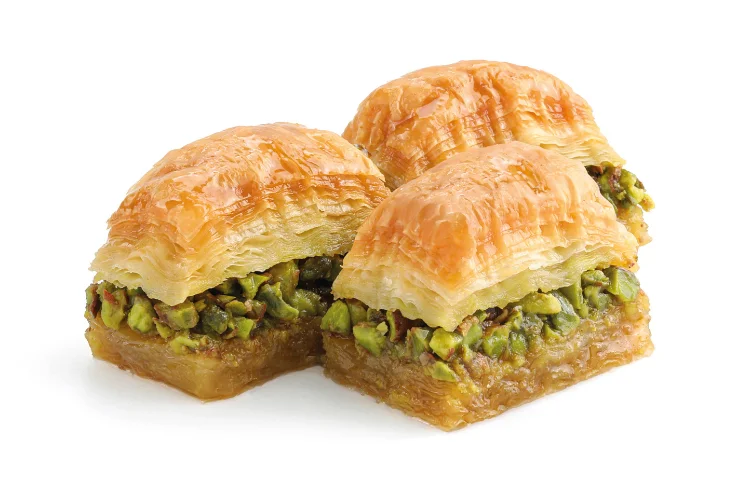
The Ottoman Empire’s geographic spread — at its height encompassing territory from Hungary to Yemen, from Algeria to Azerbaijan — is the mechanism by which the baklava place of origin dispersed so widely. As Ottoman culinary culture spread through conquest, trade, and cultural exchange, baklava went with it. Greek baklava, Lebanese baklawa, Serbian baklava, Bosnian baklava, Iranian baqlava, and Egyptian baklava all trace their lineage through the Ottoman culinary tradition — which is why the baklava place of origin debate involves so many countries with legitimate claims.
Gaziantep: Why This City Is the Definitive Baklava Place of Origin
If the baklava place of origin is the Ottoman Empire broadly, the answer to where the world’s finest baklava is produced today is far more specific: Gaziantep, in southeastern Turkey. Gaziantep’s claim to be the definitive baklava place of origin is grounded not only in historical precedence but in ingredient geography, production expertise, and official international recognition that no other city can match.
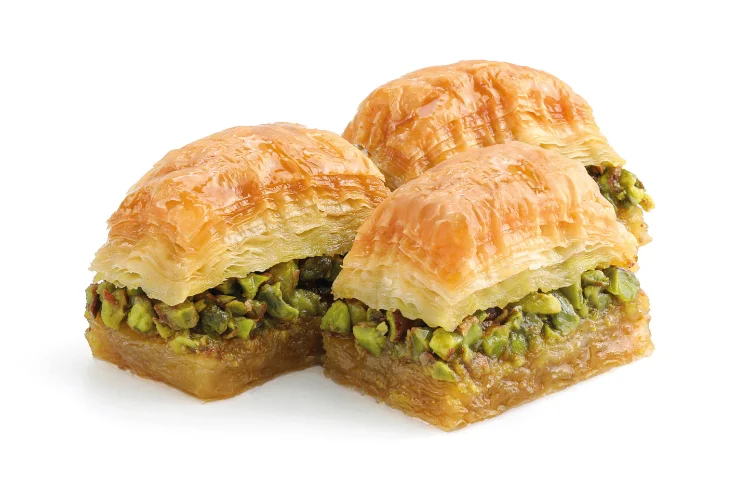
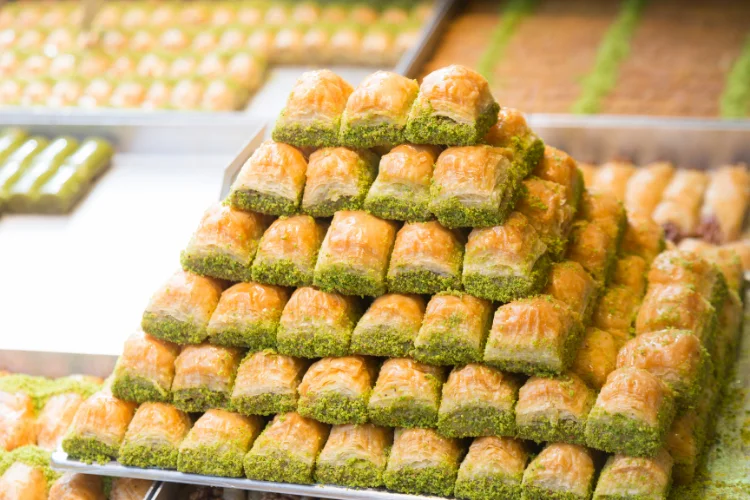
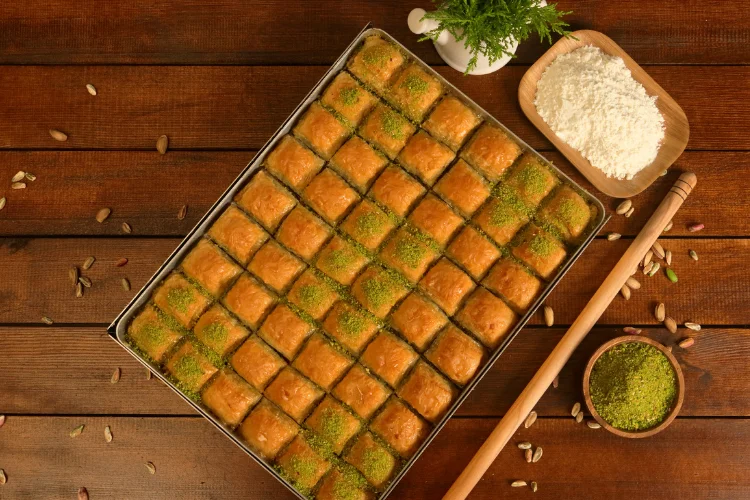
The Antep pistachio is the foundation of Gaziantep’s status as the premier baklava place of origin. Grown in the agricultural region surrounding Gaziantep, the Antep pistachio is smaller, more intensely flavoured, and more vivid green than any other pistachio variety in the world. The combination of soil, climate, and growing conditions in the Gaziantep region produces a nut uniquely suited to baklava — its flavour intensity complements rather than competes with the sweetness of the syrup, and its natural colour gives authentic Gaziantep baklava a visual distinctiveness that no substitute variety can replicate. A baklava place of origin that does not have access to Antep pistachios cannot produce the same product — regardless of how skilled the baker.
The concentration of baklava production expertise in Gaziantep is the second factor that makes it the authentic baklava place of origin for quality purposes. The city has been producing baklava commercially for centuries, and the accumulated technical knowledge is embedded in the workforce and the production culture of the city in a way that no other location can match. Gaziantep’s baklava makers — ustalar — are acknowledged globally as the highest authority on authentic production. This expertise cannot be relocated or replicated — it is part of what makes Gaziantep the baklava place of origin in the most meaningful sense.
The commercial infrastructure that has developed around the Gaziantep baklava place of origin is the third factor. The city has specialist filo producers, dedicated pistachio processing facilities, and a manufacturing ecosystem built around baklava that supports both artisan workshops and large-scale manufacturers who supply wholesale clients across Europe and the world.
The Protected Geographical Indication: Official Recognition of the Baklava Place of Origin
The most concrete institutional answer to the baklava place of origin question comes from intellectual property law: Gaziantep baklava holds a Protected Geographical Indication under Turkish law — official recognition that the baklava place of origin for the product sold as “Gaziantep Baklavası” is specifically the Gaziantep region, and that no product produced outside this geographic area can use the name.
A Protected Geographical Indication links a product’s name to its baklava place of origin — its geographic production location. The PGI for Gaziantep baklava specifies that only baklava produced within the defined geographic boundaries of the Gaziantep region, using production methods that meet established standards, can be sold under the Gaziantep Baklavası designation. This protection is analogous to the PGIs that cover Champagne, Parmigiano-Reggiano, and Scotch whisky in European law — it makes the baklava place of origin a legally protected commercial claim, not merely a marketing assertion.
For B2B buyers building premium baklava ranges in European markets, the PGI for Gaziantep baklava has direct commercial value. A product carrying the Gaziantep baklava place of origin designation is a product whose provenance has been officially certified. For retailers positioning baklava at a premium price point, this verifiable geographic claim supports the positioning in a way that a generic “Turkish baklava” label does not. The baklava place of origin story, backed by PGI status, is a retail communication tool with genuine commercial leverage.
Gaziantep’s UNESCO Creative City of Gastronomy status adds a second layer of international recognition to the baklava place of origin argument. The UNESCO designation recognises Gaziantep’s broader gastronomy heritage, of which baklava is the most internationally recognised element. For B2B buyers constructing provenance narratives for premium retail placement, the combination of baklava place of origin PGI status and UNESCO recognition provides a level of third-party credentialing that is commercially powerful.
Is Baklava Turkish or Greek? The Baklava Place of Origin Debate Explained
The Turkish-Greek baklava place of origin debate is the most publicly visible dimension of the broader question — and it is worth understanding what is historically valid about each claim, and why the debate is ultimately less commercially important than production quality.
The Greek claim to the baklava place of origin rests on two arguments. The first is Byzantine culinary heritage: Constantinople was the capital of the Byzantine Empire before it became the Ottoman capital, and Greek culinary historians argue that the proto-baklava preparations of Byzantine culinary tradition are a direct ancestor of modern baklava, giving Greece a baklava place of origin claim that predates the Ottoman period. The second argument is cultural continuity: Greek communities within the Ottoman Empire maintained their own baklava traditions over centuries, and Greek baklava — with its characteristic honey syrup and walnut filling — is a distinct and historically authentic expression of the product with its own legitimate baklava place of origin claim.
The Turkish claim to the baklava place of origin rests on the Ottoman standardisation argument: the baklava that spread across the world and is recognised globally as the archetypal product was developed and institutionalised in the Ottoman imperial kitchens, which were a Turkish cultural institution. The Protected Geographical Indication for Gaziantep baklava and the concentration of the world’s most respected production in Turkey further support the Turkish claim to the baklava place of origin for its highest-quality expression.

The honest historical position is that the baklava place of origin is neither exclusively Turkish nor exclusively Greek. It is the product of a shared culinary history across the former Ottoman world, in which both Turkish and Greek culinary traditions participated and from which both emerged with legitimate and distinct baklava expressions. The product differences between Turkish and Greek baklava — sugar syrup versus honey, pistachios versus walnuts, large pieces versus varied small formats — reflect genuine culinary differences between the two traditions, not evidence that one has a more legitimate baklava place of origin claim than the other.
Baklava Across the Middle East: The Arabic Baklava Place of Origin
The Middle Eastern dimension of the baklava place of origin story is often underrepresented in the Turkish-Greek debate, but it is historically substantial and commercially significant for B2B buyers serving Arabic consumer segments in Europe.
Lebanese baklawa is one of the most refined expressions of the Arabic baklava place of origin tradition. Beirut’s patisserie culture has produced baklawa makers whose craft rivals Gaziantep’s ustalar in technical sophistication. Lebanese baklawa is characterised by rose water and orange blossom syrup, smaller and more varied formats, and an emphasis on mixed nut combinations that reflects a different ingredient aesthetic from the single-nut purity of the Gaziantep baklava place of origin tradition.
Syrian baklawa shares many characteristics with the Lebanese tradition, with regional variations concentrated in Damascus and Aleppo — both ancient cities with deep pastry-making traditions that form part of the broader baklava place of origin story. Egyptian baklava tends toward honey syrup and walnut filling. Iranian baqlava — the Persian expression of the baklava place of origin tradition — uses cardamom and saffron, and is typically made with almonds or walnuts rather than pistachios.
For B2B buyers serving Arabic consumer segments in Europe, the Middle Eastern baklava place of origin tradition has direct commercial implications. Arabic-heritage consumers have specific product expectations that differ from those of Turkish-heritage consumers — and a supplier who can serve both baklava place of origin traditions from a single production relationship is commercially valuable for buyers whose customer base spans both communities.
Baklava Place of Origin in Different Countries Today
The baklava place of origin debate plays out differently in different countries today — each with their own authentic expression of the product and their own relationship to its history.
In Turkey, the Gaziantep baklava place of origin is a source of intense national culinary pride — a product with PGI protection, UNESCO recognition, and a production infrastructure that supplies baklava to export markets across the world. Istanbul also has a significant baklava culture, but it is Gaziantep that is recognised as the definitive baklava place of origin within Turkey itself.
In Greece, baklava is a deeply embedded part of the national culinary identity — made with honey and walnuts in most regional traditions. Greek baklava is not attempting to replicate Turkish production — it is a distinct baklava place of origin expression with its own historical legitimacy and its own devoted consumer base.
In Lebanon, baklawa patisseries are a central feature of food culture in Beirut and major cities — products of craftsmanship that have developed over centuries within the Arabic baklava place of origin tradition. In Serbia, Bosnia, and Albania, baklava is a deeply rooted part of food culture inherited from the Ottoman period — the Balkan expression of a baklava place of origin story that the Ottoman Empire dispersed across three continents.
Why the Baklava Place of Origin Matters for B2B Buyers
The baklava place of origin is not just a matter of culinary pride — it has direct commercial implications for B2B buyers building baklava ranges in European retail and foodservice markets.
Provenance is a retail differentiation tool, and the baklava place of origin is the provenance claim that carries the most commercial weight in this category. The ability to make a specific, verifiable geographic claim — “produced in Gaziantep, the protected geographical baklava place of origin” — supports premium shelf placement and premium price positioning in a way that a generic “baklava” claim cannot. Retailers who can tell the Gaziantep baklava place of origin story to their category buyers, and put that story on their packaging, are differentiating at the point of purchase.
PGI status and UNESCO recognition provide the third-party credentialing that makes the baklava place of origin claim commercially credible. For a retail buyer justifying a premium price point to their category managers, the combination of Protected Geographical Indication status and UNESCO Creative City of Gastronomy designation — both attached to the Gaziantep baklava place of origin — is a powerful supporting argument that requires no embellishment.
For foodservice buyers, the baklava place of origin story is a menu and sales team tool. A restaurant that can describe its baklava as sourced from Gaziantep — the officially recognised baklava place of origin — is making a credibility claim that resonates with the growing proportion of European consumers who seek authenticity in their food experiences.
FAQ: Everything People Ask About the Baklava Place of Origin
What is the place of origin of baklava?
The baklava place of origin is broadly Anatolia and the Eastern Mediterranean — the geographic zone where layered pastry traditions from Central Asian, Assyrian, Byzantine, and Ottoman culinary cultures converged. The Ottoman Empire formalised and standardised baklava in something close to its modern form, most likely in the imperial kitchens of Topkapı Palace in Istanbul between the 15th and 17th centuries. Today, the officially recognised place of origin for the world’s finest baklava is Gaziantep, Turkey, which holds a Protected Geographical Indication for Gaziantep Baklavası.
Where does baklava come from?
Baklava comes from the broader Anatolian and Eastern Mediterranean culinary tradition, formalised during the Ottoman Empire and dispersed across a vast geographic range through the empire’s expansion. The specific city most associated with the product’s finest production is Gaziantep in southeastern Turkey — the baklava capital of the world, home of the Antep pistachio, and holder of UNESCO Creative City of Gastronomy status.
Is baklava originally Greek or Turkish?
Both Greek and Turkish culinary traditions have legitimate historical claims to baklava. The Greek claim rests on Byzantine culinary heritage predating the Ottoman period. The Turkish claim rests on the Ottoman imperial kitchen’s formalisation and institutionalisation of the product, and on Gaziantep’s status as the world’s premier baklava production city. The honest historical position is that baklava belongs to the shared culinary heritage of the former Ottoman world — of which both Turkey and Greece were part — rather than exclusively to either nation.
Which country made the first baklava?
No single country can claim to have made the first baklava. The earliest layered pastry preparations appear in ancient Assyrian records from what is now northern Iraq and southeastern Turkey. The product in something close to its modern form was developed in the Ottoman Empire, which spanned parts of what are now Turkey, Greece, and much of the Middle East and Balkans. The country that today produces baklava to the highest standard and with official geographic recognition is Turkey — specifically Gaziantep.
Is baklava Turkish or Serbian?
Baklava is part of both Turkish and Serbian culinary traditions — as it is of Greek, Lebanese, Iranian, Bosnian, Albanian, and Bulgarian traditions — because all of these countries were part of the Ottoman Empire during the period when baklava became an established part of the region’s food culture. Serbian baklava, like Bosnian and Albanian baklava, is a direct inheritance of the Ottoman culinary tradition, typically made with walnuts and honey in a form that reflects the ingredient availability and taste preferences of the Balkans.
Which city is famous for baklava?
Gaziantep, Turkey, is the city most famously associated with baklava in the world. The city holds a Protected Geographical Indication for Gaziantep Baklavası and UNESCO Creative City of Gastronomy status. Its unique Antep pistachio growing region, centuries of production expertise, and the concentration of the world’s most skilled baklava makers make it the undisputed global capital of baklava production. Istanbul, Beirut, Athens, and Damascus all have significant baklava cultures, but none occupies the position in the global baklava hierarchy that Gaziantep does.
Which country has the best baklava?
Turkey — and specifically Gaziantep — is the consensus answer among food authorities, culinary historians, and serious baklava consumers. The Antep pistachio, generational production expertise, Protected Geographical Indication status, and UNESCO recognition establish Gaziantep as the global quality benchmark. Lebanon produces exceptional baklawa in a distinct Arabic tradition with its own devoted following. Greece has strong regional traditions. But for the product that most professional buyers, food critics, and informed consumers point to as the world standard, Gaziantep is the answer.
What is the history of baklava?
The history of baklava begins with ancient layered pastry traditions in Assyria, Byzantium, and Central Asia. It was formalised in the Ottoman imperial kitchens in Istanbul, most likely between the 15th and 17th centuries, where specialist baklava makers developed the recipes that spread across the empire. The Baklava Alayı — the ceremonial procession of baklava from the palace kitchens to the Janissaries during Ramadan — is one of the most celebrated expressions of baklava’s imperial status. From the Ottoman kitchens, the product dispersed across three continents, adapting to local ingredients and tastes in each region, producing the diverse family of baklava traditions that exist today.
Did the Ottomans invent baklava?
The Ottomans did not invent baklava from nothing — they inherited and formalised layered pastry traditions that already existed across the regions they controlled. What the Ottoman imperial kitchens did was develop baklava into the refined, standardised product that spread globally — establishing the filo layering technique, the Antep pistachio as the premium filling ingredient, and the sugar syrup finish as the defining characteristics of the highest-quality expression of the product. The Ottoman contribution to baklava’s development was transformative rather than originating.
Is baklava originally from the Middle East?
Baklava has genuine roots in the Middle East — both through the ancient Assyrian layered pastry tradition in what is now northern Iraq and Syria, and through the Arabic and Levantine baklawa traditions that developed independently of the Turkish tradition within the Ottoman world. The Arabic Middle East has a legitimate claim to baklawa as part of its own culinary heritage, particularly in Lebanon, Syria, and Egypt, where the product has been made for centuries in distinctly local forms.
Why is Gaziantep famous for baklava?
Gaziantep is famous for baklava because it has the best pistachios in the world — the Antep pistachio, grown in the surrounding agricultural region and available nowhere else in the same form — combined with centuries of production expertise and a manufacturing culture that has developed the skills, the recipes, and the production infrastructure to make baklava at the highest level. The city holds a Protected Geographical Indication for its baklava and UNESCO Creative City of Gastronomy status — official recognitions that confirm its global status as the baklava capital.
Does baklava have a protected geographical indication?
Yes — Gaziantep baklava holds a Protected Geographical Indication under Turkish law, reserving the name “Gaziantep Baklavası” for baklava produced within the defined geographic boundaries of the Gaziantep region according to established production standards. This PGI is analogous to the protections covering Champagne, Parmigiano-Reggiano, and Scotch whisky — it links the product name to its place of origin and production method, protecting both producers and consumers from imitation products using the Gaziantep name.
What is the difference between Turkish and Greek baklava?
Turkish baklava — particularly Gaziantep baklava — uses a plain sugar syrup, prioritises the Antep pistachio as the premium filling ingredient, and tends toward larger piece formats with a dense, richly buttery character. Greek baklava typically uses honey syrup rather than sugar syrup, most commonly uses walnuts as the primary nut, and varies significantly by region. Both are authentic expressions of a shared culinary heritage, but they are distinct products with different flavour profiles, ingredient combinations, and cultural associations.
What nationality is baklava?
Baklava does not belong to a single nationality — it is the shared culinary heritage of a broad geographic and cultural region shaped by the Ottoman Empire and its successor states. Turkish, Greek, Lebanese, Syrian, Iranian, Serbian, Bosnian, Albanian, Bulgarian, and Egyptian cuisines all have legitimate and historically grounded baklava or baklawa traditions. What varies is the specific expression of the product in each tradition — the syrup flavouring, the nut variety, the piece format, and the occasion context.
Is baklava Arab or Turkish?
Baklava is both Arab and Turkish — and Greek, and Iranian, and Balkan. The product’s place of origin spans the former Ottoman world, within which Arab, Turkish, and numerous other cultures all participated. The Turkish tradition produced the Gaziantep baklava that is today recognised as the world’s finest. The Arabic tradition produced the Lebanese baklawa and Syrian baklawa that have their own globally recognised quality and distinct culinary character. Both traditions are authentic, both are historically grounded, and both are commercially relevant for B2B buyers serving European markets with diverse consumer communities.
What is the difference between baklava and baklawa?
Baklava and baklawa are two spellings of the same product name — “baklava” is the Turkish and Greek transliteration, “baklawa” is the Arabic transliteration. The spelling difference signals a cultural and culinary difference: baklawa in the Arabic tradition typically uses rose water or orange blossom syrup, smaller and more varied formats, and mixed nut combinations, while Turkish baklava uses plain sugar syrup, single-nut purity, and larger piece formats. For B2B buyers, the spelling a customer uses is a signal about their cultural background and product expectations.
How old is baklava?
The oldest documented layered pastry preparations that can be considered precursors to baklava date to approximately 800 BCE in ancient Assyrian records. The product in something close to its modern form — with filo pastry, nut filling, butter, and syrup — was developed in the Ottoman imperial kitchens between the 15th and 17th centuries CE. Gaziantep’s specific baklava tradition is documented from at least the 19th century and has likely been developing since the Ottoman standardisation of the product.
Why Lezza Foods: Sourcing from the Authentic Baklava Place of Origin
For B2B buyers who have found this guide through an interest in the baklava place of origin — and who are also evaluating their sourcing options — Lezza Foods offers the most direct commercial connection to that origin.
Lezza Foods produces baklava in Gaziantep — the city that holds the Protected Geographical Indication for the authentic baklava place of origin, the UNESCO Creative City of Gastronomy designation, and the Antep pistachio growing region that defines the world’s finest baklava. Production has been based in Gaziantep since 2013, drawing on the same ingredient ecosystem, production expertise, and manufacturing culture that make the city the baklava place of origin capital of the world.
The product that leaves Lezza Foods’ Gaziantep facility reflects the authentic baklava place of origin in the most specific sense: Antep pistachios sourced directly from local growers, real butter, traditional Anatolian recipes, no preservatives, no artificial additives. It is shipped frozen to European distribution points and supplied to retail and foodservice clients across more than 20 European countries. Major retail chains including Aldi and Kaufland, and leading HoReCa distributors including Hanos, are among the businesses that source their baklava from Lezza Foods’ Gaziantep baklava place of origin production.
For buyers who want to source from the authentic baklava place of origin — and to use that origin as a commercial differentiator in retail, foodservice, or private label — the product catalogue is available at lezzafoods.eu.
Conclusion
The baklava place of origin is Anatolia and the Eastern Mediterranean — a geographic and cultural convergence zone where ancient layered pastry traditions met in the Ottoman imperial kitchens and produced the product that spread across three continents. No single country owns the baklava place of origin exclusively. Multiple nations have legitimate and historically grounded claims to their own authentic expressions of it.
What is clear, officially recognised, and commercially relevant is that the finest baklava in the world today comes from the Gaziantep baklava place of origin — a city whose Antep pistachios, generational production expertise, Protected Geographical Indication, and UNESCO recognition make it the undisputed global capital of baklava production. For B2B buyers building baklava ranges in European markets, sourcing from that baklava place of origin is both the quality argument and the provenance story that premium positioning demands.
Why Lezza Foods: Sourcing from the Authentic Place of Origin
For B2B buyers who have found this guide through an interest in baklava place of origin — and who are also evaluating their sourcing options — Lezza Foods offers the most direct commercial connection to that origin.
Lezza Foods produces baklava in Gaziantep — the city that holds the Protected Geographical Indication for authentic baklava, the UNESCO Creative City of Gastronomy designation, and the Antep pistachio growing region that defines the world’s finest baklava. Production has been based in Gaziantep since 2013, drawing on the same ingredient ecosystem, production expertise, and manufacturing culture that make the city the baklava capital of the world.
The product that leaves Lezza Foods’ Gaziantep facility is authentic in the most specific sense: Antep pistachios sourced directly from local growers, real butter, traditional Anatolian recipes, no preservatives, no artificial additives. It is shipped frozen to European distribution points — arriving at the quality standard of fresh Gaziantep production — and supplied to retail and foodservice clients across more than 20 European countries. Major retail chains including Aldi and Kaufland, and leading HoReCa distributors including Hanos, are among the businesses that source their baklava from Lezza Foods’ Gaziantep production.
For buyers who want to source from the authentic place of origin — and to use that origin as a commercial differentiator in retail, foodservice, or private label — the product catalogue is available at lezzafoods.eu.
Conclusion
The baklava place of origin is Anatolia and the Eastern Mediterranean — a geographic and cultural convergence zone where ancient layered pastry traditions met in the Ottoman imperial kitchens and produced the product that spread across three continents. No single country owns baklava. Multiple nations have legitimate and historically grounded claims to their own authentic expressions of it.
What is clear, officially recognised, and commercially relevant is that the finest baklava in the world today comes from Gaziantep — a city whose Antep pistachios, generational production expertise, Protected Geographical Indication, and UNESCO recognition make it the undisputed global capital of baklava production. For B2B buyers building baklava ranges in European markets, sourcing from that place of origin is both the quality argument and the provenance story that premium positioning demands.