Turkish Pastry: The European Buyer’s Guide to Borek, Simit and Beyond
Turkish pastry is one of the fastest-growing international food categories in European retail and food service. Borek, simit, pide, gozleme — products that were once confined to specialist bakeries and diaspora food shops are now appearing on hotel breakfast buffets, café counters, and supermarket frozen bakery shelves across the continent.
For retail buyers, HoReCa procurement managers, and wholesale distributors building their international food range, this guide covers the full commercial picture: what the category contains, which products are driving European growth, where each format fits commercially, and how to source authentic quality from EU-based manufacturers.
What Is Turkish Pastry? A Category Overview
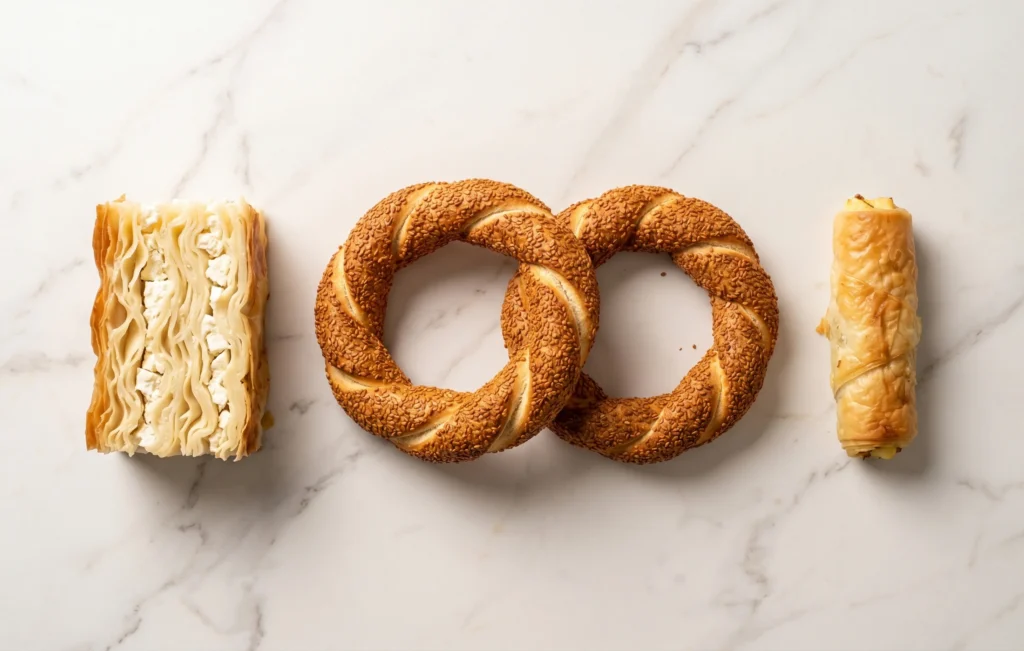
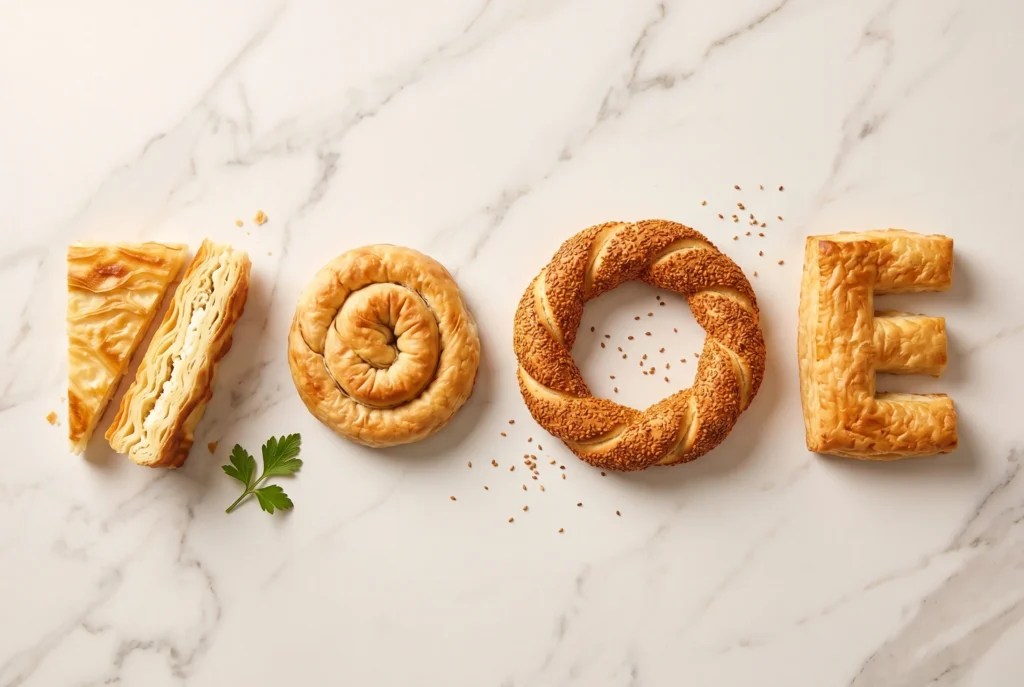
Turkish pastry is a broad category of baked and fried dough products originating in Turkey and the wider Ottoman culinary tradition. It is defined by the use of thin, layered doughs — yufka, filo, or unleavened flatbread — combined with savoury or sweet fillings and baked, fried, or griddled to a golden finish.
For European buyers, the commercially relevant part of the category is the savoury segment — and within that, four products currently account for the vast majority of wholesale and retail demand:
| Product | Type | Primary Filling | Commercial Format | Best Channel |
|---|---|---|---|---|
| Borek | Layered filo pastry | Cheese, spinach, meat | Tray, roll, individual portion | HoReCa, retail, catering |
| Simit | Sesame bread ring | None — sesame coated | Single ring, multipack | Retail, HoReCa, café |
| Pide | Flatbread | Cheese, meat | Oval, individual | HoReCa, retail |
| Gozleme | Folded flatbread | Cheese, spinach, potato | Folded individual | Street food, HoReCa |
| Pogaca | Soft dough roll | Cheese, olive, potato | Individual roll | Retail, café counter |
For buyers entering the category for the first time, borek and simit are the recommended starting points — they have the strongest established demand across European markets, the most mature frozen wholesale supply chains, and the most versatile commercial application across both retail and food service channels.
Why Turkish Pastry Is Growing Across Europe
The growth of Turkish pastry across European food service and retail is structural, not cyclical. Three converging forces are driving it — and all three are accelerating rather than plateauing.
The Mediterranean Food Category Effect
Turkish pastry sits within the broader Mediterranean and Middle Eastern food category, which has been one of the fastest-growing segments in European grocery retail for over a decade. Hummus, pita, halloumi, and baklava have all crossed from diaspora food shops into mainstream supermarket shelves in the last ten years. Each of these products opened the category slightly further for the next authentic product.
The European consumer who regularly buys hummus and pita is already receptive to borek and simit. The flavour territory — savoury, cheese-forward, sesame-rich — is familiar. The eating occasion — breakfast, snack, light lunch — is established.
The Diaspora Demand Floor
The Turkish, Balkan, and Middle Eastern diaspora communities across Germany, the Netherlands, Belgium, France, and Austria have been buying these products from specialist bakeries for decades. That demand is an immediate commercial floor for any new retail or food service listing — a ready consumer base that does not need to be educated, converted, or incentivised to trial.
What is new is the mainstream expansion. European consumers who have no personal connection to Turkish food culture are increasingly encountering Turkish pastry through restaurant visits, travel, and social media content — and seeking it out in retail and food service contexts.
The Specialist Restaurant Signal
In major European cities, specialist Turkish pastry restaurants are opening and succeeding in mainstream locations. In Berlin, restaurants dedicated entirely to su borek are attracting mainstream German consumers. In Amsterdam and Brussels, Turkish breakfast cafés featuring simit, borek, and beyaz peynir are generating strong footfall and positive media coverage.
This specialist restaurant emergence is the most reliable leading indicator that a food product is moving from diaspora staple to mainstream opportunity. It preceded the retail breakthrough of hummus, halloumi, and pita — and it is preceding the same breakthrough for the category now.
Turkish Pastry for HoReCa — The Commercial Case
For European hotel operators, café groups, restaurant chains, and catering businesses, Turkish pastry solves one of the most persistent menu challenges: how to offer something genuinely differentiated at breakfast and brunch without adding operational complexity or specialist kitchen skills to the brief.
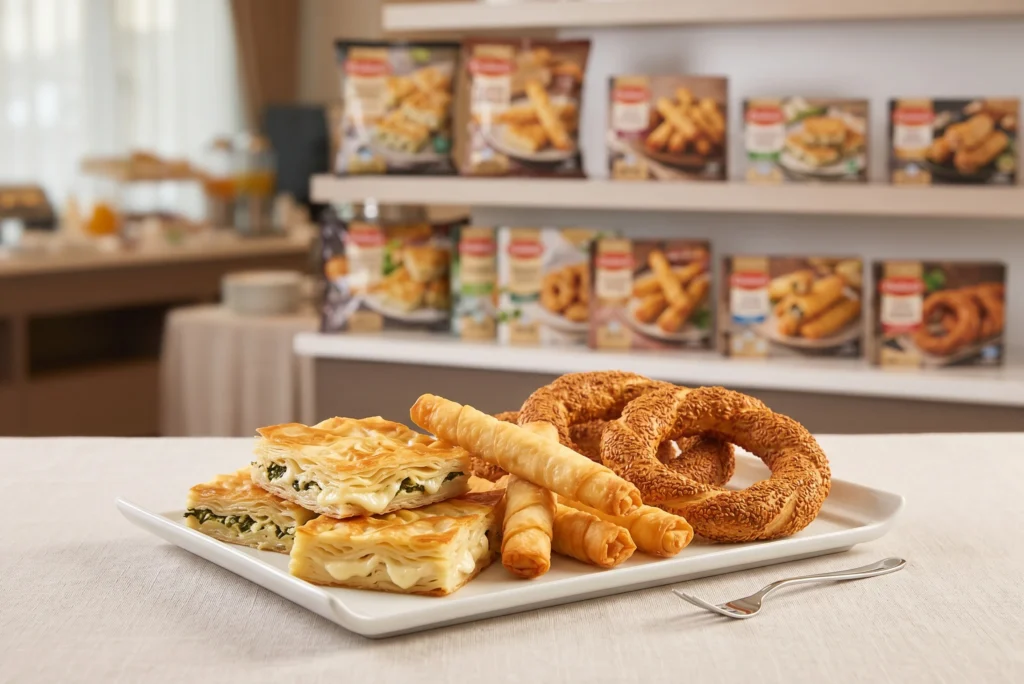
Every commercially relevant format in the frozen wholesale category finishes in a standard oven from frozen — no dough preparation, no specialist equipment, no skilled baker required. A hotel kitchen team briefed on baking temperature and timing can produce restaurant-quality borek or freshly finished simit from the first service morning. That operational simplicity, combined with the premium positioning potential of an authentically Turkish product, is why European HoReCa operators are adopting it at a growing rate.
Hotel Breakfast
Turkish pastry is at its most commercially powerful on a hotel breakfast buffet. A dedicated Turkish or Mediterranean breakfast station — borek slices, simit rings, white cheese, olives, sliced tomatoes, cucumbers, and black tea — creates a cultural destination within the buffet that drives guest engagement, positive review mentions, and the kind of memorable breakfast experience that influences repeat bookings.
The visual impact of golden borek and sesame-coated simit rings on a buffet counter is immediate. Guests who encounter them for the first time photograph them, ask about them, and return for more.
Café Counter
At a café counter, Turkish pastry in individual portion formats — rulo borek rolls, E-shaped borek, simit rings — performs as a premium impulse product alongside coffee and tea. Warm, aromatic, and visually distinctive from standard croissants and pastries, each format creates a counter presence that triggers curiosity and trial.
Pricing these products at a slight premium to standard pastry alternatives is commercially defensible across European café markets. The authentic provenance, the distinctive format, and the satisfying eating experience all justify a higher per-unit price — and that premium, against a competitive frozen wholesale input cost, is where the category builds strong gross margin.
Catering and Event Food Service
For catering operators, Turkish pastry in large-format tray sizes — the 1250g Adana borek, the 2500g su borek catering format — delivers the portion yield, the visual impact, and the batch consistency that event food service demands. A Mediterranean food station anchored by these products creates the kind of premium hospitality experience that event clients pay for and remember.
Turkish Pastry for Retail — Category Positioning
For retail category managers, the opportunity is a range addition with a fundamentally better demand profile than most international food category introductions — because it comes with an established consumer base from day one.
The diaspora consumer who walks into a supermarket already knowing what borek or simit is, already wanting it, and already frustrated that it is not available in mainstream retail is the commercial floor that makes Turkish pastry a lower-risk ranging decision than most new international categories. Above that floor, the mainstream European premium food shopper provides the growth ceiling.
Frozen Bakery
The frozen bakery aisle is the primary shelf position for Turkish pastry in most mainstream European supermarkets. The frozen-to-bake format maps directly onto consumption occasions already established by frozen baguettes, croissants, and part-baked rolls — it requires no consumer education about how to use the product. A clear shelf label — “Turkish Cheese Pastry” or “Authentic Turkish Sesame Bread” — communicates product identity and drives trial from curious mainstream shoppers.
World Foods
A secondary placement in the world foods or Mediterranean aisle drives higher-intent purchases from diaspora consumers and engaged mainstream shoppers. In markets with significant Turkish, Balkan, or Middle Eastern communities — Germany, the Netherlands, Belgium, and the UK — a dual placement in both frozen bakery and world foods significantly increases total category volume.
Private Label
For retailers with active own-label programmes, Turkish pastry is a strong private label development opportunity. Borek and simit are both visually distinctive — private label products that look nothing like standard own-brand bread or pastry — with communicable origin stories that support premium positioning. According to Turkish pastry market data published by sector analysts, the international and premium frozen pastry subcategory is among the fastest-growing segments within European frozen food.
Borek — The Flagship of the Turkish Pastry Category
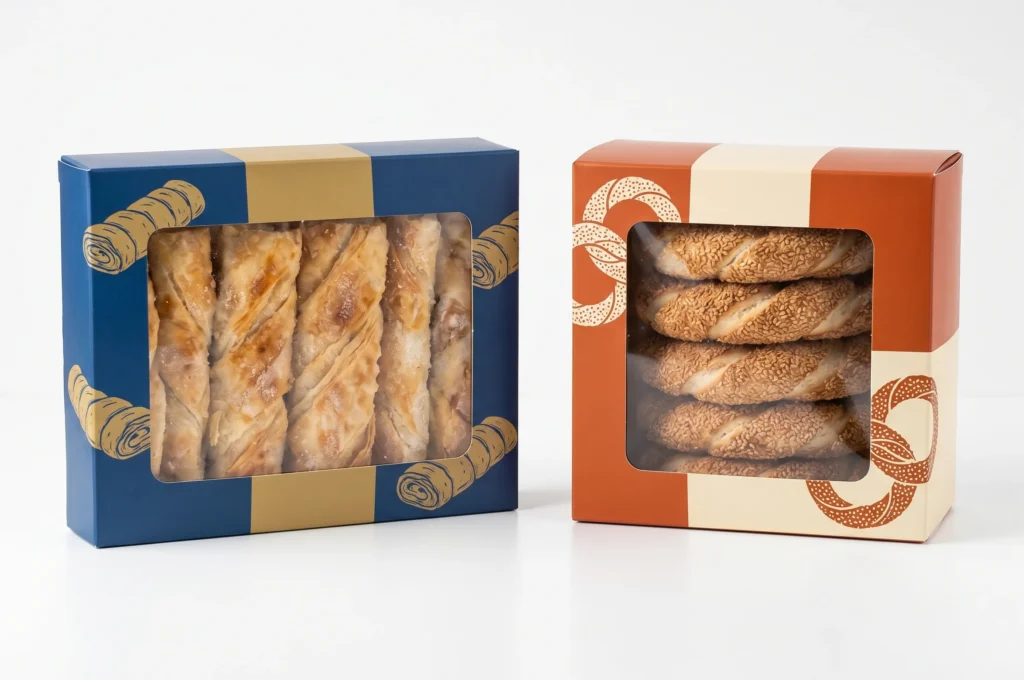
Within the category, borek is the product driving the most commercial traction across European retail and food service right now. It combines the broadest format range — su borek, rulo borek, E-shaped, Adana, spiral — with the strongest established consumer demand among diaspora communities and the most versatile application across hotel breakfast, café counter, retail frozen bakery, and catering channels.
For buyers entering the Turkish pastry category for the first time, borek is the recommended starting point. It has the lowest consumer education barrier — cheese-filled filo pastry is a format that European consumers across all markets recognise and find immediately accessible — and the most mature frozen wholesale supply chain among all products in the range.
The cheese borek format specifically is the highest-conversion entry point. White cheese filling is universally familiar to European consumers, the allergen profile is simple and manageable, and the flavour delivers immediate satisfaction without requiring cultural context. A two-SKU launch — su borek in a retail format and rulo borek for the café or grab-and-go channel — gives the best balance of consumer accessibility and commercial coverage.
Detailed guidance on sourcing and ranging borek is available in the borek wholesale and cheese borek guides published on this site.
Simit — The Turkish Pastry That Built European Awareness
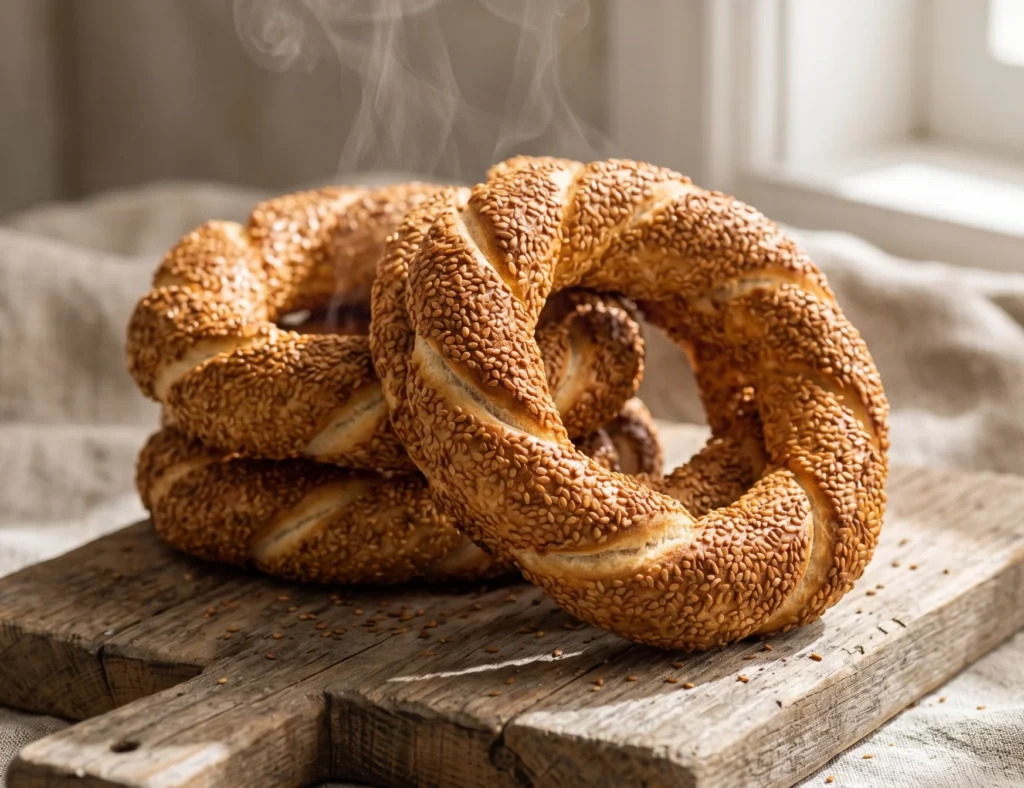
If borek is the flagship of the category in European food service, simit is the product that first put Turkish bakery on the mainstream European consumer’s radar. The golden, sesame-coated bread ring has been growing in visibility across European retail and food service for longer than any other product in this range — and it has built the consumer awareness and channel familiarity that now makes the broader category more commercially accessible.
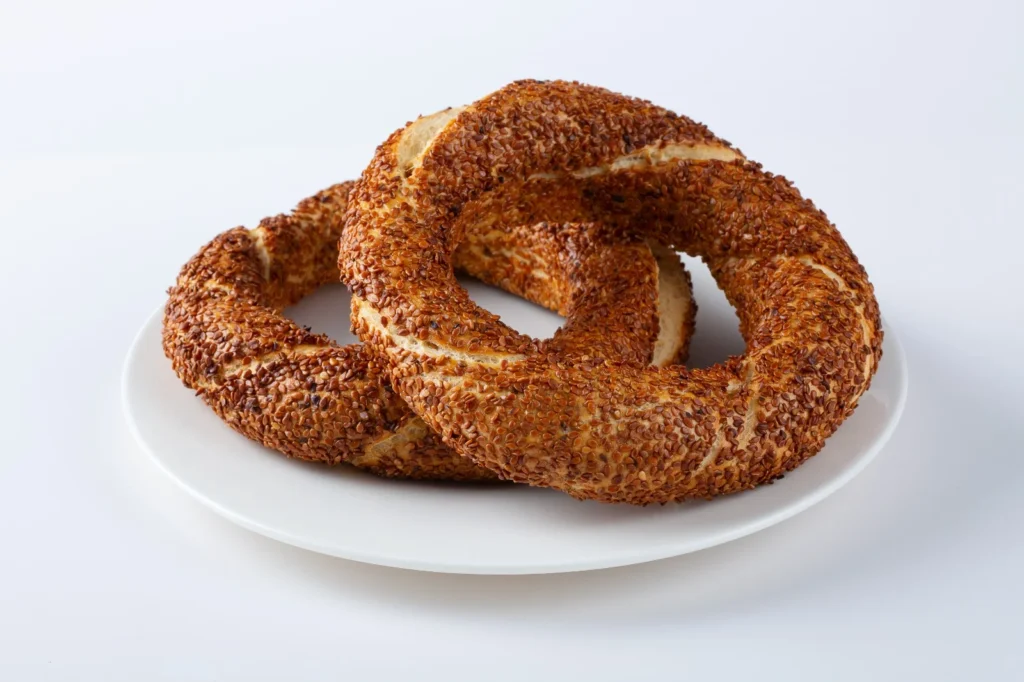
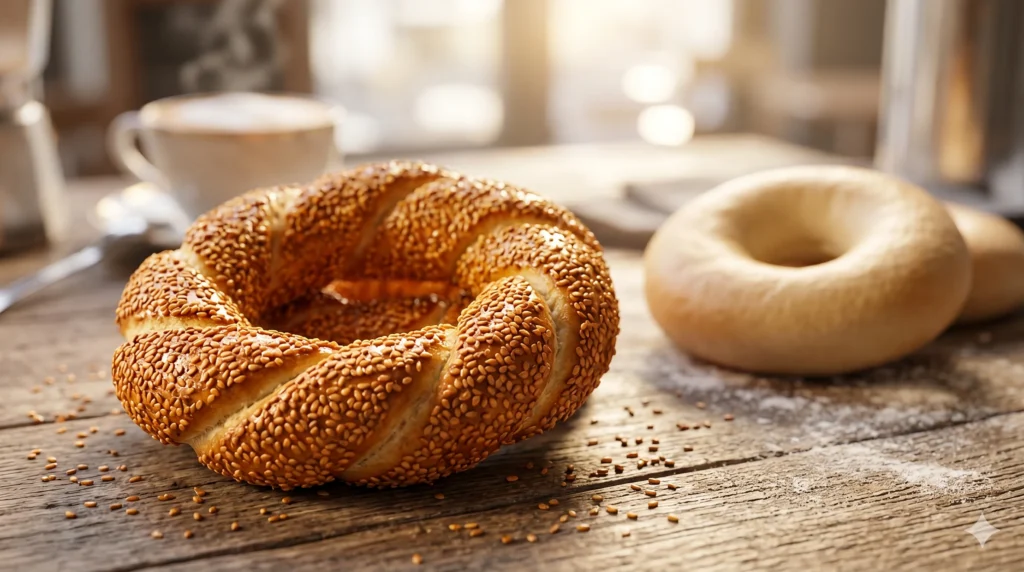
Simit’s commercial strength lies in its visual distinctiveness. No other product in the European frozen bakery category looks like it — the circular shape, the deep golden colour, and the complete sesame seed coating create a shelf presence and a buffet presence that generates curiosity and trial without requiring any additional communication from the buyer.
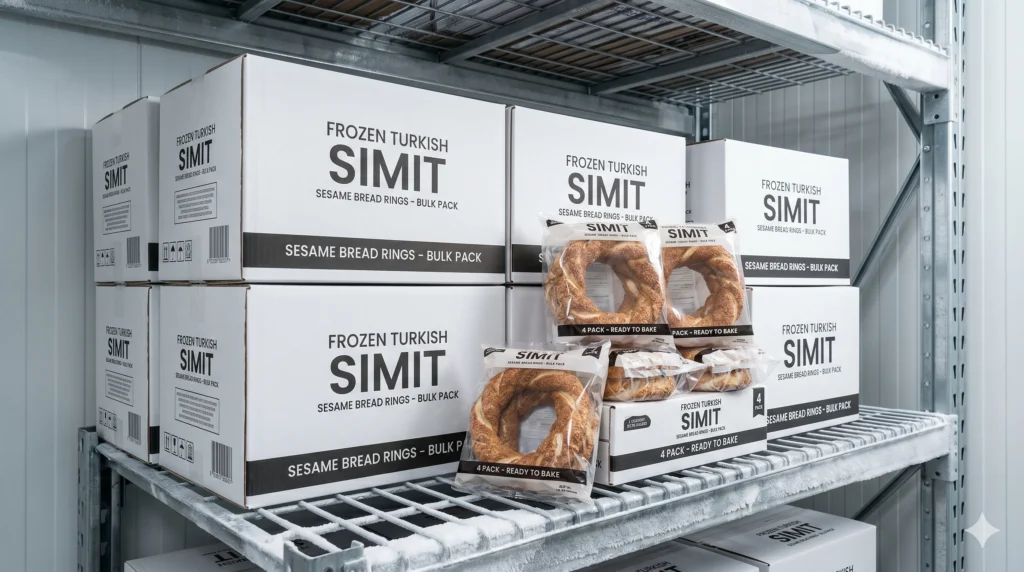
In frozen format, simit is operationally straightforward: 80% pre-baked, finished in a standard oven in 5 to 8 minutes from frozen, no specialist preparation required. For hotel breakfast operations, café counters, and retail frozen bakery, the format works identically to any other premium frozen bakery product — with the significant advantage that it looks and tastes unlike anything else in the fixture.
Detailed guidance on simit sourcing, formats, and channel positioning is available in the simit wholesale and frozen simit guides on this site.
How to Source Turkish Pastry in Europe
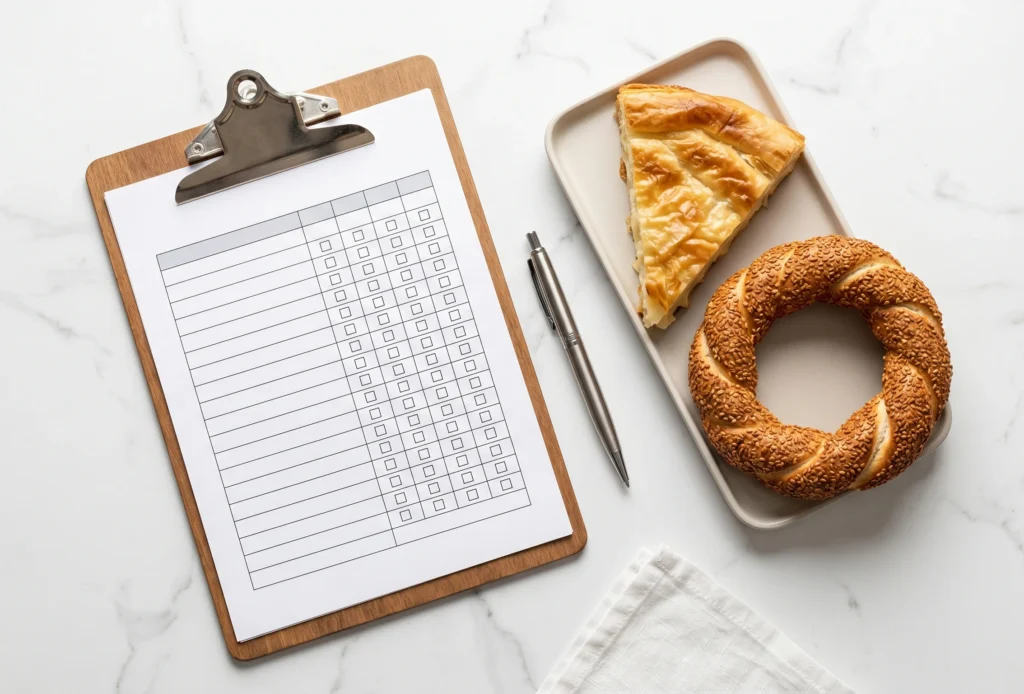
Sourcing Turkish pastry for European retail or HoReCa supply requires the same core supplier evaluation criteria across every product in the category — with product-specific quality checks that vary between borek, simit, and other formats.
| Criterion | What to Check | Why It Matters |
|---|---|---|
| Product authenticity | Bake samples from 2+ production runs | Quality gap between suppliers is large |
| Recipe specification | Authentic ingredients, correct dough type | Defines flavour and texture outcome |
| EU certification | Current BRC or IFS, relevant production scope | Required for major retail supply |
| Cold chain | EU-based production, temperature monitoring | Frozen pastry is cold chain sensitive |
| Range breadth | Multiple SKUs and formats from one supplier | Simplifies procurement across channels |
| Private label | Active own-label clients, multi-market capability | Required for own-brand development |
| Allergen documentation | Current product spec sheet for every SKU | Mandatory for retail and food service listing |
Authentic Production — The Critical Criterion
The quality gap between specialist Turkish pastry manufacturers and generic frozen pastry producers is significant and immediately apparent in the baked product. A specialist producer brings recipe knowledge, ingredient sourcing relationships, and quality control processes that a generic frozen food manufacturer cannot replicate.
Request baked samples from any potential supplier and evaluate the product against the authentic benchmark: distinct and flaky filo layers in cross-section, evenly distributed fillings, clean savoury flavours with no off-notes, and uniformly toasted sesame coatings on simit. A product that fails any of these tests will not perform commercially regardless of price or packaging.
EU-Based Supply Chain
For European buyers, a supplier based in continental Europe offers a structural advantage: shorter transit times, no customs complexity, cold chain management within EU regulatory infrastructure, and simpler resolution of supply issues.
Allergen labelling for Turkish pastry products must comply with EU food information regulations. The key regulated allergens — gluten (wheat), milk, eggs, and sesame — must be declared on all retail packaging and available in written form for food service menus and buffet labels. Full compliance with Turkish pastry allergen compliance requirements under Regulation (EU) 2021/382 is mandatory across all EU markets.
The Lezza Foods Turkish Pastry Range
Lezza Foods BV has been manufacturing and supplying authentic Turkish pastry to European retail, HoReCa, and private label buyers since 2013. Based in Mechelen, Belgium, with active distribution across 20+ European countries and more than 20 private label brands in current production, Lezza Foods is one of Europe’s established specialists in authentic Anatolian bakery at commercial scale. The client list — including ALDI, Kaufland, Hanos, and Europastry — reflects a track record verified by some of Europe’s most demanding food retail and wholesale buyers.
The range covers both savoury bakery and sesame bread, giving buyers a single-supplier solution for the core Turkish pastry category.
The Borek Range
The Lezza Foods Turkish pastry borek range includes su borek in 500g, 800g, and 2500g formats for retail and HoReCa supply. The Turkish pastry E-shaped 200g individual portion delivers strong visual differentiation for retail and café counter applications. The range also includes rulo borek in cheese and spinach & cheese formats, Adana borek in 1250g, spiral borek in 800g, and cheese-filled pastry in individual and multipack formats.
The Simit Range
The Turkish pastry simit range covers four SKUs — classic simit at 125g single-serve, 4×10⁵g retail multipack, and sweet simit variants at 135g and 160g — across formats suited to retail frozen bakery, HoReCa breakfast, and café counter supply.
All Lezza Foods Turkish pastry SKUs are available for private label across Europe. Download the Turkish pastry catalogue for full carton specifications, baking instructions, and allergen data, or request a Turkish pastry quote for wholesale pricing and private label enquiry.
Frequently Asked Questions: Turkish Pastry
What products are available for wholesale in Europe?
The core Turkish pastry products available for wholesale in Europe are borek — in su borek, rulo borek, Adana, E-shaped, and spiral formats — and simit, the sesame-coated bread ring. Pide and gozleme are also available from specialist suppliers in frozen wholesale format. Lezza Foods supplies borek and simit wholesale across 20+ European countries from Mechelen, Belgium, in formats suited to retail, HoReCa, and private label channels.
Is Turkish pastry available for private label in Europe?
Yes. Lezza Foods produces the full range under private label for retail chains, HoReCa groups, wholesale distributors, and brand owners across Europe. All SKUs are available for own-label development, with full flexibility on packaging specification, multi-language allergen labelling, and production scheduling.
What certifications should a supplier hold?
A supplier serving European retail channels must hold current BRC Global Standard for Food Safety or IFS Food certification — HACCP alone is insufficient for major retail supply. For HoReCa supply, HACCP is the baseline. Halal certification is relevant for buyers serving markets with a significant Muslim consumer segment. Always request the current certificate with its issue date and scope.
What is the most popular Turkish pastry?
Borek — specifically cheese borek in su borek format — is the most widely consumed variety in Turkey and the most commercially established in European wholesale and retail markets. Simit is the most visually distinctive and the product that has built the broadest mainstream European consumer awareness. For buyers entering the category, both products together form the strongest commercial foundation for a new range.
What is Turkish pastry made of?
It is typically made from thin sheets of yufka or filo dough — a thin, unleavened wheat-based dough — filled with savoury ingredients such as white cheese, spinach, or meat and baked until golden and crisp. Simit uses a yeasted wheat dough ring dipped in grape molasses and coated in sesame seeds before baking. All products contain gluten (wheat); cheese-filled varieties also contain milk and typically eggs.
How do you serve Turkish pastry at a hotel breakfast?
The products perform best on a hotel breakfast buffet as part of a dedicated Turkish or Mediterranean breakfast station. Borek slices and simit rings served alongside white cheese, olives, sliced tomatoes, cucumbers, and black tea create a complete cultural experience that elevates the buffet well beyond standard bread and pastry offerings. Both products finish in a standard oven in under 25 minutes from frozen — no specialist preparation required.
Ready to Build Your Turkish Pastry Range?
Turkish pastry is one of the strongest international food category opportunities available to European buyers right now. Consumer demand is established and growing. The supply chain through EU-based specialist manufacturers is practical and reliable. The commercial window for first-mover advantage in mainstream European retail and food service remains open.
Lezza Foods has been supplying authentic Turkish pastry to European retail and HoReCa since 2013. The range covers borek and simit in formats suited to every channel, with full private label capability and active supply across 20+ European countries.
Browse the full Turkish pastry range on the Lezza Foods website, download the Turkish pastry catalogue for complete SKU and carton data, or request a Turkish pastry quote for wholesale pricing, minimum order quantities, and private label enquiry.