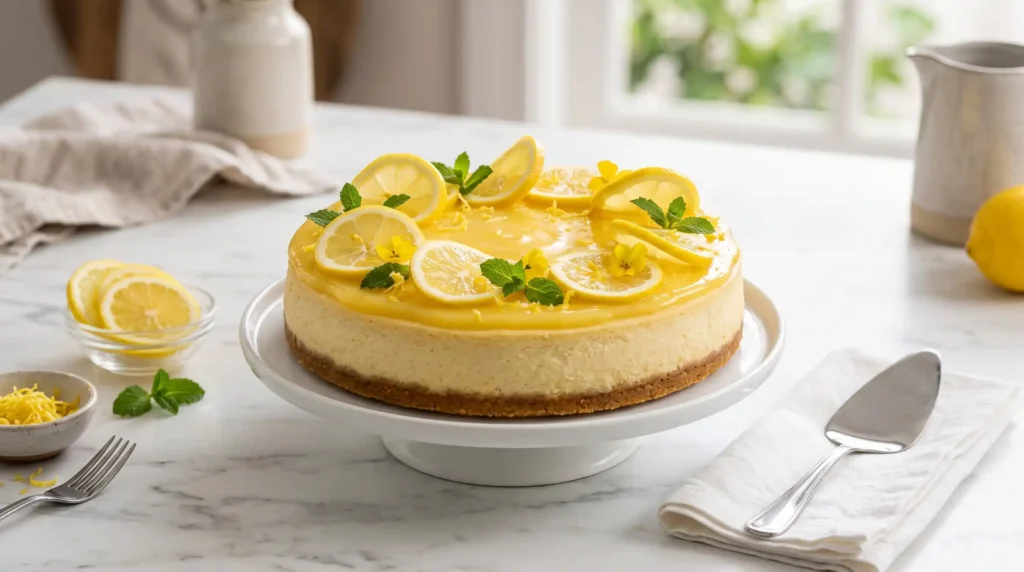
Lemon Cheesecake: What Separates Real Lemon from Artificial Flavouring
Lemon cheesecake quality depends heavily on whether the citrus flavour comes from real lemon zest and juice — often finished with a genuine lemon curd layer — or from artificial lemon flavouring mixed into a generic cream cheese base. The two versions can look nearly identical on a menu description, but the flavour difference is immediately obvious to anyone tasting them side by side. For European HoReCa and retail buyers, checking this before sourcing avoids a cheesecake that tastes flat or artificially sharp rather than genuinely citrus-forward.
What Makes Lemon Cheesecake Taste Authentic
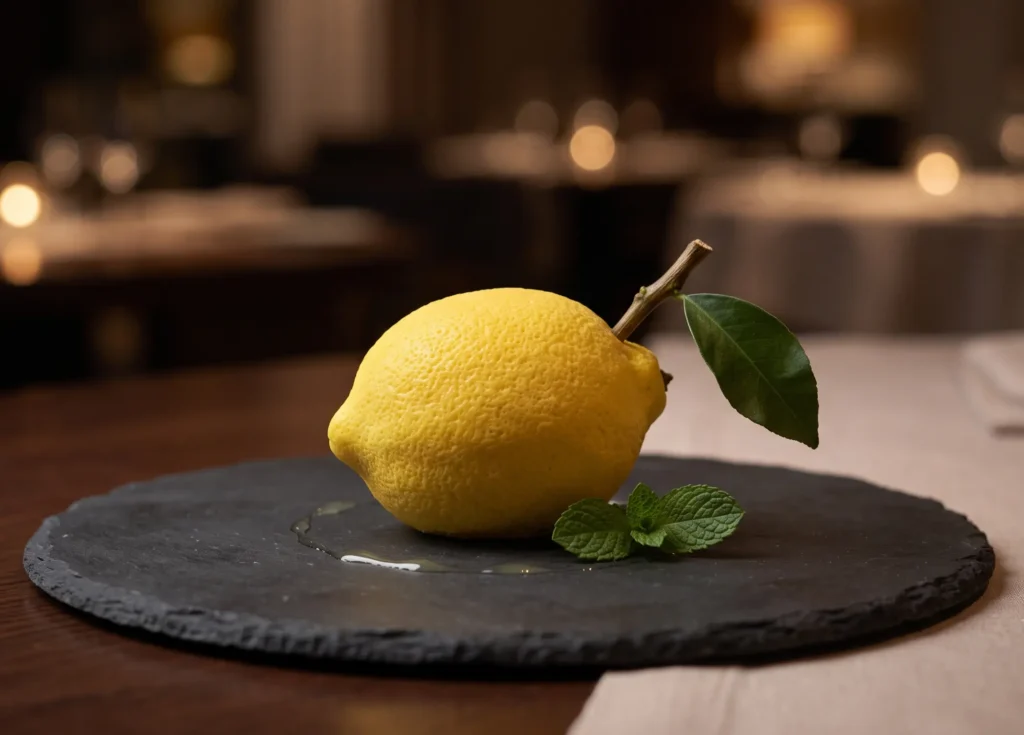
Genuine lemon cheesecake starts with real lemon zest and juice worked directly into the cream cheese filling, which delivers a natural citrus brightness and a slight tartness that balances the richness of the cheese. Many well-made versions go a step further and add a distinct lemon curd layer — a thick, tangy lemon custard — either baked into the filling or applied as a topping, which concentrates the citrus flavour and adds a textural contrast against the smooth cheesecake base.
Artificial lemon flavouring, by contrast, tends to produce a flatter, more one-dimensional citrus note — often sharper and more chemical-tasting than real lemon, without the natural balance between sweetness and acidity that fresh zest and juice provide. A cheesecake relying entirely on flavouring rather than real lemon also typically lacks any visible lemon curd layer or fleck of zest, since there is no real fruit component to showcase.
Evaluating a Lemon Cheesecake Supplier
For buyers evaluating a potential lemon cheesecake supplier, a small number of direct checks reveal whether the citrus flavour comes from genuine ingredients or flavouring alone.
| Criterion | What to Check | Red Flag |
|---|---|---|
| Lemon source | Real lemon zest and juice listed as ingredients | “Natural flavouring” or “lemon flavour” with no zest/juice |
| Lemon curd layer | Visible, distinct curd layer or topping | No curd layer; flavour mixed uniformly into filling only |
| Flavour balance | Natural tartness balanced against cheesecake richness | Sharp, one-dimensional, or artificially sweet citrus note |
| Base structure | Firm but creamy filling on a proper biscuit base | Overly soft, unstable filling; generic or crumbly base |
| Certification | Current BRC or IFS with scope covering frozen desserts | HACCP only, or unverifiable scope |
Request a physical sample and taste it directly — the presence and quality of a lemon curd layer, and whether the citrus note tastes like real fruit rather than flavouring, are both immediately apparent in person in a way a product description cannot fully convey. Confirm the supplier can document a full allergen declaration, since lemon cheesecake typically contains gluten (in the biscuit base), milk and eggs (in the filling), all of which require clear labelling under EU food information law before listing the product in any European market.
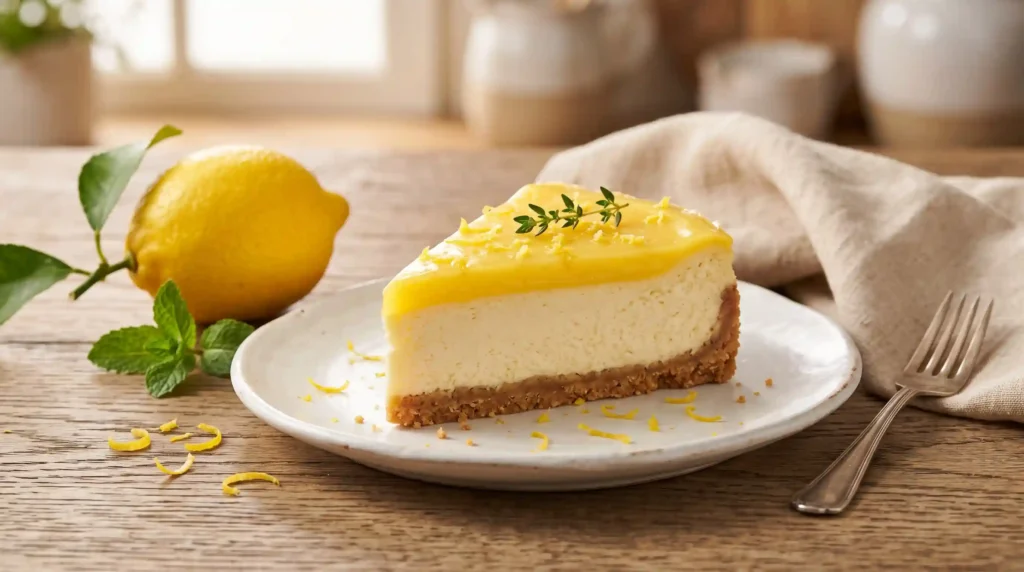
The Lezza Foods Lemon Cheesecake
Lezza Foods BV has supplied premium Mediterranean and Anatolian food products to European retail, HoReCa, and private label buyers since 2013, operating from Mechelen, Belgium with active distribution across 20+ European countries and more than 20 private label brands in current production.
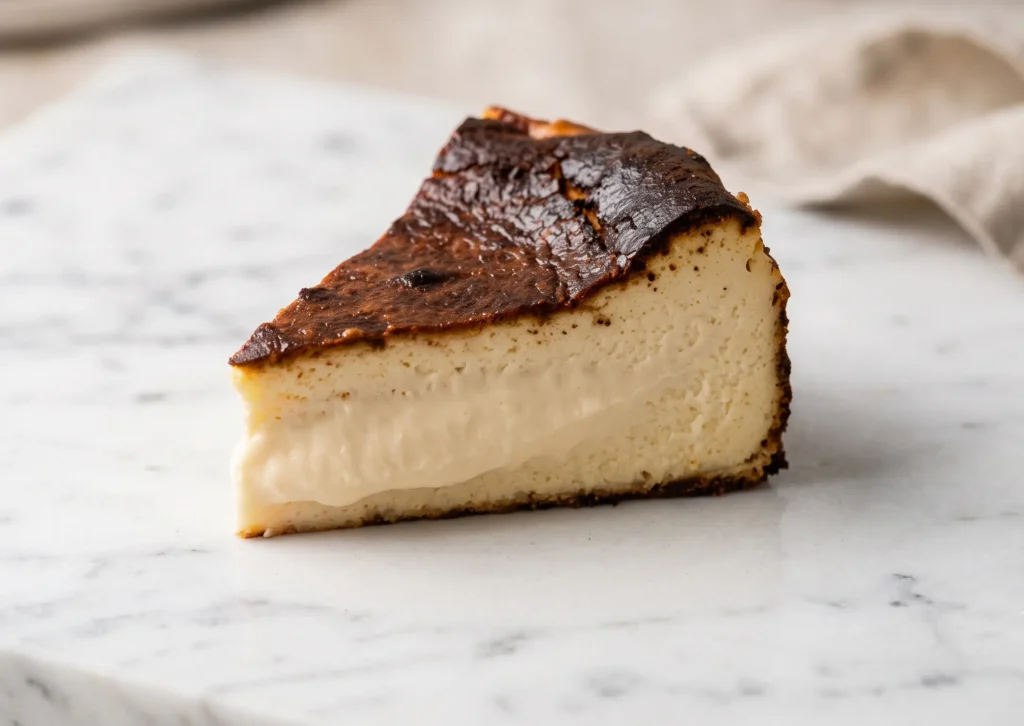
The Lezza Foods Lemon Cheesecake is produced as a full-size, cut-to-serve format designed for hotel buffets, catering operations, and café dessert cabinets. It sits within Lezza Foods’ broader L’amour de Paris cheesecake and dessert range, alongside other whole cake formats including raspberry cheesecake, tiramisu, and red velvet. The product is available for private label, with packaging specification and multi-market labelling compliance handled as part of the supply agreement.
Frequently Asked Questions
What makes lemon cheesecake taste authentic?
Genuine lemon cheesecake uses real lemon zest and juice worked into the filling, often finished with a distinct lemon curd layer, which delivers natural citrus brightness balanced against the richness of the cream cheese. Artificial lemon flavouring alone tends to produce a flatter, sharper citrus note without this balance.
Should lemon cheesecake have lemon curd?
Not always, but a visible lemon curd layer is a strong indicator of quality and genuine lemon content, since it concentrates real fruit flavour and adds textural contrast. A cheesecake using only flavouring, with no curd layer, typically has a less rounded citrus character.
How do I evaluate a lemon cheesecake supplier?
Request a physical sample and taste it for real lemon character versus artificial flavouring, checking specifically for a lemon curd layer or visible zest. Verify current BRC or IFS certification with a scope covering frozen dessert production, and confirm full allergen documentation.
What allergens does lemon cheesecake typically contain?
Lemon cheesecake typically contains gluten (from the biscuit base), milk, and eggs (from the filling), all of which must be clearly declared under EU food labelling law before the product is listed in any European market.
Is private label available for lemon cheesecake?
Some specialist producers offer private label development, including packaging specification and multi-market labelling compliance. Lezza Foods, for example, supplies its lemon cheesecake under private label for retail chains and HoReCa groups across Europe.
Where can I source lemon cheesecake wholesale in Europe?
Lezza Foods BV, based in Mechelen, Belgium, has supplied premium Mediterranean and Anatolian desserts — including a lemon cheesecake designed for hotel buffet and catering use — to European retail, HoReCa, and private label buyers since 2013, with distribution across 20+ European countries.
Browse the lemon cheesecake range on the Lezza Foods website, or request a quote for wholesale pricing and private label enquiry.