Burnt Cheesecake: The Viral Dessert European Menus Cannot Ignore
Burnt cheesecake has become one of the most commercially significant dessert trends in European food service and retail over the past several years. Its rustic, caramelised top and famously creamy interior have made it a fixture on café menus and dessert cabinets across the continent — and demand shows no sign of slowing.
For HoReCa operators, retail category managers, and wholesale distributors, it offers a rare combination: a genuinely viral, socially shared dessert format backed by real culinary heritage rather than a fleeting novelty. This guide covers what burnt cheesecake is, why it continues to grow across European markets, which formats serve which channels, and how to source authentic quality from an EU-based manufacturer.
What Is Burnt Cheesecake?
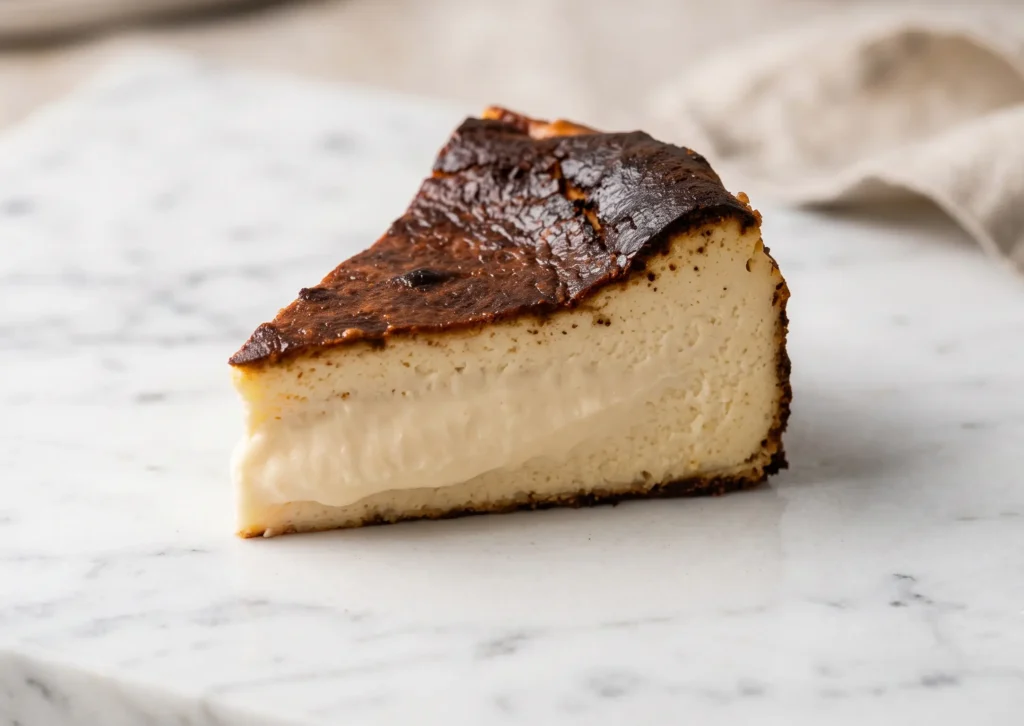
It — also known as San Sebastian cheesecake or Basque cheesecake — is a crustless cheesecake baked at a high temperature until the exterior turns deeply caramelised and almost blackened, while the interior remains soft, creamy, and slightly underset. The result is a texture unlike any other cheesecake style: part custard, part mousse, with a rich, slightly smoky sweetness from the caramelisation.
The format originated at La Viña, a small bar in the old quarter of San Sebastián in Spain’s Basque Country, where it was first created in the late 1980s. Unlike a traditional New York-style cheesecake, it has no biscuit base and requires no water bath during baking — the high, direct heat that creates the signature burnt exterior is precisely what gives the interior its distinctive, almost liquid centre.
For European buyers, understanding this origin story matters commercially. It is not a manufactured product trend invented for retail convenience — it carries genuine culinary heritage, and that authenticity is a meaningful part of what continues to drive consumer demand for it years after its initial viral moment.
Burnt Cheesecake vs. Traditional Cheesecake
| Burnt Cheesecake | Traditional Baked Cheesecake | |
|---|---|---|
| Base/crust | None — crustless | Biscuit or pastry base |
| Baking method | High heat, no water bath | Lower heat, often with water bath |
| Exterior appearance | Deeply caramelised, rustic, “burnt” | Pale, smooth, even |
| Interior texture | Soft, creamy, custard-like, slightly underset | Firm, dense, fully set |
| Flavour profile | Rich, caramelised, subtly smoky sweetness | Mild, tangy, vanilla-forward |
| Visual distinctiveness | Very high — rustic and photogenic | Moderate — familiar and neat |
| Consumer association | Premium, artisan, viral, Instagram-worthy | Classic, dependable, familiar |
Why Burnt Cheesecake Continues to Grow Across Europe
The commercial momentum behind it has proven more durable than many food trends, driven by several factors that continue to reinforce demand years after the format first gained mainstream attention.
A Genuinely Photogenic, Shareable Dessert
Its rustic, caramelised appearance photographs exceptionally well, and it became one of the most shared dessert formats on social media during its initial rise to popularity. That visual distinctiveness has not faded — the format continues to perform strongly across café and restaurant social content, giving operators who serve it genuine organic promotional value that a standard dessert cannot replicate.
Simple Ingredients, Premium Perception
It is made from a short list of accessible ingredients — cream cheese, eggs, sugar, and cream — yet it commands a premium price point and a premium consumer perception disproportionate to its ingredient cost. This combination of simplicity and perceived indulgence makes it commercially efficient: strong margin potential without complex or costly inputs.
An Unusual Cross-Market Cultural Bridge
While it originated in Spain’s Basque Country, it has also become extraordinarily popular in Turkey, where it now appears on café menus throughout the country as a mainstream, everyday dessert choice. This cross-market popularity gives Turkish and Mediterranean-focused food manufacturers a genuine, authentic connection to the format — it is not a foreign trend being adopted, but a dessert that sits naturally within a broader Mediterranean and Anatolian dessert culture that already embraces rich, indulgent, and shareable sweets.
Sustained Rather Than Fading Demand
Unlike many viral food trends that peak and disappear within a season, it has demonstrated sustained commercial relevance across multiple years. It has moved from a novelty item to a standing menu category in many European cafés, hotels, and retail dessert ranges — evidence that the format has genuine culinary merit beyond its initial social media moment.
Burnt Cheesecake Formats — Matching Product to Channel
It is available in formats suited to different commercial applications, giving buyers flexibility across hotel buffets, café counters, and retail frozen dessert ranges.
| Format | Typical Configuration | Best Channel | Commercial Advantage |
|---|---|---|---|
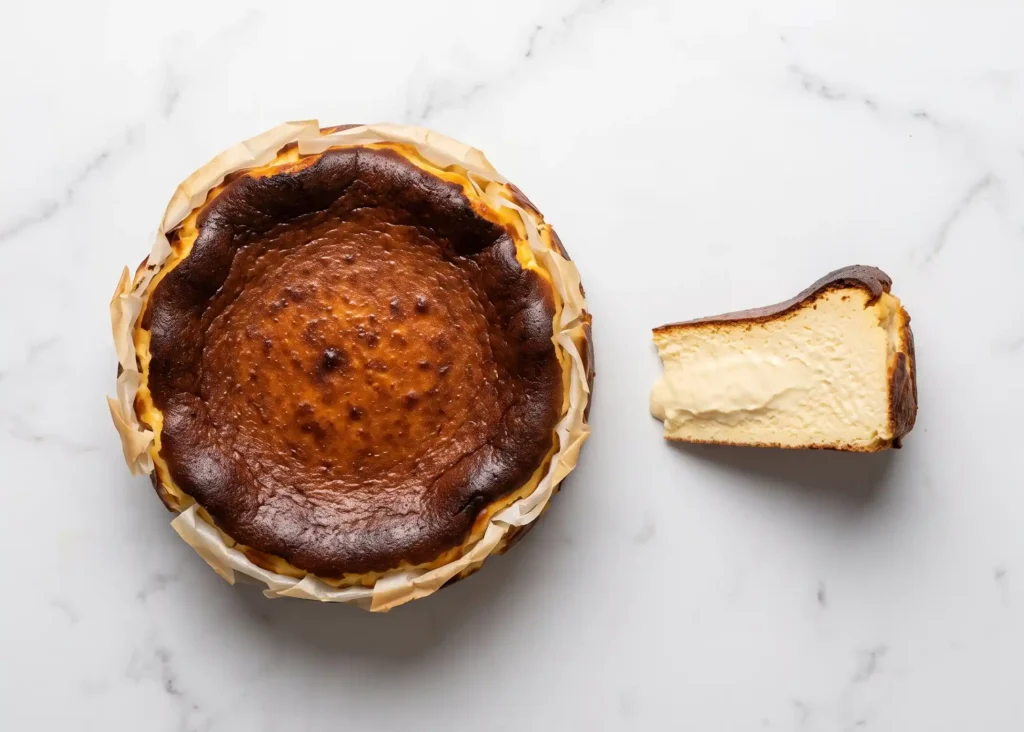
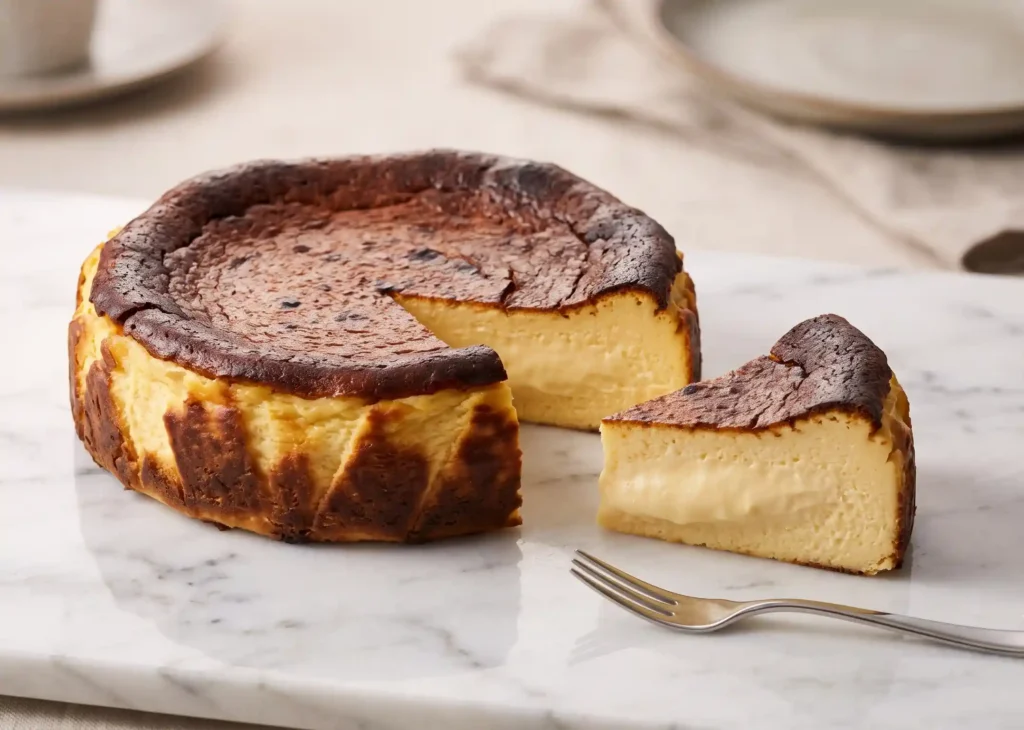
| Whole cake | Full round, multi-portion | Hotel buffet, café display, catering | High visual impact, flexible portioning |
| Pre-cut slice | Individual portion | Café counter, à la carte, room service | Fast service, consistent portion size |
Whole Cake Format
The whole cake format is the standard choice for hotel dessert buffets, café display cabinets, and catering operations serving multiple portions from a single product. Presented whole, the rustic, deeply caramelised top is immediately eye-catching — a visual signature that few other dessert formats can match on a buffet spread.
For catering and event applications, the whole cake format gives operators control over portion sizing to match specific event requirements, and its visual distinctiveness makes it a natural centrepiece for premium dessert tables.
Pre-Cut Slice Format
The pre-cut slice format delivers consistent portion size and fast service for café counters and à la carte menus. Because its texture is naturally soft and slightly underset, pre-cutting to a controlled portion size — rather than cutting to order — helps operators maintain consistent presentation without the risk of a less experienced team member producing an uneven slice.
For retail buyers, the individual slice format is also the more accessible trial format for consumers encountering it for the first time in a supermarket frozen dessert cabinet.
Burnt Cheesecake for HoReCa — Menu Positioning and Margin
For hotel dessert menus, café operators, and catering businesses, it delivers a rare combination of viral consumer appeal and genuine culinary credibility that supports strong, sustained margin.
Hotel Dessert Menus and Buffets
On a hotel dessert menu or buffet, it functions as a signature item that consistently generates guest interest and social sharing. Its rustic appearance requires no elaborate plating — the visual impact comes directly from the product itself, reducing the plating labour required compared with more complex composed desserts.
Because it arrives frozen and requires only defrosting before service, it integrates into hotel kitchen workflows with minimal additional labour. Kitchen teams can hold consistent stock levels without the quality risk that comes with attempting to replicate the notoriously temperamental baking process in-house — burnt cheesecake is genuinely difficult to bake consistently at scale, which makes a reliable frozen supply chain a significant operational advantage rather than a compromise.
Café Counter and Display Cabinet
At a café counter, a pre-cut slice performs as a premium, highly visible dessert option alongside coffee. Its rustic, caramelised appearance stands out clearly against more familiar cake and pastry options, consistently drawing attention from customers browsing a dessert cabinet.
Pricing it at a premium to standard cake slices is well established and widely accepted by European consumers, who already associate the format with premium, artisan positioning. This consumer expectation makes margin building straightforward for café operators introducing the product for the first time.
Catering and Event Applications
For catering businesses, its visual distinctiveness and consistent guest recognition make it a dependable choice for premium event dessert tables, corporate hospitality, and celebrations where a genuinely photogenic dessert option enhances the overall impression of the spread.
Burnt Cheesecake for Retail — Category Positioning
For retail category managers, it offers a differentiated addition to the premium frozen dessert category — one with proven, sustained consumer demand rather than speculative trend potential.
Shelf Positioning
It fits naturally into the premium frozen dessert section, positioned alongside other indulgent individual desserts such as tiramisu and premium cake slices. Its rustic, caramelised appearance — often visible through a clear pack window — creates a distinctive visual signal that differentiates it clearly from standard cheesecake formats already on shelf.
For retailers with a Mediterranean or world foods section, it can also be cross-merchandised alongside other Anatolian and Mediterranean dessert lines, reinforcing an authentic provenance story for retailers sourcing from a specialist Mediterranean manufacturer.
Private Label Opportunity
It is a strong private label candidate given its sustained, multi-year consumer demand and premium positioning. A private label version communicates artisan, premium character immediately through its distinctive rustic appearance, without requiring the retailer to build extensive supporting brand narrative — the format’s own visual identity and cultural credibility do much of the commercial work.
For retailers with an existing frozen dessert private label programme, burnt cheesecake represents a genuine opportunity to capture ongoing consumer demand for a format that has proven its staying power well beyond the typical viral food trend lifecycle.
How to Source Authentic Burnt Cheesecake in Europe
Sourcing burnt cheesecake for European retail or HoReCa supply requires attention to quality characteristics that are genuinely difficult to produce consistently — which makes supplier evaluation especially important for this category.
The Three Quality Tests
Request samples from any potential supplier and evaluate three things before committing to a supply agreement.
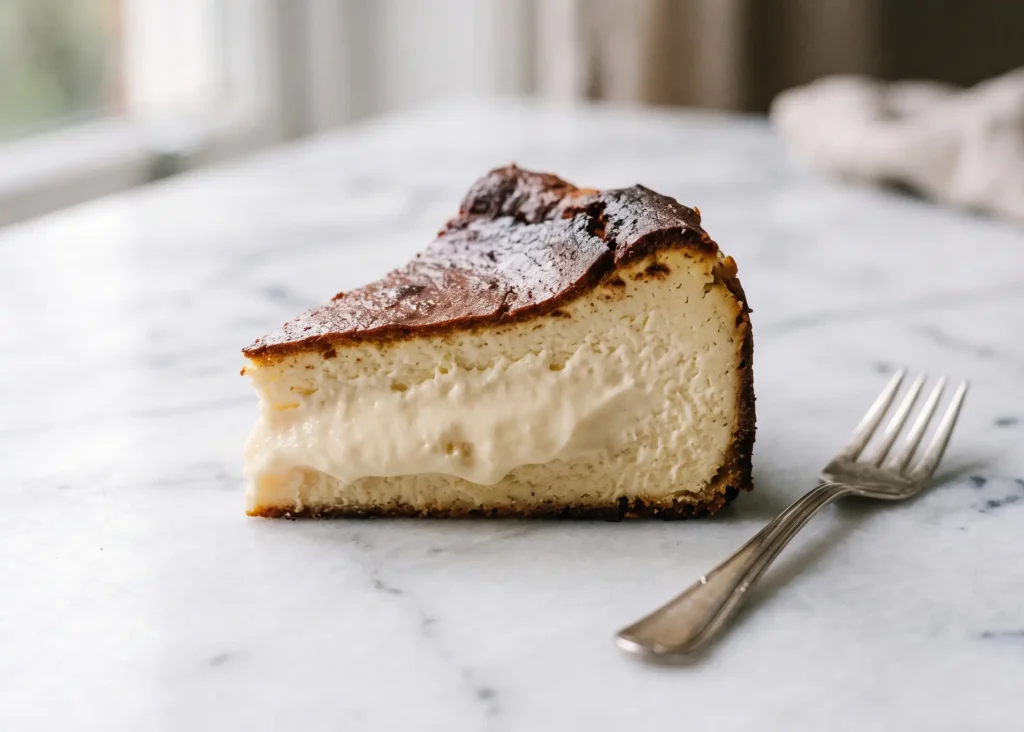
Caramelisation depth and evenness. The exterior should show a deep, even caramelisation across the top surface — not merely a light golden colour, and not unevenly scorched in patches. A correctly produced version achieves its signature appearance through a controlled high-heat baking process, not through surface torching or artificial colouring after the fact.
Interior texture. The centre should be soft, creamy, and slightly underset — closer to a custard or mousse consistency than a firm, fully set traditional cheesecake. A sample that is dense and firm throughout has been overbaked or produced to an incorrect specification, losing the defining textural characteristic of the format.
Flavour balance. An authentic version delivers a rich, subtly smoky sweetness from the caramelisation, balanced against the tang of the cream cheese base. A sample that tastes purely sweet without that caramelised depth, or that tastes burnt in an unpleasant rather than caramelised way, indicates an incorrect baking process.
EU Food Safety and Allergen Requirements
Any supplier serving European retail or HoReCa channels must hold current HACCP compliance at minimum, with BRC Global Standard for Food Safety or IFS Food certification required for supply to major European retail chains. Request the current certificate with issue date and scope before committing to a supply relationship.
Burnt cheesecake typically contains regulated allergens under EU food labelling law, including gluten (wheat, in most formulations), milk, and eggs. Always request a current product specification sheet with full allergen declaration from your supplier before listing any burnt cheesecake product, and ensure compliance with burnt cheesecake allergen requirements under EU food information regulation across every market where the product will be sold.
Cold Chain and Format Flexibility
This product, like other premium frozen desserts, depends on an unbroken cold chain from production to point of sale to preserve its distinctive texture. Because the interior is intentionally soft and underset, temperature management during transit and storage matters even more than for firmer dessert formats. A supplier based in continental Europe offers a structural advantage — shorter transit times, simpler cold chain management, and no customs complexity within the EU.
A capable supplier should also offer format flexibility across whole cake and pre-cut slice formats, allowing buyers to serve both catering and individual portion retail occasions from a single supplier relationship.
The Lezza Foods Burnt Cheesecake Range
Lezza Foods BV has been manufacturing and supplying premium Mediterranean and Anatolian food products to European retail, HoReCa, and private label buyers since 2013. Based in Mechelen, Belgium, with active distribution across 20+ European countries and more than 20 private label brands in current production, Lezza Foods brings the same authenticity standards to its cake and dessert range that have established its reputation across its broader Mediterranean and Anatolian dessert category.
The Lezza Foods San Sebastian Cheesecake is produced to authentic specification — genuine high-heat caramelisation, a soft and creamy interior, and consistent quality across every unit. As a specialist manufacturer already serving European retail and HoReCa clients across a wide Mediterranean and Anatolian dessert portfolio, Lezza Foods brings a level of category expertise to burnt cheesecake that single-product distributors cannot replicate.
Every product in the Lezza Foods dessert range is produced with authentic ingredients and consistent quality control, reflecting the same manufacturing standards the company applies across its Mediterranean and Anatolian bakery and dessert categories. The range is available for private label, with full flexibility on packaging specification and multi-market labelling compliance.
Download the burnt cheesecake catalogue for full product specifications and carton data, or request a burnt cheesecake quote directly for wholesale pricing, minimum order quantities, and private label enquiry.
Frequently Asked Questions: Burnt Cheesecake
What is the best burnt cheesecake format for a hotel dessert menu?
The whole cake format is best suited to hotel buffet service, offering strong visual impact and flexible portioning for varying guest numbers. For à la carte or room service menus, a pre-cut individual slice provides consistent presentation and portion control with no preparation required beyond defrosting.
Is burnt cheesecake available for private label in Europe?
Yes. Lezza Foods produces burnt cheesecake under private label for retail chains, HoReCa groups, and wholesale distributors across Europe, with full flexibility on packaging specification and multi-market labelling compliance.
What allergens does burnt cheesecake contain?
Burnt cheesecake typically contains gluten (wheat), milk, and eggs as regulated allergens under EU food labelling law. Always verify the full allergen declaration against the current product specification sheet from your supplier before listing.
What is burnt cheesecake made of?
It is made from a short list of ingredients — cream cheese, eggs, sugar, and cream — baked at high temperature without a biscuit base or water bath. The high heat caramelises the exterior while the interior remains soft, creamy, and slightly underset, distinguishing it clearly from traditional baked cheesecake.
Where does burnt cheesecake come from?
Burnt cheesecake originated at La Viña, a small bar in the old quarter of San Sebastián in Spain’s Basque Country, where it was first created in the late 1980s by chef Santiago Rivera. It has since become known internationally as San Sebastian cheesecake or Basque cheesecake, and has also become extremely popular in Turkey, where it now features widely on café menus.
How long does burnt cheesecake last, and how should it be stored?
Frozen burnt cheesecake typically has a shelf life of several months when stored correctly at −18°C or below. Always refer to the specific shelf life and storage guidance on your supplier’s product specification sheet, and follow the recommended defrosting and serving instructions to preserve the product’s characteristic texture.
Ready to Add Burnt Cheesecake to Your Menu or Range?
Burnt cheesecake is one of the few viral dessert formats to demonstrate genuine, sustained commercial demand well beyond its initial social media moment — backed by real culinary heritage, a distinctive texture that consumers actively seek out, and a supply chain through an EU-based specialist manufacturer that is practical and reliable.
Lezza Foods has been producing premium Mediterranean and Anatolian desserts for European markets since 2013. The burnt cheesecake range is consistent, EU-sourced, and ready for private label development.
Browse the full burnt cheesecake range on the Lezza Foods website, download the burnt cheesecake catalogue for complete product specifications, or request a burnt cheesecake quote for wholesale pricing and private label enquiry.