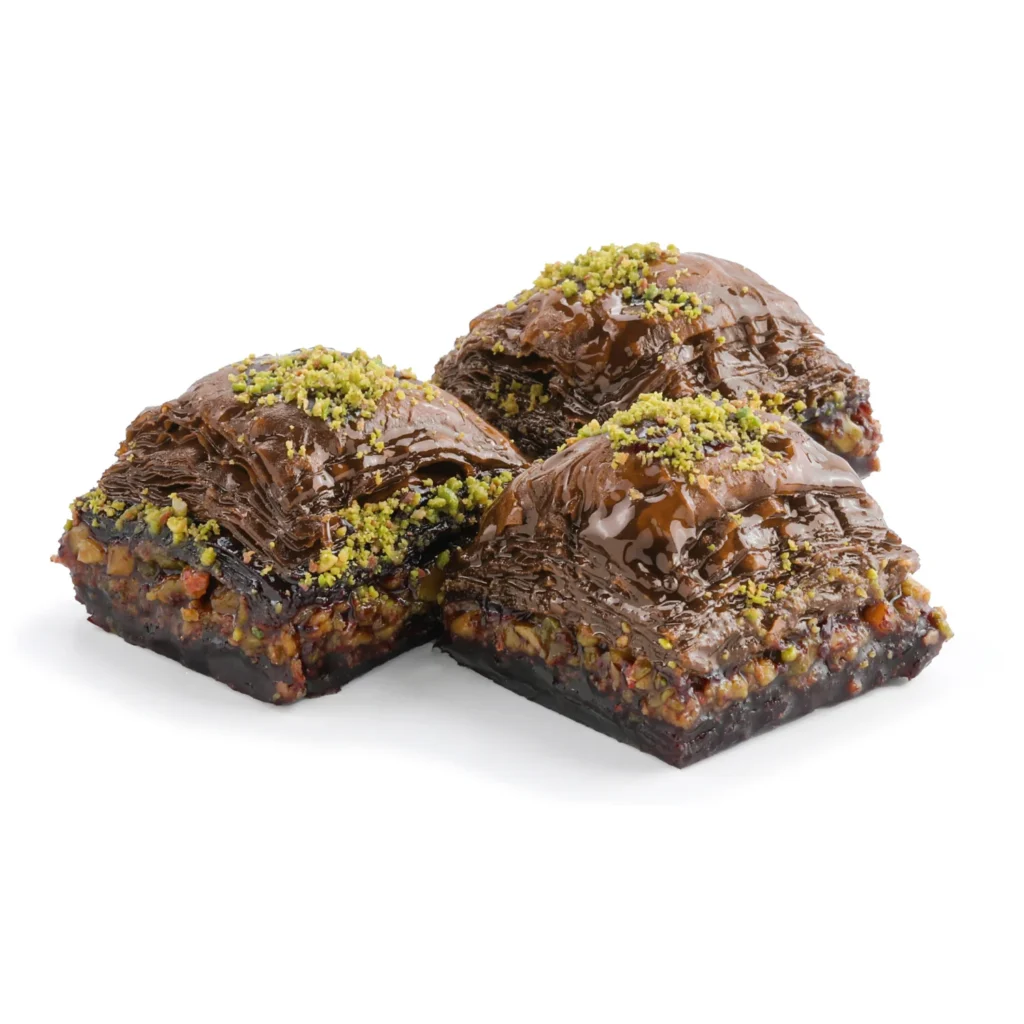
Finding Your First Baklava Supplier: A Practical Guide for Businesses Entering the Category
Most businesses that enter the baklava category do so reactively. A retail buyer notices a competitor stocking it and decides it is time to act. A restaurant distributor gets repeated requests from Middle Eastern restaurant customers and realises the gap in their portfolio. A food brand identifies a private label opportunity in the Mediterranean dessert segment and starts looking for a manufacturer. The demand signal is already there — the challenge is knowing how to respond to it.
Finding the right baklava supplier for the first time is where many businesses stumble. The category looks straightforward from the outside — it is a pastry product, how complicated can it be? — but the supplier landscape is more varied than it appears, the quality differences between suppliers are significant and not always visible until after a commercial commitment has been made, and the operational requirements of frozen supply from a Gaziantep production base have specific characteristics that first-time buyers are often not prepared for.
This guide is written for businesses taking their first steps into baklava sourcing. It covers the commercial case for entering the category, how to define what you are looking for before you start searching, what the baklava supplier landscape actually looks like, how to evaluate and approach suppliers, what to look for beyond the taste test, and how to build a supply relationship that scales beyond the first order.
Why Baklava Is Worth Sourcing: The Commercial Case for First-Time Buyers
Before investing time in finding a baklava supplier, it is worth being clear on why the category is commercially attractive — and what specific opportunity a first-time buyer is trying to capture.
The demand fundamentals are strong and structural. Baklava has moved from ethnic specialty retail into mainstream European food channels over the past decade, driven by three converging trends: the growth of multicultural consumer segments across Germany, the Netherlands, France, Belgium, the UK, and beyond; the mainstreaming of Mediterranean and Middle Eastern cuisine among European consumers generally; and the premiumisation of the European dessert category, which has created space for authentic, high-quality products at price points that conventional pastry cannot reach.
The margin profile is attractive. Well-produced baklava — particularly pistachio variants from a Gaziantep source — commands retail and foodservice margins that significantly exceed those available in conventional pastry. The premium positioning that authentic origin and clean label production supports is not a hard sell to retail buyers or restaurant operators who understand the category. It is a straightforward commercial argument backed by a product that tastes like it justifies the price.
The ranging risk is manageable with the right baklava supplier. A first-time buyer does not need to commit to a full category range on a first order. A two or three SKU starting range — pistachio baklava, walnut baklava, and one specialty format — gives buyers enough category presence to test consumer and customer response without overextending. A baklava supplier with genuine full-range capability can extend the range as demand develops, without the buyer needing to find additional suppliers.
Understanding What You Are Looking For Before You Search
The most common mistake first-time buyers make when approaching a baklava supplier is starting the search before they have defined what they actually need. This leads to wasted time, mismatched supplier conversations, and commercial commitments that turn out not to fit the buyer’s actual requirements.
Defining your segment is the first step. Are you sourcing baklava for retail — supermarket, specialty store, online grocery? For foodservice — restaurants, hotels, catering? For distribution — supplying other businesses who will sell it on? Or for private label — building a branded baklava range under your own name? Each segment has different requirements from a baklava supplier, and a supplier who is the right fit for one segment may not be the right fit for another.
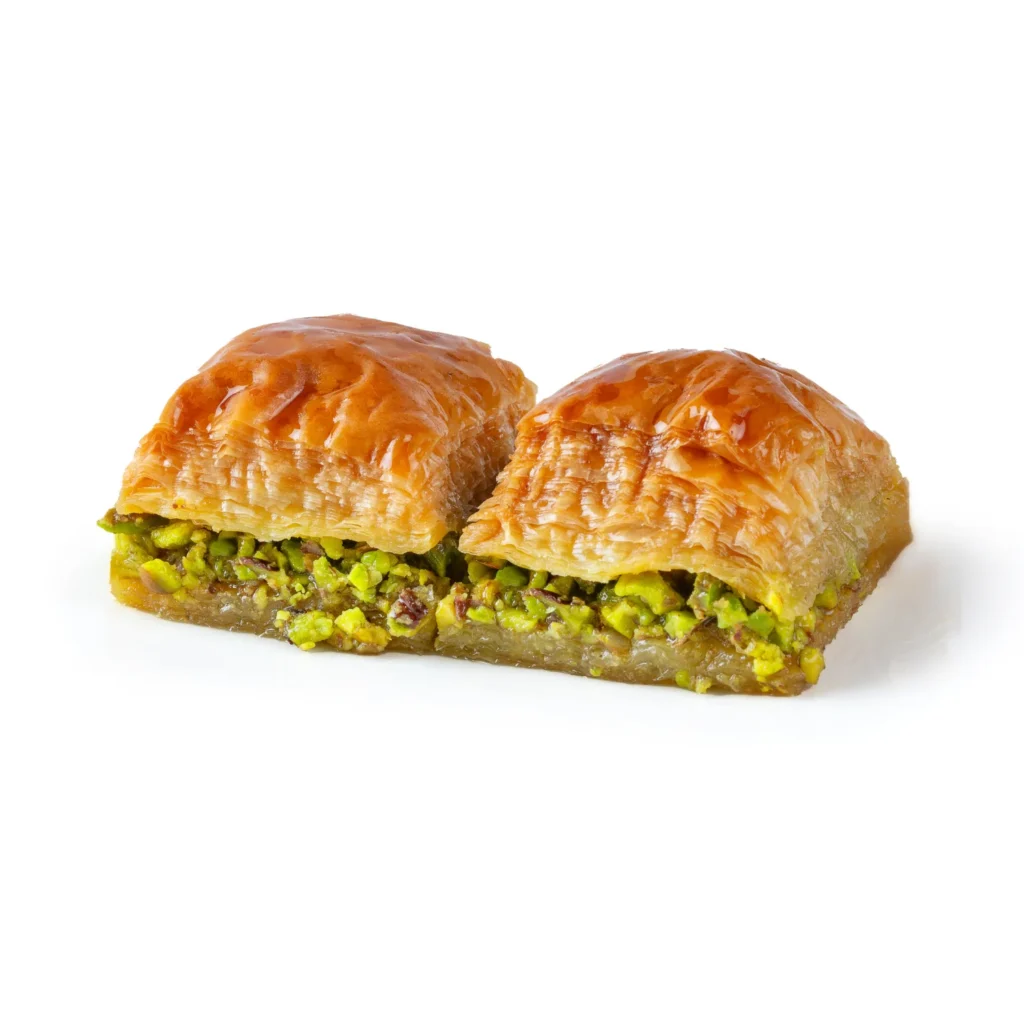
Volume expectations need to be realistic before approaching a baklava supplier. First-time buyers often underestimate how much volume they will move once the category is established, and overestimate how much they need to start. A useful approach is to think in terms of sell-through rate rather than stock quantity — how quickly will you realistically turn a pallet of baklava, and what does that imply for ordering frequency and minimum order commitments?
Format requirements should be clear before supplier conversations begin. Do you need ambient or frozen product? Tray format or individual portions? Standard retail packaging or foodservice bulk? Gift box configurations or core everyday formats? A baklava supplier who specialises in frozen foodservice formats is not automatically the right partner for a retail buyer who needs shelf-ready packaged product — and discovering this misalignment after a sample has been requested wastes everyone’s time.
Certification requirements vary by segment and market. Retail buyers typically need suppliers holding BRCGS or IFS Food certification. Foodservice buyers whose customers require halal compliance need halal certification covering the full product range. Knowing your certification requirements before approaching a baklava supplier allows you to disqualify incompatible suppliers early in the process.
The Baklava Supplier Landscape: Who Is Out There
The baklava supplier landscape in Europe is more varied than first-time buyers typically expect, and understanding the structural differences between supplier types is essential before starting the qualification process.
The first type is the direct manufacturer — a business that owns production facilities, controls its own recipes, manages its own ingredient sourcing, and is directly accountable for product quality. A direct manufacturer is the most commercially advantageous type of baklava supplier for buyers who prioritise quality consistency, private label capability, and a supply relationship that can scale. The qualification process for a direct manufacturer is more involved than for a trader, but the commercial return — on quality, pricing, and long-term reliability — makes the investment worthwhile.
The second type is the trading company — a business that sources baklava from one or more manufacturers and resells it under its own commercial terms. Traders can offer competitive pricing and lower minimum orders, but they introduce a layer between the buyer and the production. This reduces quality visibility and accountability. When a quality issue arises with a trader, the resolution process involves an intermediary who may have limited leverage with their own manufacturer. First-time buyers who start with a trader and later move to a direct baklava supplier consistently report that the quality and commercial relationship improves significantly.
The third type is the importer — a business that sources baklava from production markets, typically Turkey, and brings it into European distribution. The quality of an importer as a baklava supplier depends entirely on the stability and consistency of their manufacturer relationships. An importer with long-established, exclusive manufacturer partnerships can be a reliable supply partner. An importer who sources opportunistically — switching manufacturers for pricing reasons — delivers inconsistent product that becomes commercially problematic quickly.
First-time buyers often end up talking to traders when they should be talking to manufacturers — because traders are more visible online, more responsive to cold enquiries, and easier to engage with initially. The discipline to look past the commercial surface and ask the structural question — who actually makes this product, and do I have a direct relationship with them? — is the most important early qualification step.
What to Look for in a Baklava Supplier Before Placing an Order
Once a first-time buyer has identified potential baklava suppliers and confirmed their supplier type, the qualification process covers several areas that each need to be assessed independently.
Production origin is the first and most important quality indicator. Gaziantep is the undisputed production capital of authentic baklava — the city where the Antep pistachio is grown, where the production expertise is concentrated, and where the quality standard for the category is set. A baklava supplier producing in Gaziantep has access to ingredients, manufacturing knowledge, and a production culture that no other location can replicate. Antep pistachios, sourced directly from local growers at optimal freshness, produce a product with a flavour intensity, colour, and eating quality that substitute varieties cannot match. For first-time buyers positioning baklava at a premium price point, Gaziantep origin is the quality foundation that justifies the positioning.
Certifications are the second qualification area. Ask to see current certificates — not verbal confirmation, not references to certifications in a supplier’s marketing materials, but actual documents with issue dates and expiry dates. Confirm that the scope of each certificate covers the specific product lines you intend to source. A baklava supplier whose BRCGS certificate has lapsed, or whose halal certification scope excludes certain product lines, is presenting a misleading compliance picture.
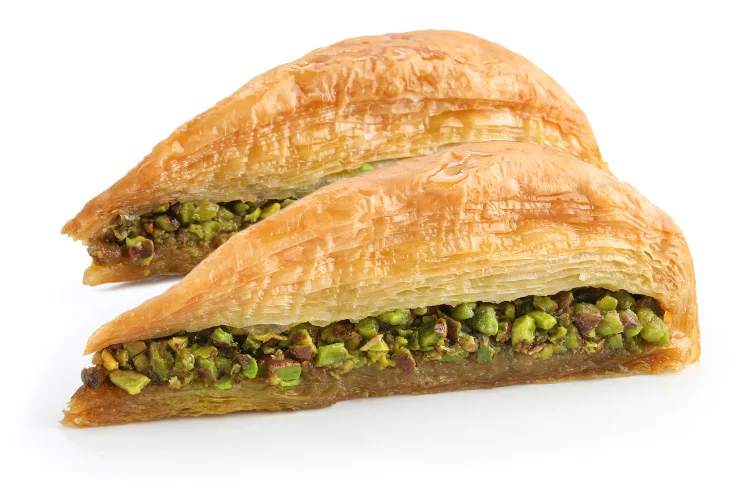
Product range qualification should cover the full range you intend to stock, not just the first SKU you plan to order. A baklava supplier who performs well on pistachio baklava but whose walnut, kadaifi, and künefe products are significantly inferior is not a full-range supplier — and discovering this after you have committed to the relationship creates problems that could have been avoided. Request samples across your full intended range from the outset.
Cold chain capability is a specific qualification requirement for buyers sourcing frozen baklava from a Turkish producer. Confirm that the supplier operates frozen production at -18°C, that temperature monitoring documentation accompanies every shipment, and that the supplier’s export logistics are set up to maintain cold chain integrity from production to your receiving dock. A baklava supplier who cannot answer detailed questions about their cold chain management is not managing it with the discipline that frozen food supply requires.
How to Approach a Baklava Supplier for the First Time
The quality of a first-time buyer’s initial approach to a baklava supplier sets the tone for the entire qualification process — and tells the supplier a great deal about what kind of buyer they are dealing with.
Before making contact, have the following information ready: your business type and the segment you are sourcing for, your estimated volume requirements and ordering frequency, your format and packaging requirements, your certification requirements, and a clear description of the product range you are interested in. A buyer who can communicate these specifics in a first contact demonstrates that they have thought about their requirements seriously — which positions them as a credible commercial partner rather than a speculative enquiry.
The first contact should be a formal enquiry rather than an informal question. Explain who you are, what your business does, what you are looking for, and what your timeline is. Ask specific questions about the supplier’s production capability, certification status, and minimum order terms. A baklava supplier’s response to this kind of structured enquiry — the speed of response, the quality of information provided, the professionalism of the communication — is itself a data point about how they will manage the supply relationship if you proceed.
A sample request should be structured and specific. Ask for samples across the full range you are evaluating, specify that you want samples in commercial packaging rather than informal samples, and ask for the product to be shipped frozen if that is the format you intend to source. A baklava supplier who sends frozen product in well-sealed, correctly labelled commercial packaging, with basic product documentation, is demonstrating the same standards they apply to commercial shipments. One who sends ambient product in informal packaging when you asked for frozen commercial samples is showing you something important about their operational standards.
Red flags in early supplier communication include: slow or vague responses to specific questions; inability to provide current certification documents; reluctance to confirm product specifications in writing; pressure to place an order before qualification is complete; and inability to answer detailed questions about production origin, cold chain management, or halal certification scope.
Evaluating Samples: What First-Time Buyers Often Get Wrong
Sample evaluation is necessary but not sufficient as a qualification tool. First-time buyers who make their baklava supplier selection based primarily on a taste test are using an incomplete evaluation framework.
Taste and eating quality are obviously important — the product needs to be good. In evaluating eating quality, focus on the specific variables that indicate production quality: nut content per piece, nut freshness and flavour intensity, filo texture and consistency, syrup balance. A baklava with inadequate nut filling, stale nuts, inconsistent filo, or a syrup that is either too heavy or too light is a product with quality management problems that will not improve with scale.
But taste is only one dimension of sample evaluation. Packaging integrity matters — if the sample arrives with damaged packaging, temperature excursion evidence, or inadequate labelling, these are operational quality signals that indicate how commercial shipments will be managed. Frozen format presentation matters — product that has been frozen and shipped correctly should thaw with the texture and eating quality of freshly made baklava. Product that has clearly been frozen and thawed multiple times, or that shows evidence of temperature variation, does not.
Documentation accompanying the sample matters. A baklava supplier who sends samples with a basic product specification sheet — listing nut content, ingredients, allergens, and nutritional information — is demonstrating the documentation discipline that commercial supply requires. One who sends samples with no documentation is not.
Evaluating across the full intended range is more important than evaluating the flagship SKU thoroughly. The pistachio baklava that most baklava suppliers show first is typically their best product, produced under conditions of close attention for a prospective buyer evaluation. The walnut baklava, the kadaifi, and the assorted formats are more revealing of the supplier’s genuine production capability across the range.
One sample batch is not enough. Before placing a first commercial order, request samples from a second production batch — preferably several weeks after the first. Consistency between batches is the quality indicator that a single sample cannot provide.
Placing Your First Order: What to Confirm Before Committing
The transition from sample approval to first commercial order is where first-time buyers most frequently make avoidable mistakes. The following confirmations should be in place, in writing, before an order is placed.
Product specification agreement covers the quality parameters for each SKU: nut content percentage per piece, format dimensions, weight per piece and per pack, packaging specification, labelling requirements for your market, and cold chain specification. A baklava supplier who resists putting these specifications in writing does not intend to be held to them.
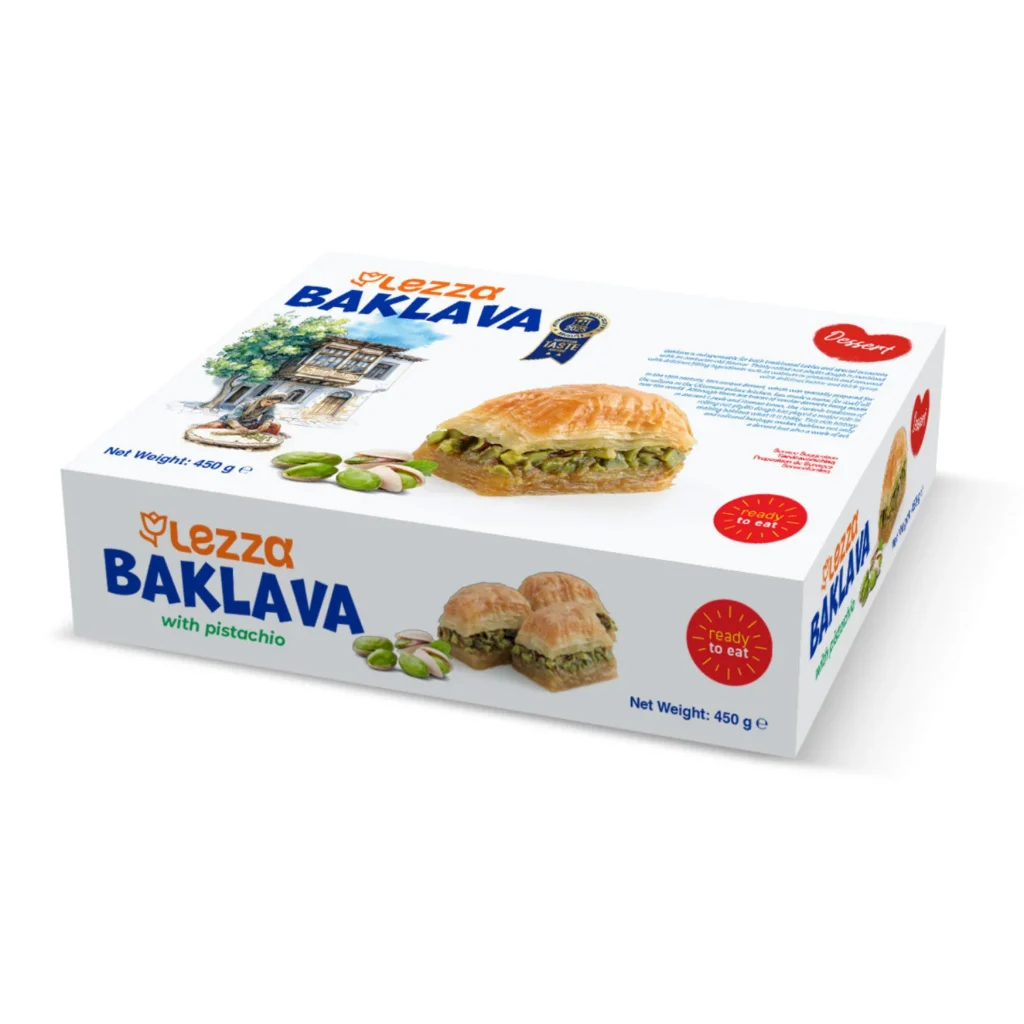
MOQ and pricing confirmation should include the minimum order quantity per SKU and in total, the per-unit price at the agreed volume, the currency, and the payment terms. For a first order with a new baklava supplier, payment in advance or against documentary evidence of shipment is standard — extended credit terms are typically available only once a relationship is established.
Lead time and delivery schedule confirmation should include the production start date, the expected loading date at the production facility, the estimated arrival date at the destination port, and the expected delivery date to your facility. Build a buffer of at least one week between the expected delivery date and the date by which you need product in stock.
Documentation checklist confirmation covers what you will receive with the shipment: current certification documents, batch COAs, halal certification confirmation for the relevant product lines, temperature monitoring logs for the cold chain, and EU import documentation for the shipment. Confirm this list with the supplier before the order is placed — not after the shipment arrives.
What to Expect After the First Delivery
The first commercial delivery from a new baklava supplier is as much a qualification event as the sample evaluation. How you manage it sets the standard for the supply relationship going forward.
Quality check on receipt should cover product temperature — confirming cold chain integrity on arrival — packaging condition, labelling completeness, and eating quality across all delivered SKUs. Eat a sample from the delivery and compare it to the approved sample. Differences in nut content, filo texture, or syrup balance that were not present in the sample are quality variances that should be raised immediately.
If delivered product differs from the approved sample, raise it with the baklava supplier directly and specifically — describing the variance, providing photographic evidence where possible, and requesting a root cause explanation and corrective action commitment. The quality of a supplier’s response to a first quality issue is one of the most informative indicators of how they will manage quality throughout the relationship. A supplier who responds quickly, takes the issue seriously, and provides a credible corrective action plan is a supplier worth continuing with. One who deflects, minimises, or fails to respond is not.
Constructive feedback at this stage — specific, documented, and professionally communicated — signals to the baklava supplier that you are a serious buyer who will hold them to the agreed specification. This signal is commercially valuable: suppliers invest more in accounts that engage seriously with quality management than in those who accept whatever arrives.
Scaling from First Order to Long-Term Supply
The first order is the beginning of a supply relationship, not the end of a qualification process. The buyers who get the best commercial outcomes from their baklava supplier relationships are those who invest in the relationship from the first order onward.
Volume growth is the most straightforward path to improved commercial terms. As annual volume with a baklava supplier increases, buyers move through the supplier’s volume pricing tiers, access more flexible MOQ terms, and receive better lead time commitments. Buyers who consolidate their baklava supply with a single supplier — rather than splitting volume across multiple relationships — reach these tiers faster and with more leverage.
Introducing new SKUs into an established supply relationship is operationally straightforward when the baklava supplier has already demonstrated full-range capability. A buyer who started with two SKUs and wants to add kadaifi, künefe, and gift box formats has the supplier relationship, documentation process, and cold chain arrangements already in place — the incremental effort of ranging additional products is minimal.
Moving from standard wholesale into private label is the most commercially significant transition available in a baklava supplier relationship. Buyers who have established a reliable wholesale supply relationship with a producer who has genuine private label capability can make this transition with confidence — they have the quality evidence, the relationship capital, and the production familiarity that private label development requires. The wholesale relationship is the foundation from which private label brand development is most effectively launched.
Seasonal planning from the second order onward makes the supply relationship significantly more reliable. Share your Ramadan, Christmas, and Easter demand forecasts with your baklava supplier in advance — give them the production planning visibility they need to prioritise your account. Buyers who provide advance demand visibility get better capacity allocation and more predictable delivery than those who order reactively.
Why Lezza Foods
Lezza Foods has been operating as a baklava supplier since 2013, with production based in Gaziantep — the production capital of authentic baklava. The business today supplies retail and foodservice clients across more than 20 European countries and manages private label production for more than 20 brands. For first-time buyers evaluating a baklava supplier, this track record provides the commercial evidence that qualification requires — not theoretical capability, but current, verifiable delivery at scale.
The Lezza Foods client base reflects the breadth of the supply operation. Retail partnerships with major chains including Aldi and Kaufland demonstrate the production quality and delivery reliability that demanding European retail accounts require. The partnership with Hanos, one of Europe’s leading foodservice distributors, confirms that Lezza Foods meets the operational standards of professional foodservice supply. For first-time buyers who want to know whether a baklava supplier can deliver on their promises, these relationships provide a straightforward answer.
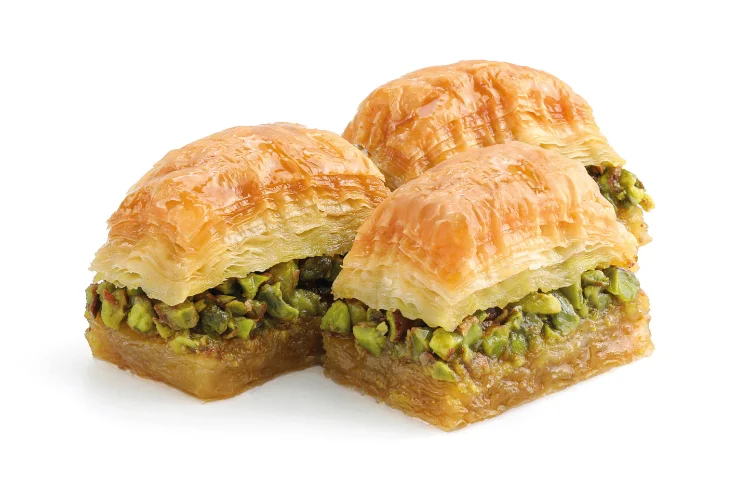
The production standard is preservative-free and frozen throughout. Antep pistachios, real butter, authentic Anatolian recipes — no additives, no shortcuts. Product ships frozen from Gaziantep to European distribution points via documented cold chain logistics, and arrives at the quality standard that Gaziantep production delivers. The full product range — pistachio baklava, walnut baklava, cashew baklava, kadaifi, künefe, bird’s nest, rolled formats, and assorted gift configurations — is available from a single supply relationship, allowing first-time buyers to start with a focused range and expand as demand develops.
For first-time buyers who are ready to start the conversation, the product catalogue is available at lezzafoods.eu. The team is set up to handle first enquiries from businesses entering the category, as well as established wholesale and private label accounts across Europe.
Conclusion
Finding the right baklava supplier for the first time takes more effort than placing an order with the first trader who appears in a search result. It requires clarity on what you are looking for before you start searching, an understanding of the supplier landscape and what different supplier types actually offer, a structured qualification process that covers production origin, certifications, full-range capability, and cold chain management, and the discipline to evaluate samples thoroughly rather than just tasting the flagship product.
The investment in this process pays back across every subsequent order in the relationship. A baklava supplier who passes a thorough qualification framework is a supplier who will deliver consistent quality, support your business as your volume grows, and provide the private label capability you will eventually want. A supplier who is chosen on the basis of a convenient sample and a competitive price will eventually reveal why that process was insufficient.
The baklava category in Europe is growing. The businesses that enter it with the right supplier relationships from the start are the ones best positioned to capture that growth.