The Complete Guide to Baklava Products: Types, Formats, and What B2B Buyers Need to Know
Baklava is one of the most recognised dessert names in European food culture — and one of the least understood as a product category. Most consumers know what pistachio baklava looks like. Most B2B buyers know they should be stocking it. But the full breadth of baklava products available from a serious Anatolian producer — the different nut variants, the alternative pastry formats, the specialty configurations, the gifting products — is far wider than a single product, and buyers who do not understand the full category are making ranging decisions with an incomplete picture.
This matters commercially. A retailer who stocks only pistachio baklava is leaving a significant portion of the category’s sales potential on the shelf. A foodservice distributor who does not understand the difference between kadaifi and classic filo baklava products cannot advise their restaurant customers on menu development. A private label buyer who does not know the full range of baklava products available cannot brief a manufacturer on a range that will perform.
This guide covers every major type of baklava product in detail — what it is, where it comes from, what distinguishes quality from commodity in each format, and how it fits into retail, foodservice, and private label ranging decisions. It is written for B2B buyers who want to understand the category they are sourcing, not just the single SKU they are currently ordering.
What Baklava Products Are — and Where They Come From
All baklava products share a common ingredient architecture: a pastry base, a nut filling, a fat component applied between layers, and a syrup applied after baking to bind and sweeten the finished product. Within this architecture, the variation in pastry type, nut variety, fat source, syrup composition, and assembly technique produces the range of distinct baklava products that the category encompasses.
The origin of this product family is Anatolian and Levantine — a culinary tradition stretching across what is now Turkey, Lebanon, Syria, and parts of the broader Middle East. Within Turkey, Gaziantep has developed into the undisputed capital of baklava production, a status recognised officially through Protected Geographical Indication for Gaziantep baklava and UNESCO Creative City of Gastronomy designation for the city itself. The production expertise, the ingredient ecosystem — particularly the Antep pistachio grown in the region — and the manufacturing infrastructure concentrated in Gaziantep establish it as the quality benchmark against which all baklava products from other origins are implicitly measured.
For B2B buyers, understanding this origin context matters beyond the provenance narrative. It explains why baklava products produced in Gaziantep by manufacturers with genuine local roots are structurally different — in ingredient quality, in production expertise, in recipe authenticity — from baklava products assembled elsewhere using substitute ingredients and adapted techniques. The category has a quality ceiling defined by its place of origin, and buyers who source from that origin are working at that ceiling rather than below it.
Pistachio Baklava: The Flagship Product
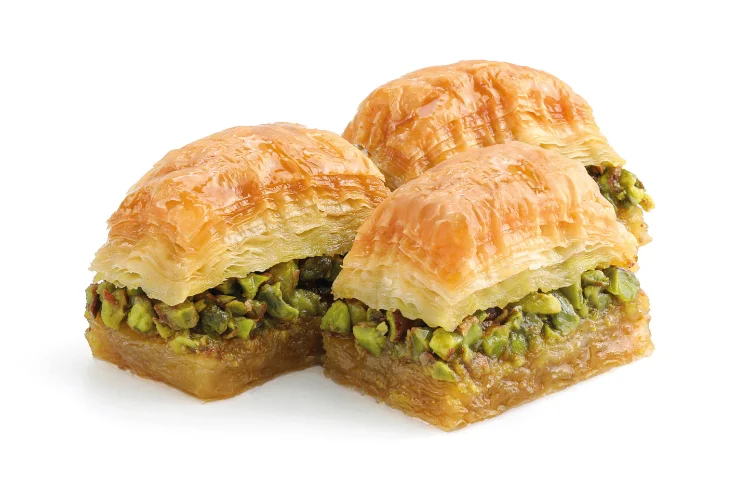
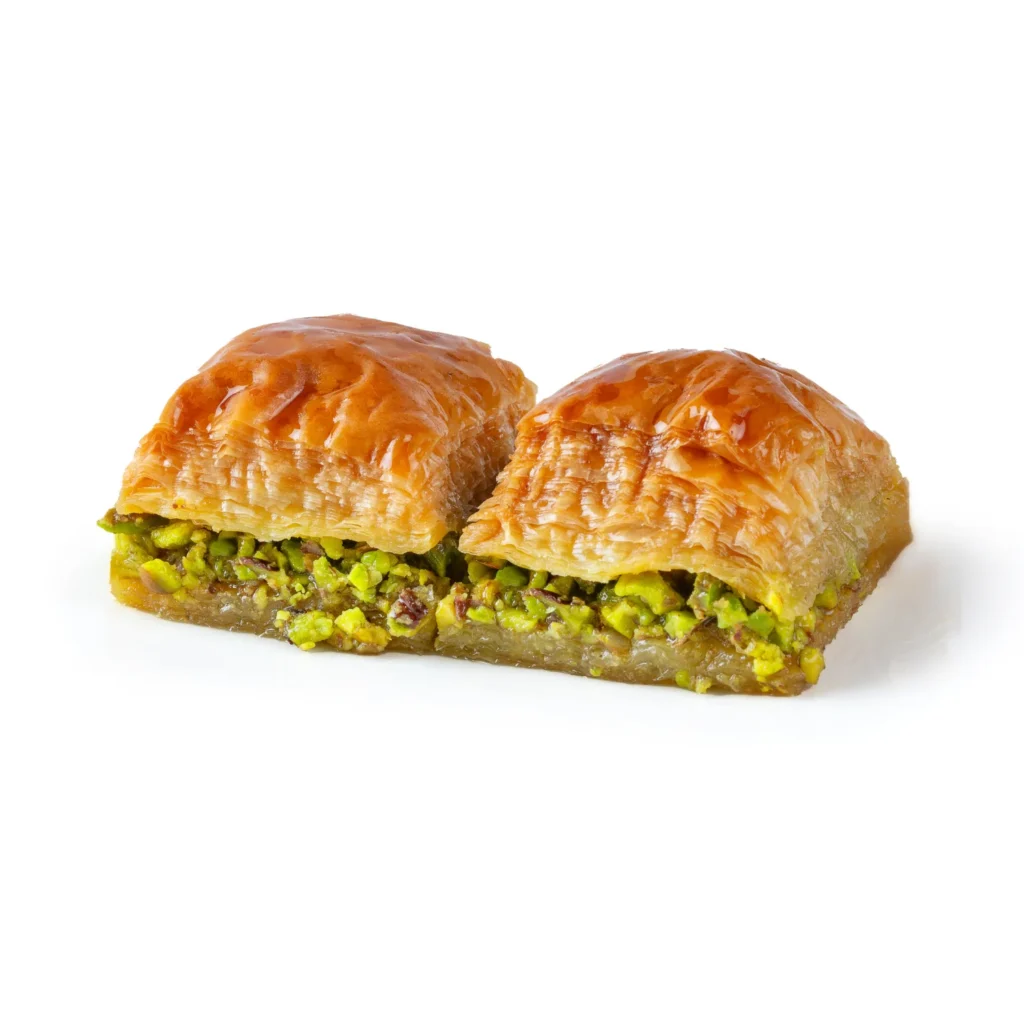
Pistachio baklava is the defining product of the category — the format most closely associated with the Gaziantep tradition, the highest-value SKU in most retail and foodservice ranges, and the product against which consumers and buyers most often benchmark quality across the baklava products they encounter.
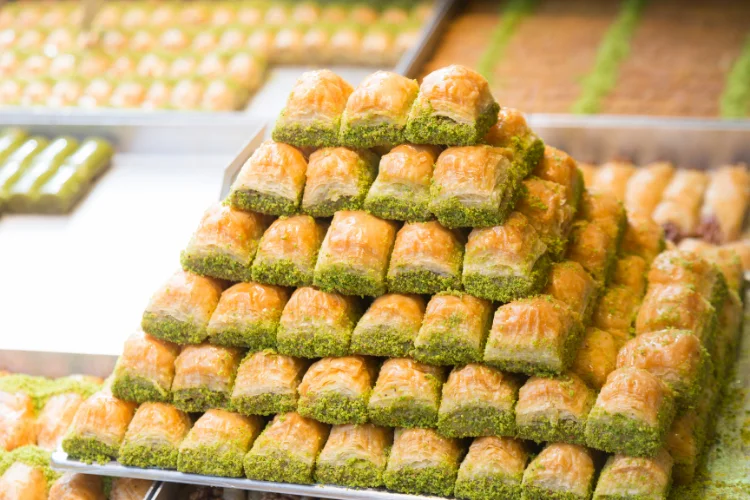
The quality of pistachio baklava is determined above all by the quality of the pistachios used. The Antep pistachio — grown in the agricultural region around Gaziantep — is smaller, more intensely flavoured, and more vibrantly green than the Iranian or Californian varieties that producers outside the Gaziantep ecosystem typically use. The colour difference alone is immediately visible: authentic Gaziantep pistachio baklava products have a deep, vivid green filling that commodity versions made with lower-grade nuts cannot replicate. The flavour intensity is equally distinctive — Antep pistachios have a richness and depth that makes the nut filling the dominant flavour experience rather than a background note behind sweetness.
Classic pistachio baklava products come in several cuts. The rectangular cut — sometimes called the Gaziantep cut — produces long, flat pieces with a high surface-area-to-depth ratio that emphasises the layered filo structure. The diamond cut produces the more widely recognised rhombus shape, with a slightly thicker profile. Rolled pistachio baklava — filo sheets rolled around a pistachio filling rather than layered — produces a different textural experience and a more cylindrical visual presentation that some retailers and foodservice operators find easier to portion and serve.
For retail buyers, pistachio baklava products are the anchor SKU around which a baklava category is built — the product that drives the highest unit value and supports premium price positioning. For foodservice buyers, pistachio baklava is the dessert menu item with the strongest consumer recognition and the most established price expectation. For private label buyers, it is the flagship product whose quality most directly determines the perceived value of the entire branded range.
Walnut Baklava: The Most Widely Consumed Variant
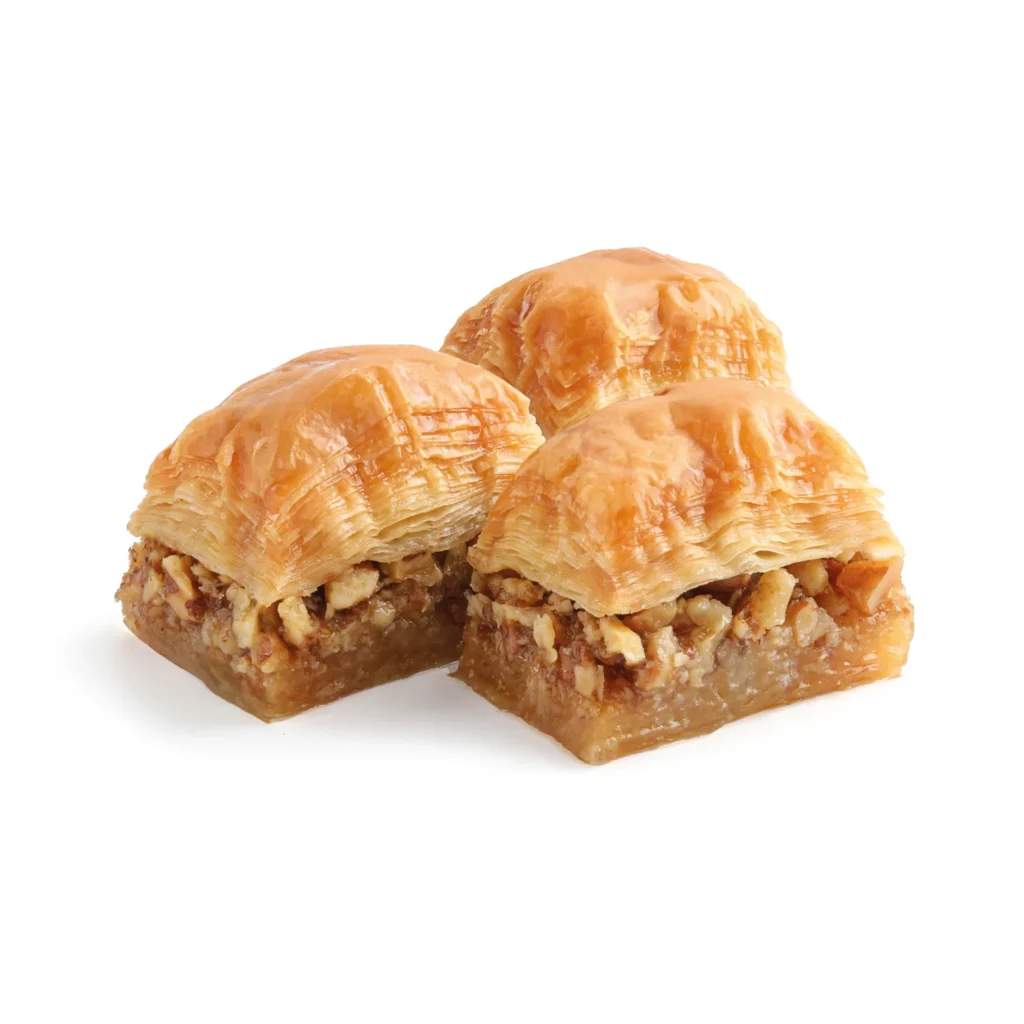
While pistachio baklava carries the highest prestige, walnut baklava products outsell pistachio in volume terms across many European markets. The price differential between walnuts and pistachios makes walnut baklava a more accessible entry point for consumers, and its flavour profile — earthier, less intensely sweet than pistachio, with a slightly more robust texture — appeals to consumer segments who find pistachio baklava too rich.
Walnut baklava products follow the same structural logic as their pistachio counterparts: filo layers, walnut filling, butter, syrup. The quality markers are different, however. The freshness and grade of the walnuts are the primary quality variable — stale or low-grade walnuts produce a bitter, astringent filling that undermines the entire product. The syrup balance is particularly important in walnut baklava, as the more assertive flavour of walnuts requires a syrup formulation that complements rather than overwhelms.
For retail buyers, walnut baklava products serve the volume-driving role in a category range — the accessible price point that brings repeat buyers into the category and funds the shelf space investment. For foodservice buyers, walnut baklava offers menu variety alongside pistachio without the cost implications of a full pistachio range. For distributors supplying both mainstream and specialty accounts, walnut baklava products are the SKU that moves consistently across both segments without the seasonality that can affect pistachio demand.
Cashew and Mixed Nut Baklava: The Growing Middle Ground
Cashew baklava products occupy a distinctive position in the category — between the premium prestige of pistachio and the volume accessibility of walnut, with a flavour and texture profile that is milder and creamier than either. The cashew’s natural sweetness and soft texture produce a baklava with a gentler, more approachable eating experience that appeals to consumers who find the intensity of pistachio or the robustness of walnut less appealing.
Mixed nut baklava products — combining two or more nut varieties in a single product — serve a different commercial purpose. They offer category variety without requiring buyers to range additional single-nut SKUs, and they perform particularly well in assorted format products and gift configurations where variety within a single box or tray is commercially valuable.
For retail buyers, cashew and mixed nut baklava products provide the range architecture between anchor and premium SKUs that prevents a category from feeling like a two-product range. For foodservice distributors, they are the products that appeal to customers whose own consumers are less familiar with baklava and who benefit from a less intense introduction to the category.
Kadaifi: The Shredded Wheat Format
Kadaifi is one of the most commercially significant baklava products in the Anatolian tradition — and one of the most under-ranged by European buyers who have not taken the time to understand it. Rather than filo pastry sheets, kadaifi uses fine shredded wheat strands — kataifi dough — which are layered with nut filling, soaked in butter, baked until golden and crisp, and finished with syrup. The result is a product with a completely different visual presentation and textural profile from filo-based baklava products: lighter, more open, with a crunch that comes from the shredded wheat structure rather than compressed filo layers.
Kadaifi is not a niche product in its production markets. In Gaziantep and across Turkey, Lebanon, and the broader Levant, it is a category staple with as much consumer recognition as classic filo baklava. In European foodservice, it has established a strong presence in Middle Eastern restaurants, Lebanese and Turkish casual dining, and the growing number of Mediterranean-focused food concepts that are bringing Anatolian dessert culture into mainstream European dining. In European retail, it remains under-ranged relative to its consumer demand potential — which represents an opportunity for buyers who are willing to range beyond the flagship pistachio SKU.
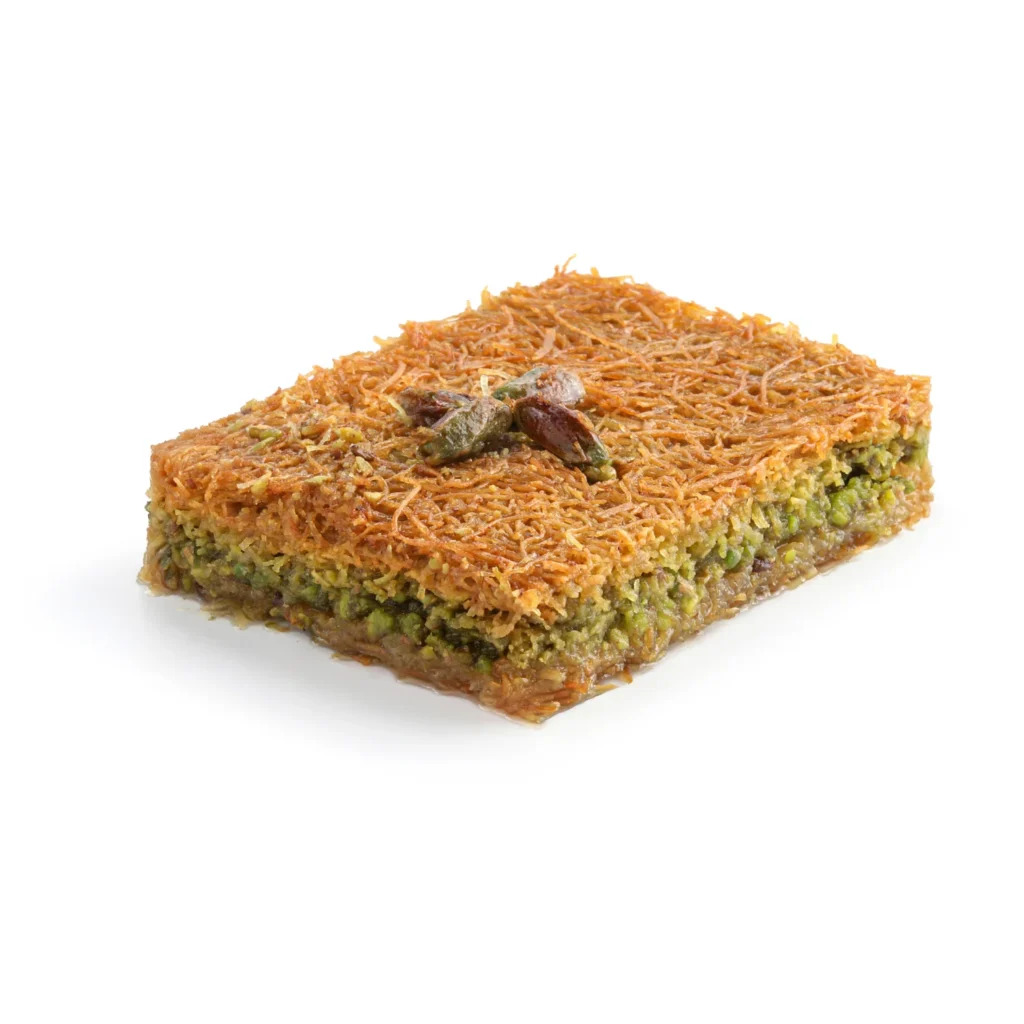
The quality markers for kadaifi products are similar to those for filo baklava: nut content, nut quality, butter authenticity, and syrup balance. The additional quality variable specific to kadaifi is the shredded wheat itself — the fineness, consistency, and crispness of the kataifi dough after baking. Kadaifi products from producers who do not specialise in this format often have uneven shredded wheat consistency or inadequate crispness — a quality failure that is immediately apparent to any consumer familiar with well-made kadaifi.
Not all baklava suppliers produce kadaifi seriously. Buyers evaluating suppliers for full-range capability should request kadaifi samples specifically and assess them independently of the filo-based baklava products in the range.
Künefe: The Warm Cheese Pastry
Künefe occupies a unique position within the broader family of Anatolian baklava products — it is made from the same kataifi shredded wheat dough as kadaifi, but filled with fresh, unsalted cheese rather than nuts, finished with syrup, and traditionally served warm. The result is a product with a completely different flavour and texture profile from any other item in the baklava family: savoury-sweet, with the pull of melted cheese against the crunch of golden shredded wheat, balanced by a light syrup finish.
Künefe has developed a significant and growing following in European foodservice over the past several years. Middle Eastern restaurants, Turkish casual dining operations, and increasingly mainstream Mediterranean food concepts have added it to their dessert menus as a differentiated offer that consumers who have encountered it in Turkey or Lebanon actively seek out in European dining settings. The product’s combination of visual drama — it is typically served bubbling from the pan, sometimes with a kaymak cream accompaniment — and distinctive flavour profile makes it a strong menu performer for foodservice operators who understand how to present it.
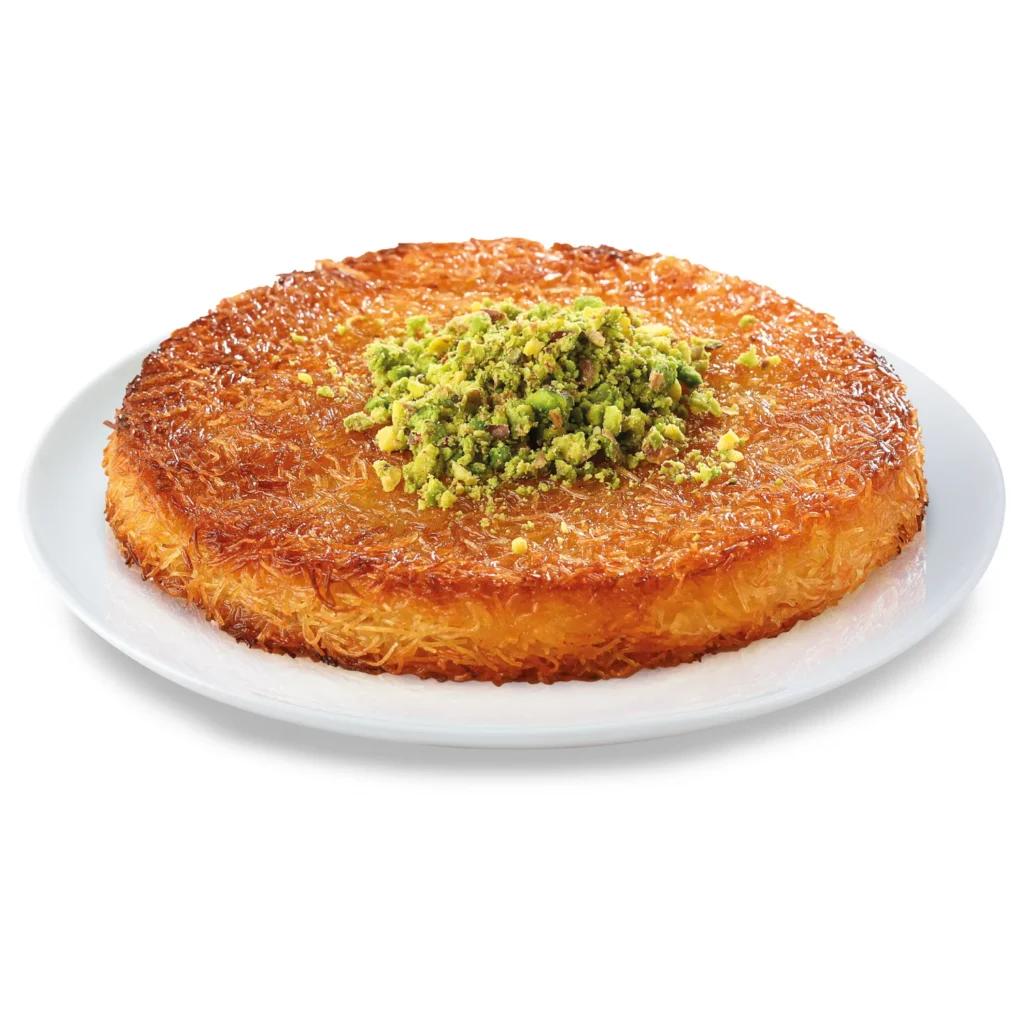
For wholesale supply in European markets, künefe is produced and distributed frozen. The frozen format allows the product to be thawed, finished in a pan or oven, and served warm — maintaining the essential characteristic of the product while making it operationally practical for professional kitchens that cannot produce it fresh. Buyers sourcing künefe products should verify that the producer’s frozen format genuinely replicates the eating quality of the fresh-made product, and that the cheese filling component meets the halal certification requirements relevant to their customer base.
Bird’s Nest Baklava and Specialty Formats
Bird’s nest baklava — also known as esh asafir or simply nest baklava — is one of the most visually distinctive baklava products in the Anatolian range. Filo or kataifi dough is shaped into small round nests, filled with whole or chopped pistachios, baked, and finished with syrup. The visual presentation — a small, golden pastry cup overflowing with vivid green pistachio — is one of the most immediately appealing in the entire baklava product family, and it performs exceptionally well in premium retail gifting and foodservice plated dessert applications.
Beyond bird’s nest, serious Anatolian baklava producers offer a range of specialty formats that serve specific commercial applications: finger baklava — thin rolled cylinders of filo with nut filling, typically pistachio — which work well as individual portion formats in foodservice and as premium retail lines; mini baklava products in various formats, which serve the gifting and sharing occasion in retail and the dessert trolley or sharing plate occasion in foodservice; and premium tray formats in which multiple baklava product types are presented together in a single retail or gifting package.
For retail buyers, these specialty format baklava products serve the premium and gifting end of the category range — the products that support the highest price points and that perform most strongly in seasonal gifting windows. For foodservice buyers, they are the menu differentiation tools that allow operators to present baklava in forms that go beyond the standard diamond-cut piece on a plate.
Assorted Baklava and Gift Box Formats
Assorted baklava products — trays or boxes combining multiple baklava types in a single package — are among the most commercially significant items in the European retail baklava market. They serve the gifting occasion more effectively than any single-format product, offering variety within a single purchase that appeals to gift buyers who want to present a range rather than a single product type.
The commercial performance of assorted baklava products in European retail concentrates around several key calendar moments. Ramadan is the strongest gifting window for baklava products in markets with significant Muslim consumer populations — Germany, the Netherlands, France, Belgium, the UK — and assorted gift boxes are the primary format for Ramadan gifting. Christmas and New Year represent the second major gifting window, with premium baklava gift boxes performing well in specialty retail and premium supermarket ranges. Corporate gifting, Eid al-Adha, and Mother’s Day represent additional calendar moments where well-designed assorted baklava products have demonstrated consistent commercial performance.
The quality of assorted baklava products varies enormously between suppliers. A well-curated assorted tray combines product types that complement each other in flavour profile and visual presentation — pistachio and walnut cuts alongside bird’s nest and specialty formats, presented in a way that communicates premium quality at first glance. A commodity assorted tray puts whatever products are available in a box with no curation logic. Retail buyers building a gifting range should assess assorted baklava products for their curation quality as much as their individual component quality — the packaging and presentation are as commercially important as what is inside.
Frozen vs Ambient Baklava Products: Why Format Matters
The production format decision — frozen or ambient — is one of the most commercially significant variables across the entire baklava products category. It affects product quality, shelf life management, distribution practicality, and retail and foodservice positioning in ways that buyers should understand before making sourcing decisions.
Ambient baklava products achieve shelf life through preservatives or through very high sugar content that inhibits microbial activity. Both approaches compromise the product. Preservatives alter the flavour profile — the characteristic freshness of well-made baklava is not preserved by chemical stabilisation. Very high sugar content produces a product that is sweeter than authentic baklava recipes call for, and that has a texture affected by the moisture management demands of ambient storage.
Frozen baklava products achieve shelf life through temperature — production at full recipe quality, blast freezing immediately after production, and cold chain maintenance through storage and distribution. The product that thaws at a European distribution point or retail back-of-house is as close to freshly made Gaziantep production as the cold chain allows. The filo retains its texture. The nut filling retains its flavour. The syrup balance is what the recipe specifies, not what the preservative system requires.
For retail buyers, frozen baklava products support clean label positioning — no preservatives, no artificial additives — that ambient products with stabiliser declarations cannot claim. For foodservice buyers, frozen products deliver the portion consistency and operational reliability that professional kitchen environments require. For any buyer positioning baklava at a premium price point, frozen production from a Gaziantep source is the format that justifies the premium most credibly.
How to Build a Baklava Product Range for Retail
A well-structured retail baklava product range is built around three tiers: a core volume tier, a mid-range tier, and a premium and gifting tier.
The core volume tier is anchored by walnut baklava in standard formats — the accessible price point that drives repeat purchase and category footfall. Pistachio baklava in a standard cut sits alongside walnut as the second core SKU, positioned at a slight premium to reflect the ingredient cost differential. These two products constitute the minimum viable retail baklava range.
The mid-range tier adds format variety and extends the category’s appeal: cashew baklava, mixed nut formats, and kadaifi for buyers whose customer base has familiarity with the broader Anatolian dessert tradition. These products increase basket size for engaged category buyers and signal a more serious category commitment to the retail buyer’s own customers.
The premium and gifting tier brings in bird’s nest formats, specialty cuts, and assorted gift box products — the items that perform in gifting windows, support premium shelf placement, and carry the highest unit margins in the category. For retailers in markets with strong Ramadan, Christmas, or corporate gifting dynamics, this tier is where the most significant seasonal revenue is generated.
A Gaziantep-origin frozen range supports this entire architecture with a clean label story — preservative-free, authentic ingredients, protected geographical indication — that retail buyers can use across all three tiers to differentiate their baklava products from commodity alternatives.
How to Build a Baklava Product Range for Foodservice
A foodservice baklava product range is structured differently from retail — the primary organising principle is service occasion rather than price tier.
For à la carte and plated dessert menus, individual portion formats are the primary requirement: diamond-cut pistachio baklava, walnut portions, bird’s nest pieces for premium positioning, and künefe for operators who want a warm dessert option with genuine theatre. These baklava products need to be portion-consistent, frozen for operational reliability, and presented in a format that requires minimal finishing in a professional kitchen.
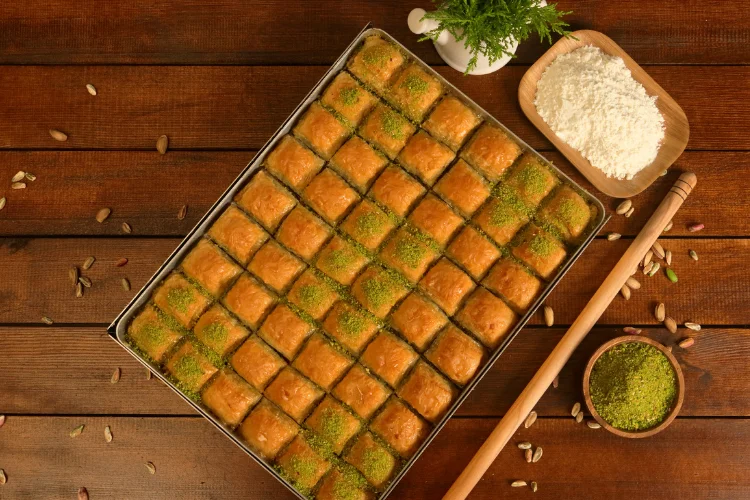
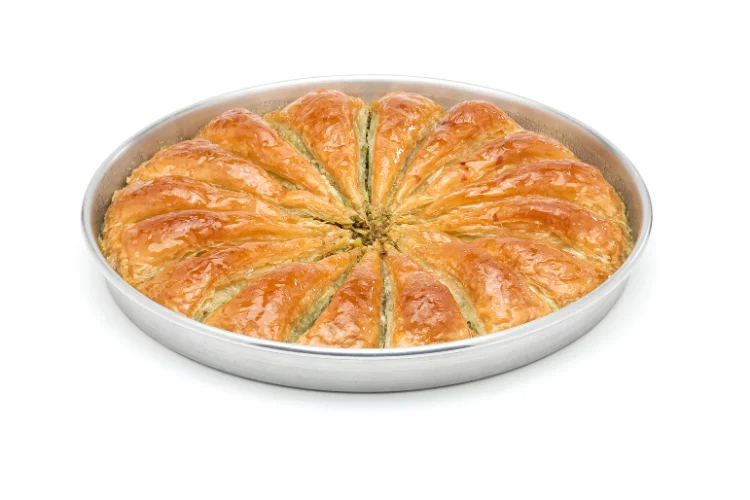
For buffet and event catering service, full tray formats are the operational requirement — large trays of mixed or single-type baklava products that can be set out for self-service, replenished from frozen stock, and managed without per-portion plating. Full tray assorted formats, combining several baklava product types in a single display tray, work particularly well for hotel buffet applications.
For dessert trolley or sharing plate service — an increasingly common format in premium casual dining and Mediterranean restaurant concepts — specialty formats and mixed presentations are the right tool. Bird’s nest baklava, rolled finger formats, and mini portions of multiple types presented together give service teams a visually engaging, variety-rich offering that encourages sharing and generates higher per-table dessert revenue than single-format plating.
Sourcing all of these formats from a single baklava products supplier simplifies logistics, consolidates documentation, and provides a unified quality standard across every service occasion.
Why Lezza Foods
Lezza Foods produces the full range of authentic Anatolian baklava products from its Gaziantep production base — established in 2013, supplying retail and foodservice clients across more than 20 European countries, and managing private label production for more than 20 brands.
The product range covers every format covered in this guide: pistachio baklava in classic cuts and rolled formats, walnut baklava, cashew baklava, mixed nut variants, kadaifi, künefe, bird’s nest baklava, specialty finger and roll formats, and assorted gift box configurations. Every product is produced in Gaziantep using Antep pistachios, real butter, and authentic Anatolian recipes — no preservatives, no artificial additives. Shelf life is achieved through freezing, and product is shipped frozen to European distribution points via documented cold chain logistics.
For retail buyers, the full Lezza Foods baklava product range provides the range architecture to build a genuine category across core, mid-range, and gifting tiers. For foodservice buyers, the frozen format variety across service occasions — from individual portions to full buffet trays — provides the operational flexibility that professional kitchen environments require. For private label buyers, the full range of baklava products is available for custom specification, branded packaging, and multi-market labelling across the 20+ country distribution footprint.
The product catalogue is available at lezzafoods.eu, and the team handles wholesale, foodservice, and private label enquiries from buyers across Europe.
Conclusion
The baklava products category is wider, more varied, and more commercially nuanced than a single pistachio SKU suggests. Buyers who understand the full range — from flagship pistachio to walnut, kadaifi, künefe, bird’s nest, and assorted gift formats — are better positioned to build ranges that perform across retail, foodservice, and private label applications.
The quality foundation that underpins all baklava products, regardless of format, is production origin and production standard. Gaziantep origin, Antep pistachios, real butter, authentic recipes, and preservative-free frozen production are the variables that separate baklava products worth building a commercial range around from commodity alternatives that will underperform at any price point.
For B2B buyers who are ready to range the full baklava products category with a supplier who produces every format from that quality foundation, Lezza Foods is the natural starting point.