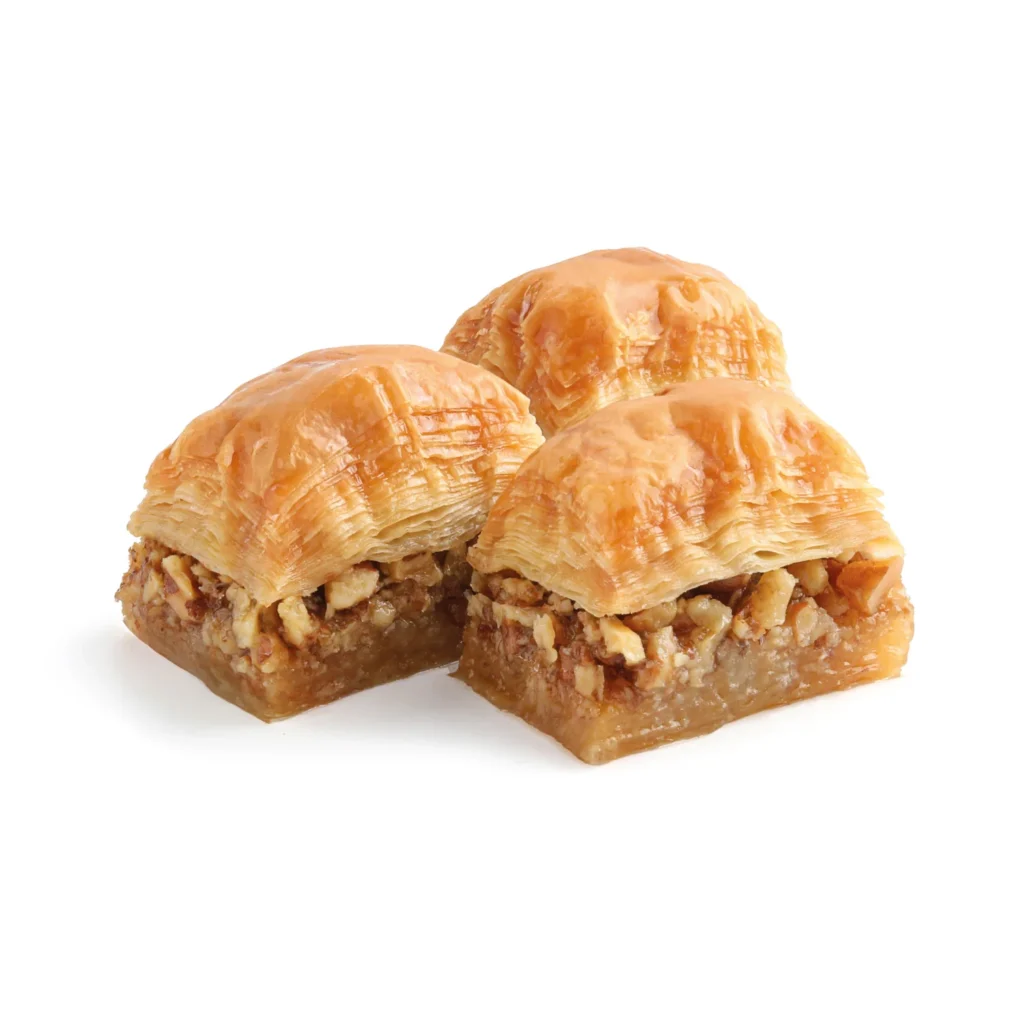
Baklava or Baklawa: Same Product, Different Markets — What B2B Buyers Need to Know
Two spellings. One product category. But for B2B buyers serving European food markets, the difference between “baklava” and “baklawa” is more than orthography — it signals different consumer communities, different product expectations, and different commercial opportunities that a buyer who treats both terms as interchangeable will consistently underserve.
“Baklava” is the Turkish and Greek spelling, dominant in the northern arc of the product’s geographic origin. “Baklawa” is the Arabic spelling, used across Lebanese, Syrian, Egyptian, Moroccan, and Gulf culinary traditions, and by the large and commercially significant diaspora communities that have brought those traditions into European cities. Both spellings refer to the same broad product family — layered pastry, nut filling, fat, syrup — but the consumer expectations that come with each are not identical, and a B2B buyer who understands the difference sources more effectively for both.
This guide is written for retailers, foodservice distributors, importers, and private label brands who are serving or planning to serve European consumer segments that use the term “baklawa” — and who want to understand what that means for their sourcing decisions, their product selection, and their supplier qualification process. It covers the linguistic and cultural background of the spelling difference, the product differences that matter commercially, the European market segments where “baklawa” is the operative term, and how to find a supplier who can serve both communities from a single supply relationship.
Baklawa vs Baklava: Where the Difference Comes From
The word “baklawa” is the Arabic transliteration of a product name that appears in slightly different forms across the languages of the broader region where this pastry tradition originated. In Turkish it is “baklava.” In Arabic it is “baklawa.” In Greek it is also “baklava.” In Farsi it is “baqlava.” The product travels across linguistic and national borders, carrying a different phonetic rendering in each.
The geographic spread of each spelling reflects the spread of the communities that use it. “Baklava” dominates in Turkey and Greece, and through Turkish and Greek diaspora communities across Northern Europe — Germany, the Netherlands, Belgium, Austria, Sweden, and the UK all have significant Turkish-heritage communities for whom “baklava” is the natural term. “Baklawa” is the operative term across the Arabic-speaking world — Lebanon, Syria, Egypt, Jordan, Iraq, the Gulf states — and through the substantial Lebanese, Syrian, Egyptian, Moroccan, and Gulf diaspora communities that are present in significant numbers across France, Belgium, the UK, Germany, and the Netherlands.
For B2B buyers in European markets, this linguistic geography has a practical implication: both terms are actively searched by European consumers, but by different consumer communities with different purchasing contexts. A buyer who optimises their product selection and marketing entirely around “baklava” may be invisible to the portion of their market that searches for “baklawa” — and may be offering a product that does not meet the specific expectations of Arabic-heritage consumers even when they find it.
Understanding which term your target consumers use — and what product experience they associate with it — is the starting point for a sourcing strategy that serves both communities effectively.
Are Baklawa and Baklava the Same Product?
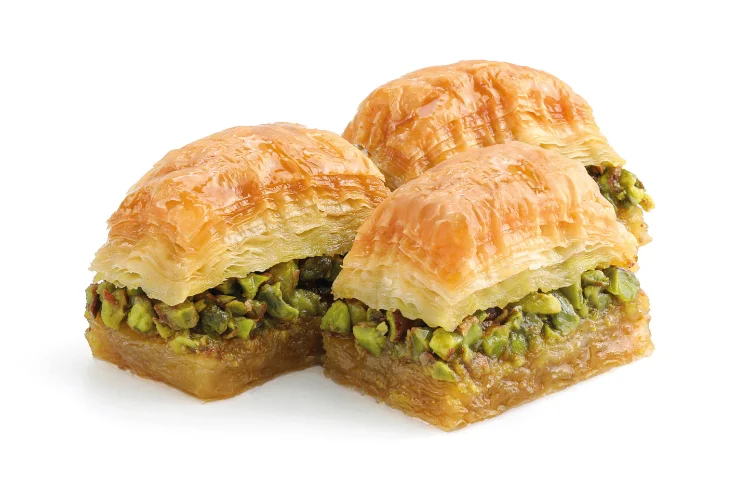
The short answer is: broadly yes, specifically no. They share the same ingredient architecture — pastry base, nut filling, fat component, syrup finish — and the same basic production logic. But the specific expressions of that architecture in the Turkish baklava tradition and the Arabic baklawa tradition differ in ways that matter to consumers who have grown up with one or the other.
The most commercially significant difference is the syrup. Turkish baklava uses a plain sugar syrup — sometimes with a small amount of lemon juice to balance sweetness, but fundamentally unflavoured. The syrup’s role is to provide sweetness and moisture without competing with the flavour of the nuts and butter. Arabic baklawa traditionally uses a syrup flavoured with rose water, orange blossom water, or both. This floral syrup note is one of the most immediately recognisable characteristics of authentic Lebanese or Syrian baklawa, and its absence is immediately noticed by consumers from these culinary traditions. A B2B buyer supplying Lebanese restaurants or Arabic specialty retailers with Turkish-style baklava — however high quality — may find that the product does not meet their customers’ expectations precisely because of this syrup difference.
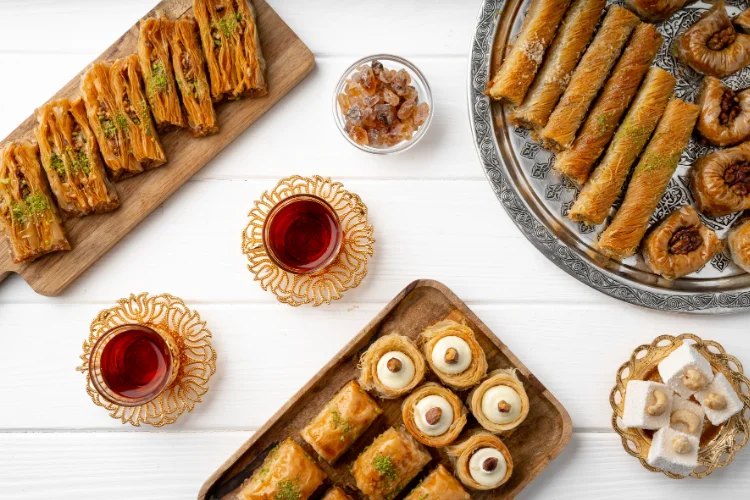
The nut preferences differ as well. Pistachios are dominant in both traditions, but the Arabic tradition also places significant emphasis on mixed nut combinations — pistachios with pine nuts, cashews with pistachios, walnut and pistachio combinations — that are less common in the Turkish tradition where single-nut purity is more valued. For buyers building a range for Arabic-heritage consumers, mixed nut formats are commercially important products, not afterthoughts.
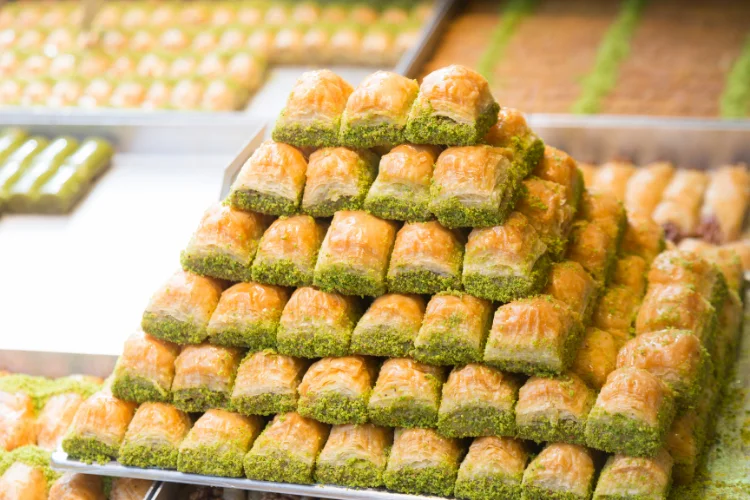
Format and portion size also differ. Turkish baklava tends toward larger pieces — the classic diamond or rectangular cut produces substantial portions. Arabic baklawa traditionally uses smaller pieces, more bite-sized, with greater variety of format within a single serving. An assorted baklawa presentation for a Lebanese restaurant might include eight or ten different small formats on a single plate, where a Turkish baklava service might present two or three larger pieces. For foodservice buyers, this format difference has direct implications for the product specifications they should request from their supplier.
The texture profile differs subtly as well. Turkish baklava tends toward a denser, richer, more intensely buttery product — the Antep pistachio and real butter tradition produces a substantial eating experience. Arabic baklawa often tends toward a lighter, more delicate texture — particularly in Lebanese interpretations — with a less intensely buttery character and a more prominent floral syrup note. These are not absolute distinctions — there is enormous variety within both traditions — but they are tendencies that experienced consumers from each tradition will notice.
The European Market for Baklawa: Which Buyer Segments Use This Term
The commercial opportunity in baklawa in European markets is concentrated in specific consumer communities and the retail and foodservice channels that serve them — and understanding this geography is essential for buyers trying to assess whether and how to serve this segment.
The Lebanese diaspora in Europe is the most commercially significant community for baklawa. With large and well-established communities in France — particularly Paris — Belgium, Germany, the UK, Sweden, and the Netherlands, Lebanese consumers represent a buyer segment that has high awareness of baklawa quality, strong preference for authentic product, and a gifting culture around baklava— particularly for Ramadan, Eid, and family occasions — that drives premium purchasing behaviour. Lebanese bakeries and confectionery specialists in major European cities have built businesses around baklawa that serve both diaspora consumers and the broader food-curious public.
Syrian, Egyptian, and Gulf communities add further depth to the Arabic-heritage baklawa market across Europe. Syrian communities — particularly in Germany, Sweden, and the Netherlands following the post-2015 migration wave — have brought strong baklava culinary traditions into European cities. Egyptian communities in Italy, France, and the UK represent an additional consumer base. Gulf diaspora communities — students, professionals, and families from Saudi Arabia, UAE, Kuwait, and Qatar living in European cities — represent a premium-spending consumer segment with high baklawa awareness and strong gifting purchase behaviour.
Moroccan and North African communities — the largest Arabic-heritage diaspora group in France, Belgium, and the Netherlands — have their own pastry traditions that overlap with baklawa in some formats and differ in others. For buyers serving North African consumer segments, it is worth understanding whether baklawa or local pastry forms like chebakia and kaab el ghazal are the primary purchase drivers — the answer varies significantly by community and by occasion.
The geographic concentrations of these communities in Europe map onto specific retail and foodservice opportunities. Paris, Brussels, London, Berlin, Hamburg, Amsterdam, Stockholm, and Malmö all have significant Arabic-heritage consumer populations with active baklava purchasing behaviour. Buyers operating in these markets who are not actively catering to this segment are leaving a commercially significant opportunity on the shelf.
What Retail Buyers Should Know When Sourcing Baklawa
Retail buyers serving markets with significant Arabic-heritage consumer populations face specific sourcing and ranging decisions that differ from the standard baklava retail approach.
Labelling is the first decision. Should the product be labelled “baklava,” “baklawa,” or both? The answer depends on the primary consumer segment being targeted. A supermarket with a broad consumer base might label the product “baklava / baklawa” to capture both search terms and both communities. A specialty retailer specifically serving Lebanese or Syrian customers might label exclusively as “baklawa” to signal cultural authenticity. A premium food hall targeting food-curious mainstream consumers might use “baklava” as the more widely recognised term while describing the product’s Arabic heritage in the copy.
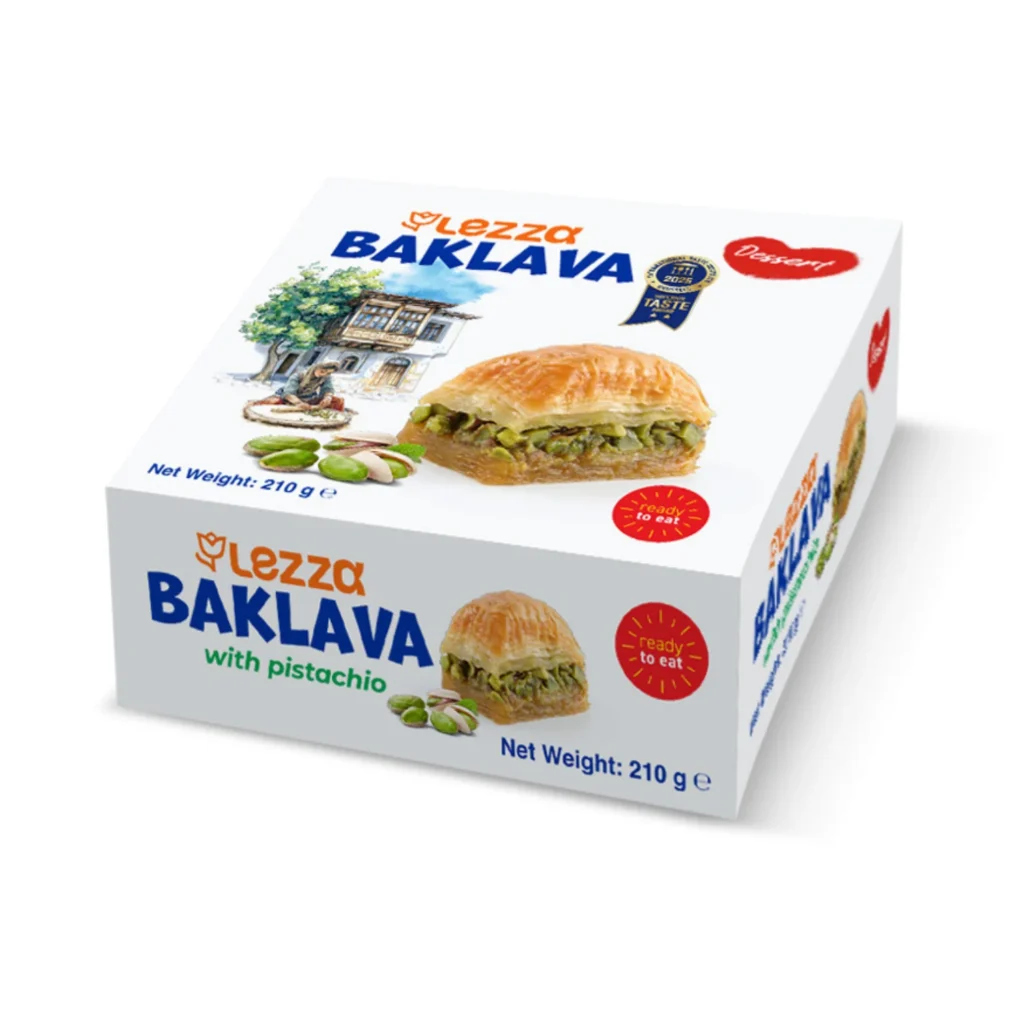
Product selection for the baklava segment requires attention to format and flavour profile. Small-format pieces, mixed nut combinations, and — where the target consumer community is specifically Lebanese or Syrian — rose water or orange blossom syrup variants are commercially important. A retail range built entirely on Turkish-style large-format pistachio baklava will not fully satisfy Arabic-heritage consumers who are looking for the baklawa formats and flavour profiles of their culinary tradition.
Packaging and presentation expectations in the Arabic consumer segment tend toward premium gift presentation — elaborate boxes, individually wrapped pieces, and visually impressive assortments that communicate the gifting value of the product. Ramadan gift box formats are particularly commercially significant, and retail buyers who stock well-curated baklawa gift assortments in the weeks leading into Ramadan will find strong sell-through in markets with significant Muslim consumer populations.
Clean label and authenticity are purchasing drivers in this segment as they are across the broader baklava market. Arabic-heritage consumers who grew up with freshly made baklawa are particularly attuned to quality differences — they will notice a product made with lower-grade nuts, vegetable fat substitutes, or artificial flavouring immediately. A supplier who offers preservative-free, frozen product made with authentic ingredients is supplying a product that can credibly claim authenticity to this discerning consumer base.
What Foodservice Buyers Should Know When Sourcing Baklawa
Foodservice buyers serving Lebanese restaurants, Arabic bakeries, Middle Eastern catering operations, and HoReCa distributors with significant Arabic restaurant customer bases face a particularly demanding set of product expectations when sourcing baklawa.
The authenticity standard in this segment is the highest of any European buyer category. A Lebanese restaurant owner or an Arabic pastry chef knows exactly what baklawa should taste like — they grew up eating it, possibly making it, and their customers have the same reference point. A baklawa supplier whose product does not meet this standard will not retain these accounts beyond the first order. The bar is not “better than average” — it is “good enough to serve to customers who know the real thing.”
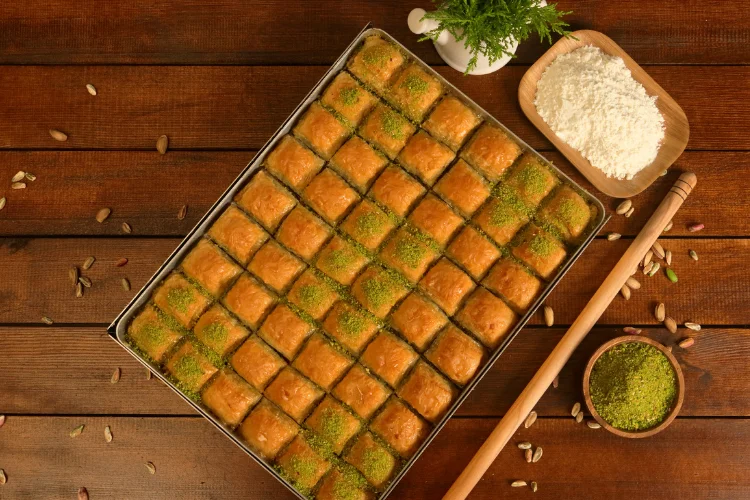
Format variety per serving is a specific operational requirement in this segment. Arabic restaurant dessert service typically presents baklawa in assorted formats — a selection of small pieces representing several product types — rather than a single format in a single portion. A foodservice baklava supplier who can deliver genuine variety — pistachio pieces, walnut pieces, mixed nut formats, kadaifi, bird’s nest, and specialty formats in small individual sizes — gives these operators the product range they need to serve authentically.
The Ramadan and Eid occasion calendar is the most commercially significant driver for foodservice baklawa buyers. Arabic restaurants, catering companies, and event organisers see dramatically elevated baklawa demand during Ramadan — for iftar dessert service, for Eid gifting, and for the family and community celebration occasions that concentrate around these religious calendar moments. Foodservice buyers who plan their baklava supply around this calendar — placing forward orders well ahead of Ramadan — ensure availability when demand peaks. Those who order reactively find their supplier’s capacity already committed to buyers who planned ahead.
HoReCa distributors like Hanos, who supply a diverse foodservice customer base that includes Middle Eastern restaurants alongside mainstream hospitality accounts, need baklawa suppliers who can deliver format variety, halal certification across the full range, and the delivery reliability that professional foodservice distribution requires.
Sourcing Baklawa in Europe: What to Look for in a Supplier
The supplier qualification criteria for baklawa sourcing are broadly consistent with the qualification criteria for baklava sourcing — production origin, certifications, product range, cold chain capability — with some baklawa-specific emphases.
Production origin in Gaziantep provides the quality foundation for both baklava and baklawa buyers. The Antep pistachio — the defining ingredient of authentic Gaziantep production — is as prized in the Arabic baklawa tradition as it is in the Turkish baklava tradition. A baklawa supplier producing in Gaziantep with direct access to Antep pistachios is supplying a raw material quality that satisfies the ingredient expectations of Arabic-heritage consumers as well as Turkish-heritage consumers. The quality floor that Gaziantep origin establishes is relevant to both markets.
Halal certification is particularly important for baklawa buyers serving Arabic consumer segments. The halal requirement is culturally non-negotiable for most Arabic-heritage Muslim consumers, and a baklawa supplier whose halal certification does not cover the full product range — including all nut variants, the filo, the butter, and the syrup — is not a compliant supplier for this segment. Buyers should verify halal certification scope across every product line they intend to source.
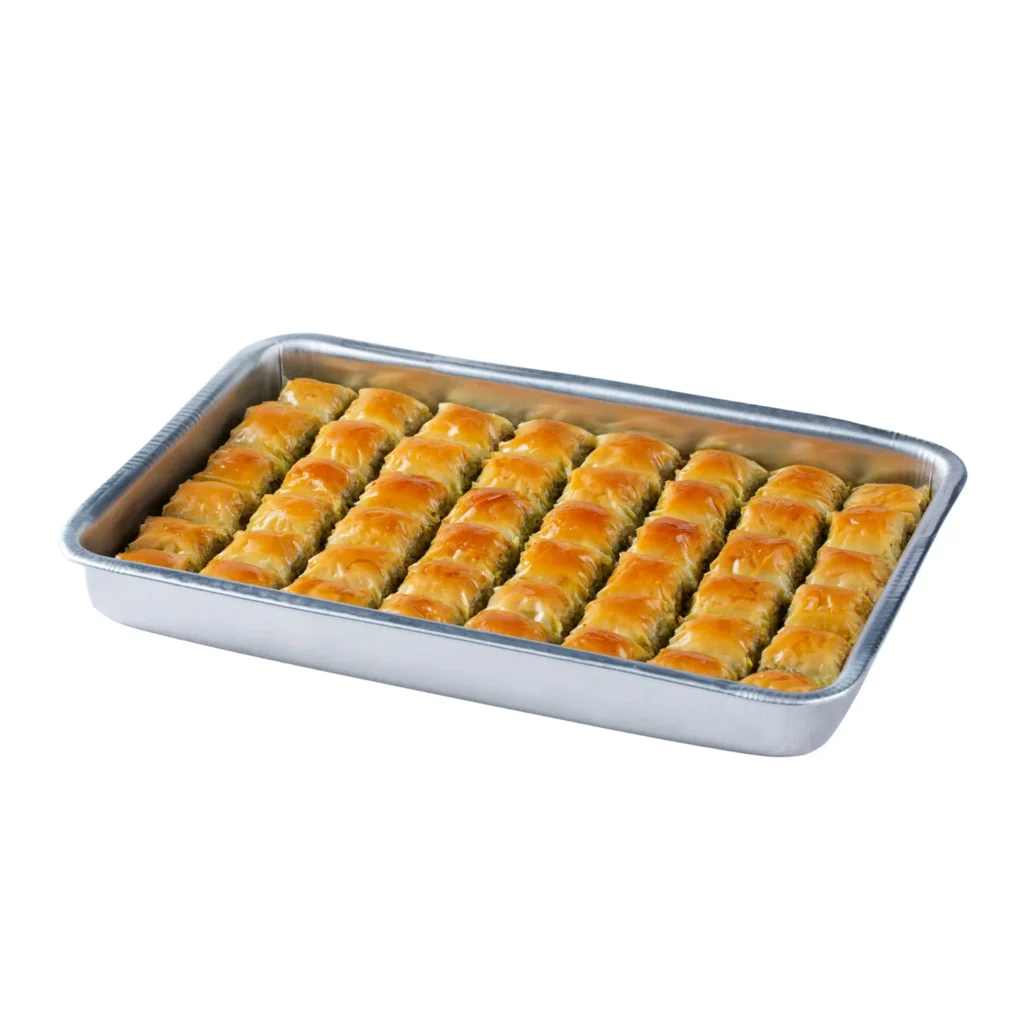
Frozen production and preservative-free credentials matter in the baklawa segment as much as in the broader baklava market. Arabic-heritage consumers who are accustomed to freshly made baklawa from a specialist bakery have a quality reference point that frozen authentic product can meet — but that preservative-stabilised ambient product typically cannot. A baklawa supplier who ships frozen from Gaziantep, with no preservatives or artificial additives, is supplying a product that can credibly present itself as authentic to this discerning consumer base.
Range depth covering small formats, mixed nut combinations, and variety assortments is a specific baklawa sourcing requirement that not all baklava suppliers can meet. Buyers serving Arabic consumer segments should confirm that their baklawa supplier produces the small-format individual pieces, the mixed nut variants, and the assorted presentation formats that Arabic baklawa tradition expects — not just the large-format single-nut Turkish baklava formats.
Baklawa for Private Label: Opportunity in the Arabic Consumer Segment
The private label opportunity in baklawa is commercially significant and still relatively underdeveloped in European markets. Food brands, specialty retailers, and importers who serve Arabic-heritage consumer communities have an opportunity to build branded baklawa ranges that speak specifically to this segment — in language, in format, in flavour profile, and in packaging — rather than adapting Turkish baklava ranges to serve a consumer base with different expectations.
A private label baklawa range for the Arabic consumer segment might include Arabic-language labelling alongside the European market language, small-format piece configurations that reflect Arabic serving tradition, rose water or orange blossom syrup variants for Lebanese and Syrian consumer communities, and premium gift box formats calibrated to the Ramadan and Eid gifting occasions. These are product and packaging decisions that require a baklawa supplier with genuine custom specification capability — the ability to work to a buyer’s brief rather than a standard catalogue.
The qualification question for private label baklawa is the same as for any private label programme: track record. A supplier currently managing private label production for more than 20 brands across European markets has the organisational infrastructure — recipe development capability, packaging management, multi-market labelling compliance, production scheduling discipline — that a private label baklawa programme requires.
The Ramadan Opportunity: Baklawa as a Seasonal Commercial Driver
Ramadan is the single most commercially significant moment in the baklawa calendar across European markets with significant Muslim consumer populations — and it is an opportunity that rewards buyers who plan ahead and penalises those who do not.
The demand concentration during Ramadan is dramatic. Baklawa consumption rises sharply during the holy month — as an iftar dessert, as a gift exchanged between families and communities, and as a product shared at the communal iftars that are a central social feature of Ramadan in European Muslim communities. The gifting dimension is particularly commercially significant: premium baklawa assortments in gift box formats are among the most commonly exchanged gifts during Ramadan and Eid al-Fitr, and the willingness to spend on quality gifting product during this period is high.
For retail buyers, Ramadan represents the highest-volume selling window in the baklawa calendar. Stock arriving late — or not arriving at all because a baklawa supplier’s capacity was already committed — means missed sales in the weeks when category revenue is highest. Forward orders placed six to eight weeks before the start of Ramadan, with production allocation confirmed by the supplier, are the correct operational approach.
For foodservice buyers, Ramadan means elevated baklawa demand across Arabic restaurants, catering companies managing community iftar events, and hotel F&B operations with significant Muslim guest populations. The format requirements for Ramadan foodservice supply differ from standard service — larger quantities, more variety, and gift-ready presentation formats for takeaway and event service.
Eid al-Fitr and Eid al-Adha represent secondary but still commercially significant peaks. The gifting behaviour concentrated around both Eid celebrations drives premium baklawa sales in retail and the gifting-focused foodservice segment. Buyers who maintain stock availability through both Eid celebrations — rather than treating Ramadan as the only relevant sales window — capture the full seasonal commercial opportunity.
Why Lezza Foods
Lezza Foods has been producing authentic baklava and baklawa since 2013, with production based in Gaziantep — the production origin that provides the quality foundation for both Turkish and Arabic market supply. The Antep pistachios, real butter, and authentic Anatolian recipes that define Lezza Foods’ production standard are as relevant to Arabic-heritage baklawa buyers as they are to the Turkish and mainstream European market.
The product range covers the full spectrum of formats relevant to both market communities: pistachio baklava and baklawa in classic cuts and small formats, walnut variants, mixed nut combinations, kadaifi, künefe, bird’s nest formats, and assorted gift configurations. All product is frozen at production without preservatives or artificial additives — the clean label and quality credentials that both Turkish baklava and Arabic baklawa consumers expect from an authentic product.
The halal certification covering the full product range meets the non-negotiable compliance requirement for Arabic-heritage Muslim consumer segments. The private label programme — currently serving more than 20 brands across European markets — provides the custom specification and packaging management capability that buyers building baklawa-specific branded ranges for Arabic consumer segments require.
The scale and reliability of Lezza Foods’ European supply operation is demonstrated by partnerships with major retail chains including Aldi and Kaufland, whose supply standards are among the most demanding in European food retail, and with Hanos, whose foodservice distribution network serves the full spectrum of European hospitality including significant Middle Eastern restaurant and catering accounts. For buyers evaluating a baklawa supplier who needs to be credible to Arabic-heritage consumers and professional foodservice operators alike, these partnerships provide the commercial evidence that qualification requires.
For buyers ready to discuss baklawa sourcing — whether for retail, foodservice, private label, or distribution — the product catalogue is available at lezzafoods.eu.
İşte sadece FAQ bölümü — mevcut makalenin sonuna, Conclusion’dan önce ekleyebilirsin:
FAQ: Baklawa and Baklava — Common Questions from B2B Buyers
What is the difference between baklawa and baklava?
The terms refer to the same broad product family — layered pastry, nut filling, fat, and syrup — but reflect different cultural traditions. “Baklava” is the Turkish and Greek spelling; “baklawa” is the Arabic spelling used across Lebanese, Syrian, Egyptian, and Gulf traditions. The key product differences are the syrup — Arabic baklawa often uses rose water or orange blossom flavouring, Turkish baklava uses plain sugar syrup — and the format, with Arabic baklawa typically using smaller, more varied pieces.
Can I source one product that satisfies both baklava and baklawa buyers?
Yes — provided the supplier produces to a quality standard rooted in authentic Gaziantep production. Antep pistachios, real butter, and genuine Anatolian recipes satisfy the quality expectations of both Turkish-heritage and Arabic-heritage consumers. The range depth required differs: Arabic baklawa buyers expect more format variety and smaller piece sizes, which a full-range Gaziantep producer can supply alongside classic Turkish baklava formats.
Is halal certification mandatory when sourcing baklava for Arabic consumer segments?
For any buyer serving Muslim consumers — which is the majority of the Arabic-heritage baklawa market in Europe — halal certification is non-negotiable. The certification must cover the full ingredient list of every product line being sourced, not just the flagship SKU. Buyers should verify scope per product line, not just per facility.
Which European markets have the strongest demand for baklava specifically?
France, Belgium, Germany, the Netherlands, the UK, and Sweden all have large and commercially active Arabic-heritage consumer communities with strong baklawa purchasing behaviour. Paris, Brussels, London, Berlin, Amsterdam, and Malmö are particularly significant concentration points. The Ramadan gifting season is the highest-demand period across all of these markets.
Do I need to label my product “baklawa” rather than “baklava” to serve Arabic consumers?
Not necessarily — many Arabic-heritage consumers recognise and purchase product labelled “baklava.” However, labelling as “baklawa” or “baklava / baklawa” signals cultural awareness and can strengthen purchase intent in communities where the Arabic spelling is the culturally familiar term. For private label ranges specifically targeting Lebanese or Syrian consumer communities, Arabic-language labelling alongside the European market language significantly strengthens the authenticity signal.
What formats should I stock for the Ramadan baklava opportunity?
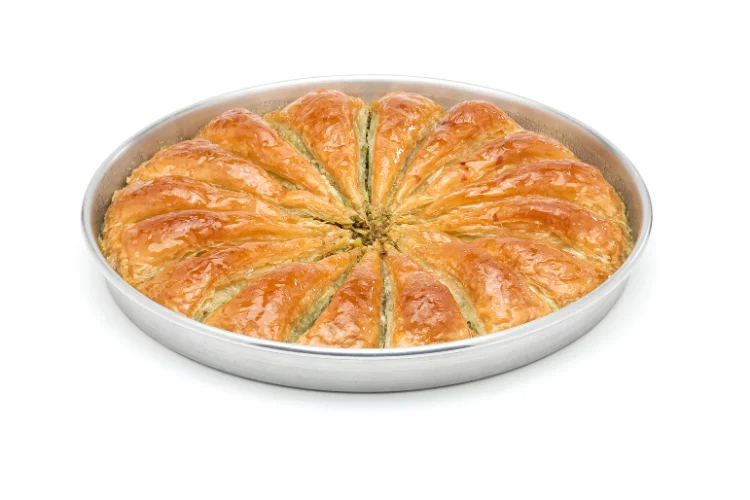
Premium gift box assortments — combining multiple baklava formats in a single presentation — are the highest-performing retail format during Ramadan. Small individual pieces in variety assortments perform better than large single-format pieces for gifting occasions. Foodservice buyers should plan for full tray supply for community iftar events and portion-cut product for restaurant dessert service. Forward orders placed six to eight weeks before Ramadan are essential — supplier capacity fills quickly in this period.
Can I source baklawa under my own private label from a Gaziantep producer?
Yes — provided the supplier has genuine private label capability, which means custom specification, packaging management, multi-market labelling compliance including Arabic language where required, and the production scheduling discipline to run branded lines alongside standard wholesale. The qualification test is track record: how many brands does the supplier currently produce for, and in which markets?
Conclusion
Baklawa and baklava are the same product family wearing different cultural identities. For B2B buyers in European markets, the commercial implication is clear: serving both communities — Turkish-heritage baklava buyers and Arabic-heritage baklawa buyers — requires understanding what each community expects from the product, and sourcing from a supplier who can deliver on both sets of expectations from a single supply relationship.
The quality foundation that satisfies both is Gaziantep origin, Antep pistachios, real butter, no preservatives, and frozen production. The range depth that serves both requires small formats, mixed nut combinations, and assorted gift configurations alongside the classic Turkish baklava formats. And the halal certification that is culturally essential for Arabic consumer segments must cover the full product range, not just selected SKUs.
A baklawa supplier who combines all of these elements is the right partner for buyers whose markets include both communities — or who are ready to enter the Arabic consumer segment for the first time.