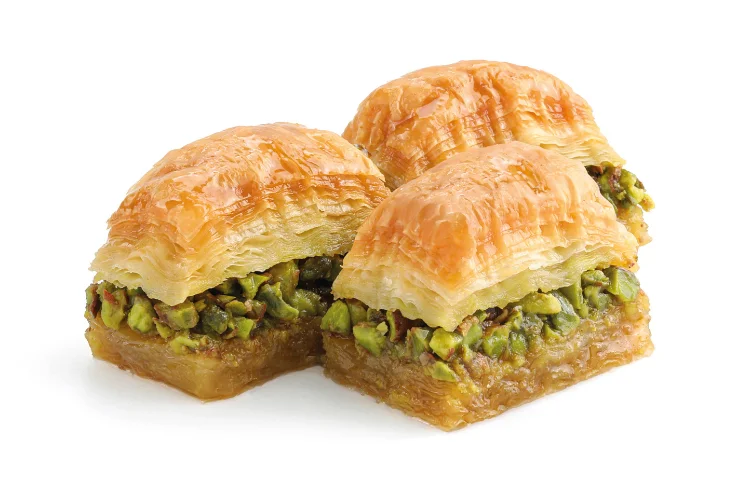
Baklava Suppliers UK: What B2B Buyers Need to Know About Sourcing, Import Compliance, and Finding the Right Partner
Baklava suppliers UK buyers can genuinely rely on — for consistent quality, post-Brexit import compliance, BRC certification, and halal coverage across the full product range — are fewer than the number of businesses claiming to offer them. The UK baklava market is one of the most commercially significant in Europe, driven by a large and diverse consumer base that includes Turkish-heritage communities, Arabic diaspora segments, South Asian Muslim consumers, and a mainstream food culture.
Those communities has embraced Mediterranean and Middle Eastern cuisine more broadly than almost any other Northern European market. But the sourcing environment is equally specific: post-Brexit import compliance, UK-specific retail certification requirements, and a halal food market that is the largest in Europe create a framework that rewards buyers who understand its details.
This guide is written for UK-based retailers, foodservice distributors, importers, and private label brands who are evaluating baklava suppliers UK businesses need to know about — whether sourcing for the first time or reviewing an existing supply relationship. It covers the UK consumer landscape, what post-Brexit import compliance means in practice, what UK supermarkets and foodservice operators require, and how to find and qualify baklava suppliers UK buyers can build long-term commercial relationships with.
The UK Baklava Market: Why Baklava Suppliers UK Buyers Choose Matter
The UK has one of the most diverse and commercially active baklava consumer bases in Europe — a function of demographic breadth, culinary openness, and a food retail environment that has consistently led Northern Europe in adopting premium and international food categories. For baklava suppliers UK businesses want to work with, this market represents a genuine commercial opportunity — provided their production quality, certification compliance, and logistics infrastructure are matched to its demands.
The Turkish-heritage community in the UK — concentrated in London but present in significant numbers in Birmingham, Manchester, and other major cities — is one of the largest in Europe. Turkish bakeries and confectionery specialists in London’s Green Lanes, Dalston, and Edmonton have built substantial businesses around baklava, and the consumer expectations they serve are among the most demanding of any buyer segment in Europe. Baklava suppliers UK Turkish community retailers choose are held to a quality standard defined by direct cultural familiarity with the authentic product.
Arabic-heritage communities — Lebanese, Syrian, Egyptian, Moroccan, and Gulf diaspora — are the second major consumer segment for baklava suppliers UK importers and distributors should prioritise. London’s Lebanese community, concentrated around Edgware Road and Kensington, is one of the most commercially significant diaspora food markets in Europe. Gulf nationals living and studying in London represent a premium-spending consumer group with strong gifting behaviour around baklava. Syrian communities in London, Manchester, and Birmingham represent a growing purchasing segment.
The South Asian Muslim consumer segment is a third and commercially underappreciated driver of demand for baklava suppliers UK foodservice and retail buyers are increasingly recognising. With approximately 3.9 million Muslim consumers in the UK, the overlap between Ramadan gifting behaviour and baklava purchasing is commercially real and growing.
Beyond diaspora and religious community segments, mainstream UK food culture has embraced Mediterranean and Middle Eastern cuisine more broadly and more quickly than most of Europe. Baklava appears on the menus of gastropubs, in the dessert ranges of premium supermarkets, and in the gifting selections of premium food halls. Baklava suppliers UK premium retail buyers choose need to offer the provenance narrative, clean label credentials, and presentation quality that these channels demand.
Post-Brexit Import Compliance: What UK Buyers Need from Baklava Suppliers UK Sources
For UK buyers sourcing from baklava suppliers in Turkey — which includes the highest-quality Gaziantep producers — post-Brexit import compliance is a practical reality that differs meaningfully from the EU model.
Before January 2021, UK importers sourcing from Turkish producers operated within the EU-Turkey Customs Union framework, which significantly simplified import documentation and eliminated customs duties on most food products. Post-Brexit, imports from Turkey into Great Britain operate under a different framework — one that requires UK-specific documentation and, in some product categories, import duties that did not previously apply.
The documentation requirements for frozen baklava imported into the UK from Turkish baklava suppliers include a health certificate issued by the Turkish competent authority; a commercial invoice and packing list; a UK customs declaration filed at the port of entry; and cold chain documentation confirming temperature maintenance throughout transit. UK buyers sourcing directly from baklava suppliers UK-based importers are already working with should confirm the specific documentation requirements with their freight forwarder before placing a first order.
UK food labelling regulations diverge from EU regulations post-Brexit in several respects that affect how baklava suppliers UK retail buyers use must format their labels. Allergen declarations, the GB address requirement for the responsible food business operator, and UKCA-related packaging requirements are the most practically significant differences. Baklava suppliers UK buyers can rely on for retail supply will have UK-compliant label templates already standardised across their major markets — buyers should confirm this capability explicitly before committing to a supply relationship.
The practical implication is straightforward: baklava suppliers UK buyers should prioritise are those with existing UK export experience. A supplier whose European export infrastructure is entirely EU-focused may not have UK-specific documentation and labelling processes in place, which creates compliance risk and administrative burden for the UK buyer.
What UK Supermarkets and Retail Chains Need from Baklava Suppliers UK Retail Buyers Work With
UK supermarket and retail chain buyers operate within one of the most demanding retail compliance environments in Europe — and the requirements they place on baklava suppliers UK retailers use reflect this.
BRCGS certification is the dominant food safety certification framework for UK supermarket supply. Tesco, Sainsbury’s, Waitrose, Marks & Spencer, and the major UK discounters all require current BRCGS certification from their food suppliers as a condition of trading. Among baklava suppliers UK retail buyers evaluate, BRCGS certification is not optional — it is the entry ticket. Buyers should verify that their prospective supplier holds current BRCGS certification whose scope explicitly covers the product lines being sourced.
UK food labelling compliance covers specific requirements that baklava suppliers UK retailers depend on must manage correctly. Allergen declarations must follow UK format, with allergens emphasised in the ingredients list. Nutritional information must be presented in the UK format. The responsible food business operator address on the label must be a UK address. Country of origin declarations must comply with UK origin labelling requirements. Baklava suppliers UK import buyers work with should be able to produce UK-compliant labels as a standard service, not a custom request.
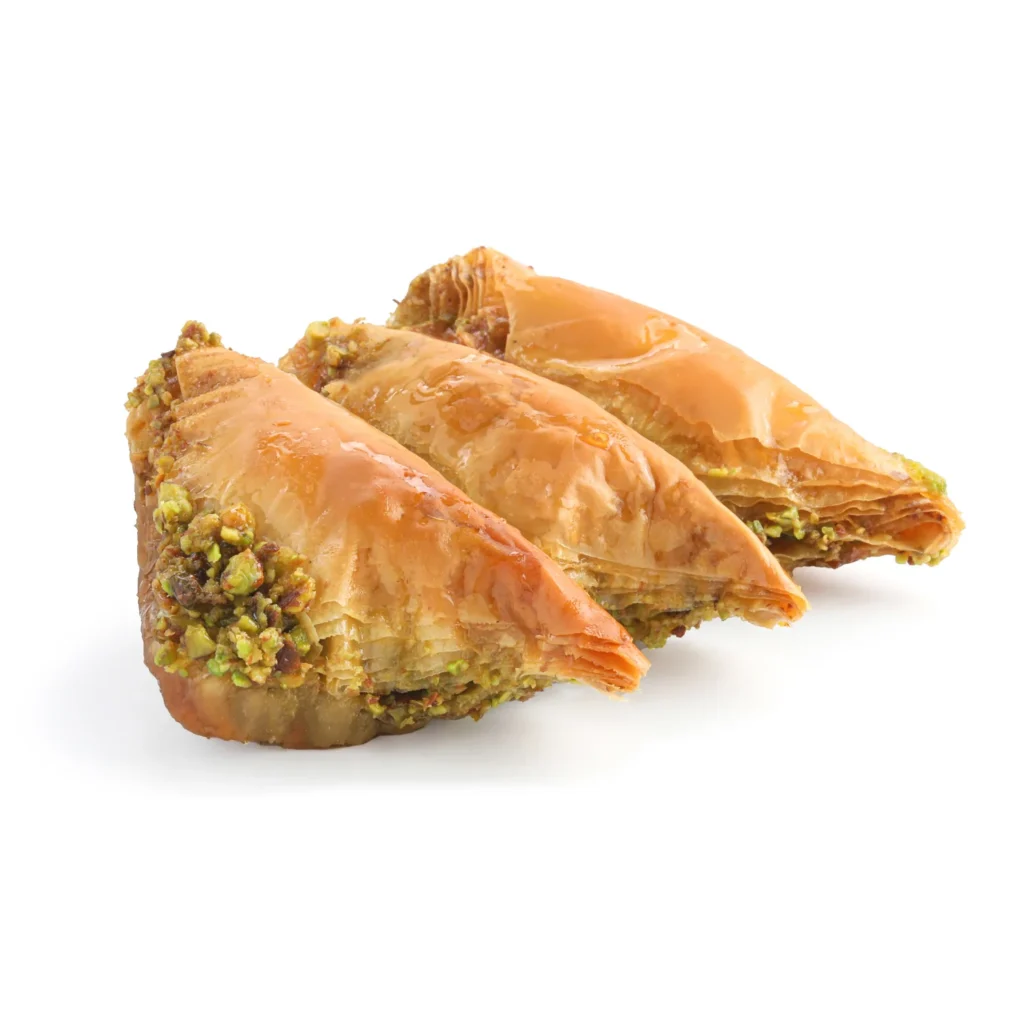
Range depth and premium positioning are commercially important in UK grocery. Waitrose and M&S Food are two of the most commercially significant channels for premium baklava in the UK — their food halls attract a premium consumer who expects authentic, provenance-led product. Among baklava suppliers UK premium retail buyers evaluate, those offering Gaziantep-origin, preservative-free frozen product with premium packaging are best positioned for these channels. Aldi and Kaufland’s established partnerships with Lezza Foods demonstrate that the same production standard that satisfies discount retail supply requirements in mainland Europe is equally capable of serving UK premium retail expectations.
Seasonal opportunities in UK retail concentrate around Ramadan, Christmas, and Eid al-Fitr. The volume concentration during Ramadan in a market with 3.9 million Muslim consumers is commercially substantial — baklava suppliers UK retail buyers use must be able to plan and deliver peak period capacity reliably.
What UK Foodservice and Restaurant Buyers Need from Baklava Suppliers UK HoReCa Sources
London’s foodservice landscape for Middle Eastern and Mediterranean cuisine is the most developed in Northern Europe — which means the quality expectations that foodservice buyers place on baklava suppliers UK restaurant operators choose are correspondingly high.
The Lebanese restaurant sector in London — concentrated on and around Edgware Road — serves a consumer base with direct cultural familiarity with authentic baklawa. Baklava suppliers UK Lebanese restaurant buyers select are evaluated against a quality standard defined by consumers who grew up eating the real product. Format variety per serving is a specific requirement: Arabic restaurant dessert service typically presents baklava in assorted small formats rather than a single large portion, which means baklava suppliers UK Middle Eastern foodservice buyers work with need genuine small-format and variety production capability.
Turkish restaurants in North and East London represent a second major foodservice segment for baklava suppliers UK operators source from. The Turkish restaurant scene in Green Lanes, Dalston, and Stoke Newington is extensive and long-established, and operators in this segment typically have access to community supply channels — which means baklava suppliers UK Turkish restaurant buyers consider must offer product quality that competes with what those informal channels provide.
Halal certification is mandatory for baklava suppliers UK Muslim foodservice buyers work with. UK-specific halal certification bodies — the Halal Food Authority and the Halal Monitoring Committee — are the most widely recognised by UK Muslim consumers and foodservice operators. The certification must cover the full product range, not just selected SKUs.
Distributors like Hanos, who supply a diverse foodservice customer base that includes Middle Eastern restaurants and mainstream hospitality accounts, represent the kind of professional HoReCa partner that baklava suppliers UK foodservice distributors trust must be able to serve with format variety, halal coverage, and delivery reliability.
What UK Importers and Distributors Need from Baklava Suppliers UK Trade Buyers Source From
UK importers and distributors sourcing directly from Turkish baklava suppliers face a specific post-Brexit operational context that shapes their supplier requirements in ways that differ from EU-based competitors.
UK import compliance documentation from Turkish baklava suppliers UK importers work with must meet GB-specific requirements. Health certificates, customs declarations, and product documentation must reference UK regulatory frameworks, and must be processed through UK customs at the port of entry. Importers transitioning from EU-based baklava suppliers to direct Turkish producer sourcing post-Brexit need to establish customs clearance and freight forwarding arrangements specifically configured for Turkey-to-GB shipments.
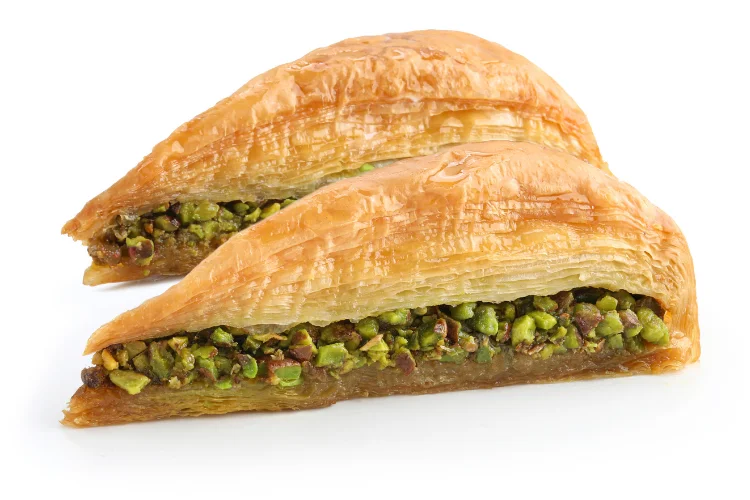
Cold chain logistics into UK ports present specific considerations for frozen baklava. Felixstowe is the primary UK container port for frozen food imports. Transit times from Gaziantep to UK ports are slightly longer than to Northern European continental ports — typically adding two to four days — which has implications for forward ordering schedules. UK buyers sourcing from baklava suppliers UK importers depend on should build this additional lead time into their inventory management.
Pricing structure for UK distribution needs to account for the post-Brexit cost structure, including customs duties and compliance costs that did not apply under the EU-Turkey Customs Union framework. Baklava suppliers UK importers negotiate with should provide UK-landed cost pricing rather than ex-works pricing, which allows buyers to accurately assess the margin architecture for UK market development.
Halal Baklava Suppliers UK Buyers Can Trust: Why Certification Matters More Here
The UK halal food market is the largest in Europe — and baklava sits within a segment of that market that is growing as awareness of the product spreads beyond Turkish and Arabic communities into the broader South Asian Muslim consumer base.
The halal certification landscape among baklava suppliers UK buyers evaluate is more complex than in most European markets because multiple certification bodies operate with different recognition levels across different consumer communities. The Halal Food Authority is the most widely recognised body for mainstream retail and for Arabic and Levantine Muslim consumer segments. The Halal Monitoring Committee has stronger recognition in the South Asian Muslim community, particularly in the Midlands and North of England.
For baklava suppliers UK retail buyers work with, HFA certification is typically the most broadly applicable. For foodservice buyers serving South Asian Muslim restaurants, HMC certification may be specifically requested. Buyers should confirm which certification body their customer base recognises before specifying halal requirements to prospective baklava suppliers UK trade buyers evaluate.
The halal scope requirement among baklava suppliers UK buyers should insist on is full ingredient coverage across every product line — filo pastry, nuts, butter, syrup, and all processing aids — applying to all SKUs in the range without exception.
Private Label Baklava: What UK Buyers Need from Baklava Suppliers UK Brands Work With
The UK own-label food market is one of the most developed in Europe, and baklava suppliers UK private label brands choose need to offer genuine custom specification and packaging management capability — not just a different label on a standard product.
The premium own-label tier — represented by M&S Food and Waitrose — is a natural home for premium private label baklava. Both retailers have established track records building own-label ranges in Mediterranean and Middle Eastern food categories, and baklava is a logical extension. Mid-market own-label baklava represents volume opportunity for Tesco, Sainsbury’s, and Co-op buyers. Food brands operating in the UK Mediterranean food space have private label baklava opportunities that leverage existing retail relationships.
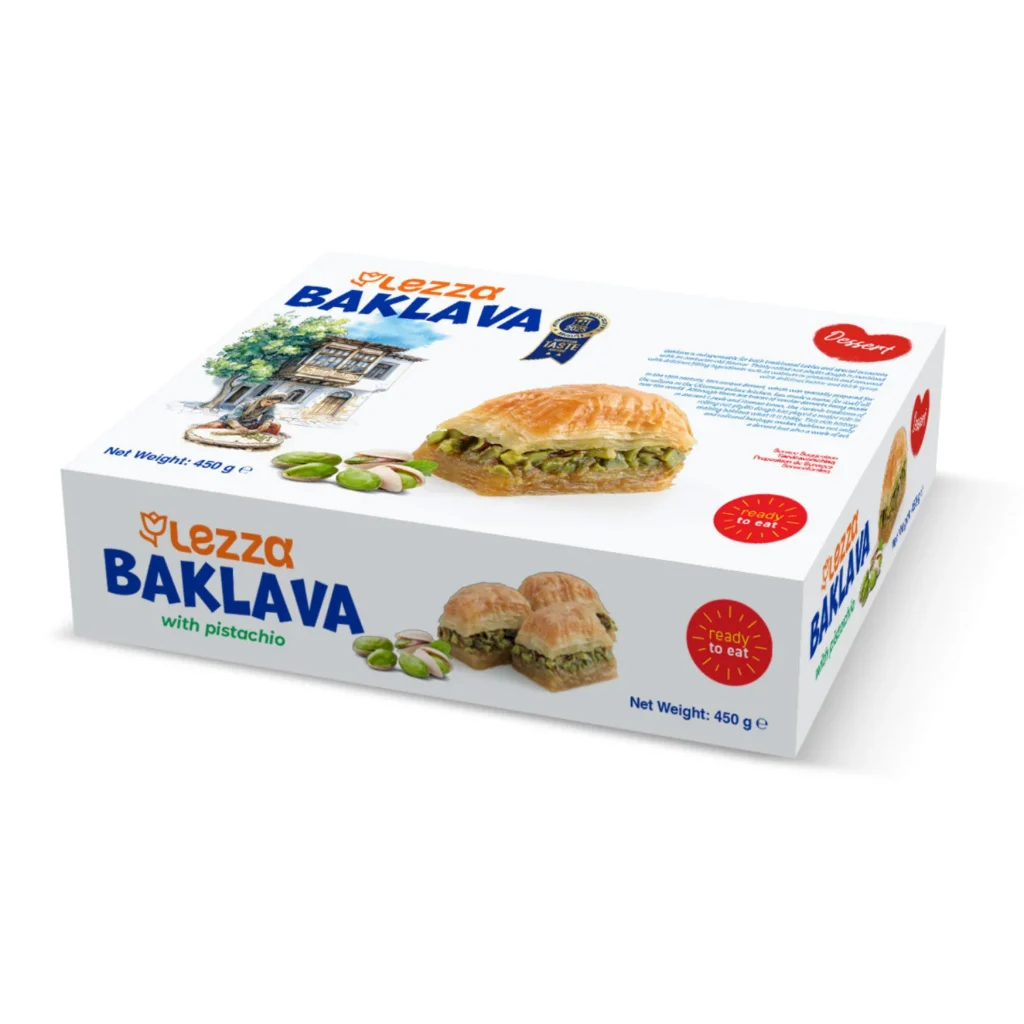
Genuine private label capability among baklava suppliers UK brands use means: custom specification capability, UK-compliant packaging management, Arabic-language labelling where required for specific diaspora communities, production batch segregation, and the track record to demonstrate all of the above. The qualification test is verifiable: how many brands does the supplier currently produce for, in which markets, and for how long?
Sourcing Frozen Baklava: What UK Buyers Should Verify
Frozen is the right format for wholesale and retail baklava supply in the UK — and the cold chain requirements from Gaziantep to UK distribution points require specific verification from baklava suppliers UK buyers source from.
The cold chain specification is -18°C throughout — from production loading through sea transit to UK port arrival and onward road distribution. Temperature monitoring documentation should accompany every delivery and be reviewed as part of the incoming goods process. Among baklava suppliers UK frozen food buyers work with, those who provide temperature monitoring logs as a standard service demonstrate cold chain management discipline. Those who do not are not managing it adequately.
Lead times from Gaziantep to UK distribution points — combining production lead time, sea transit, UK customs clearance, and onward delivery — typically run four to six weeks from order confirmation. Forward ordering on a schedule that accounts for the full lead time, rather than reactive ordering when stock runs low, is the correct inventory management approach for buyers sourcing from Turkish baklava suppliers UK importers depend on.
FAQ: People Also Ask About Baklava Suppliers UK Buyers Search For
Which baklava brand is best?
The best baklava brands are those produced in Gaziantep using authentic recipes, Antep pistachios, and real butter without preservatives. In the UK market, premium quality baklava is increasingly available through specialist retailers and foodservice distributors sourcing directly from Gaziantep producers. For wholesale and retail supply, Lezza Foods is one of the most established Gaziantep-based producers supplying the European and UK market.
Where can I buy the best baklava in London?
London has an exceptional range of baklava — from Turkish bakeries in Green Lanes and Dalston to Lebanese patisseries on Edgware Road and premium food halls in Knightsbridge and Marylebone. For wholesale supply and distribution in the UK, contact Lezza Foods at lezzafoods.eu to be connected with their UK distributors and stockists.
Which country has the best baklava?
Turkey — specifically Gaziantep — is universally recognised as producing the world’s finest baklava. Gaziantep baklava holds Protected Geographical Indication status under Turkish law, and the city holds UNESCO Creative City of Gastronomy status. The Antep pistachio, generational production expertise, and authentic recipes make Gaziantep the global quality benchmark.
Is baklava actually Greek or Turkish?
Baklava has roots across a broad geographic region spanning Anatolia, the Levant, and the Eastern Mediterranean — a culinary heritage that predates modern national borders. Both Turkish and Greek culinary traditions claim strong baklava heritage, but the Protected Geographical Indication for Gaziantep baklava and the concentration of the world’s most respected baklava production in Gaziantep are widely recognised by food historians and culinary authorities.
What is the difference between Turkish baklava and regular baklava?
Turkish baklava — particularly Gaziantep baklava — is characterised by Antep pistachios, pure butter, and a plain sugar syrup that allows the nut flavour to dominate. Arabic baklawa typically uses rose water or orange blossom syrup and smaller, more varied formats. Greek baklava commonly uses honey syrup and walnuts. The Turkish tradition, and Gaziantep production specifically, is generally considered the highest quality expression of the product.
Which city is famous for baklava?
Gaziantep, Turkey. The city holds a Protected Geographical Indication for its baklava and UNESCO Creative City of Gastronomy status. Its baklava production tradition spans centuries and is supported by the Antep pistachio — grown in the surrounding agricultural region and the defining ingredient of authentic Gaziantep baklava.
What is the most popular baklava?
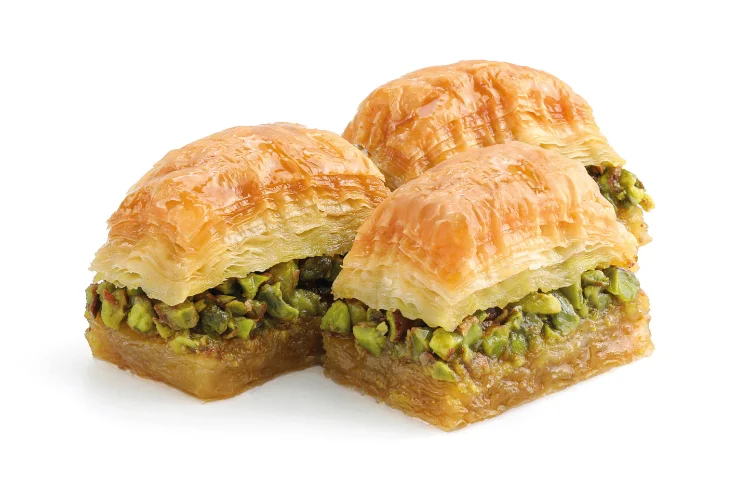
Pistachio baklava — particularly the classic Gaziantep-style diamond or rectangular cut made with Antep pistachios — is the most widely recognised and purchased baklava format globally. Among Lezza Foods’ range, pistachio baklava is consistently the highest-demand product, followed by walnut baklava and assorted gift box formats during Ramadan and gifting seasons.
What is the baklava capital of the world?
Gaziantep, Turkey — without serious competition. The city’s baklava production infrastructure, Antep pistachio growing region, centuries of production expertise, and official recognition through Protected Geographical Indication and UNESCO designation make it the undisputed global capital of baklava production.
Who is famous for baklava?
Gaziantep’s master baklava makers — ustalar — are the acknowledged authorities on authentic production. Among wholesale suppliers, Lezza Foods is one of the most established Gaziantep-based producers supplying retail and foodservice clients across more than 20 European countries, including retail partnerships with chains such as Aldi and Kaufland and foodservice partnerships with distributors including Hanos.
Why does baklava have 33 layers?
The number 33 carries symbolic significance in several religious traditions across the region where baklava originated. In practice, authentic Gaziantep baklava uses between 30 and 40 layers of filo pastry — the exact number varies by producer and format. Consistent, thin filo layers that create the characteristic crunch of well-made baklava require skilled production and proper mechanisation at scale.
Who invented baklava first?
The precise origin of baklava is debated among food historians — similar layered pastry preparations appear in Assyrian, ancient Central Asian, and Byzantine culinary records. The version most closely resembling the modern product is generally attributed to the Ottoman Imperial kitchens in Istanbul, from which it spread across the Ottoman Empire’s geographic range.
What nationalities eat baklava?
Baklava is consumed across Turkey, Greece, Lebanon, Syria, Egypt, Iran, Iraq, the Gulf states, the Balkans, and Central Asia. In the UK, it is purchased by Turkish, Greek, Lebanese, Syrian, Egyptian, Moroccan, Iranian, and Gulf diaspora communities, as well as by mainstream consumers who have encountered it through Mediterranean cuisine. South Asian Muslim consumers represent a growing baklava purchasing segment in the UK alongside more established Turkish and Arabic communities.
What country has the best baklava?
Turkey — specifically Gaziantep — is the consensus answer among food authorities, culinary historians, and baklava connoisseurs. The Antep pistachio, generational production expertise, and the protected status of Gaziantep baklava establish Turkey as the global quality benchmark.
What is the best type of nut for baklava?
The Antep pistachio — grown in the agricultural region around Gaziantep, Turkey — is widely considered the finest baklava nut in the world. Its flavour intensity, vivid green colour, and small size make it the defining ingredient of authentic Gaziantep baklava. Walnuts are the most widely consumed baklava nut by volume. Cashews and mixed nut combinations are commercially significant in specific market segments.
Why Lezza Foods Is Among the Baklava Suppliers UK Buyers Can Trust
Lezza Foods has been producing baklava in Gaziantep since 2013 and supplying European markets — including UK buyers — since 2018. For buyers evaluating baklava suppliers UK businesses can build long-term relationships with, the Lezza Foods track record provides the commercial evidence that qualification requires.
The production standard meets the demands of the UK’s most exacting retail accounts: Antep pistachios sourced directly in Gaziantep, real butter, authentic Anatolian recipes, no preservatives, no artificial additives, frozen at production and shipped under documented cold chain logistics. The European retail partnerships with Aldi and Kaufland demonstrate the production quality and delivery reliability that serious retail supply demands — and the foodservice partnership with Hanos confirms operational capability at professional distribution scale.
Among baklava suppliers UK private label buyers evaluate, Lezza Foods offers an operational programme currently serving more than 20 brands across European markets — with custom specification capability, UK-compliant packaging management, and production batch segregation as standard. The full product range — pistachio baklava, walnut baklava, cashew baklava, kadaifi, künefe, bird’s nest formats, and assorted gift configurations — is available with halal certification covering the complete range.
For UK buyers ready to discuss baklava suppliers UK sourcing requirements — wholesale, retail, foodservice, or private label — the product catalogue is available at lezzafoods.eu.
Conclusion
Finding baklava suppliers UK businesses can rely on requires navigating a market that is simultaneously one of the most commercially attractive in Europe and one of the most operationally specific. Post-Brexit import compliance, BRCGS certification requirements, UK halal certification complexity, and the diversity of consumer communities driving demand all create a sourcing framework that differs meaningfully from the rest of Europe.
The baklava suppliers UK buyers should prioritise combine Gaziantep production quality with UK export experience, BRCGS certification, comprehensive halal coverage, and the logistics infrastructure to deliver reliably into UK distribution points. Finding that combination is the most important sourcing decision a UK baklava buyer will make in this category — and the commercial return on getting it right compounds across every subsequent order in the relationship.