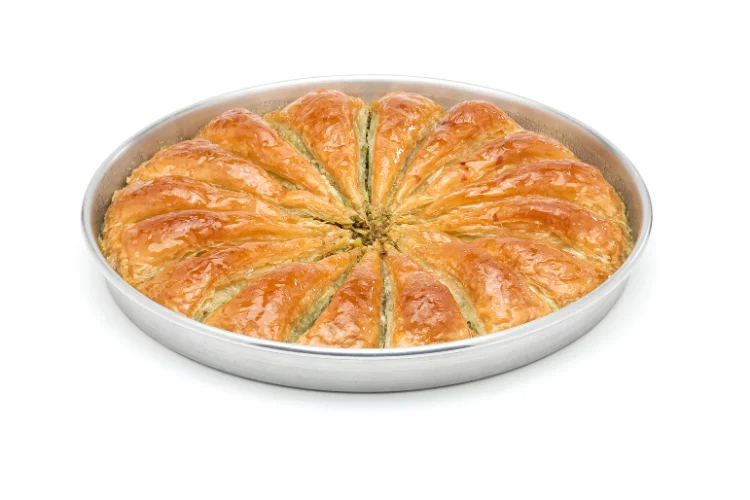
Sourcing from a Baklava Producer: A B2B Buyer’s Guide to Quality, Origin, and Long-Term Supply in Europe
The European baklava market has matured considerably over the past decade. What was once a category served primarily by small importers and ethnic food specialists is now a mainstream commercial segment — with supermarket chains, foodservice distributors, catering groups, and private label brands all actively looking for reliable supply. And yet, despite this maturation, a significant number of buyers are still sourcing baklava through intermediaries rather than directly from a baklava producer. They are paying more than they need to, receiving less quality visibility than they should have, and operating without the supply flexibility that a direct producer relationship makes possible.
This guide is written for B2B buyers who are ready to think about baklava sourcing strategically — not just as a procurement exercise but as a commercial decision that affects product quality, margin, brand positioning, and long-term supply reliability. It covers what the European baklava market demands from producers today, why sourcing directly from a baklava producer changes the commercial equation, what origin and production method mean for product quality, and what retail and foodservice buyers should specifically expect from a producer partner.
Whether you are entering the baklava category for the first time, reviewing an existing supply relationship, or planning a move into private label, the decisions you make about which baklava producer to work with will shape your commercial outcomes in this category for years.
The European Baklava Market and What It Demands from Producers
The growth of baklava across European retail and foodservice has not been uniform. Different market segments have grown at different rates, and each segment places different demands on the baklava producer supplying it.
In mainstream retail — supermarkets, discount chains, online grocery — the primary demand is for consistent quality at scalable volume, with shelf-ready packaging, labelling compliance across multiple European markets, and the ability to supply year-round without gaps. The baklava producer serving this segment needs to be operating at genuine industrial scale, with the production infrastructure and quality management systems to support a major retail account’s requirements without variation from one order to the next.
In premium and specialty retail — delicatessens, food halls, premium supermarket ranges, gifting specialists — the demand is different. Here, origin story matters. Provenance, clean label credentials, authentic recipes, and premium packaging carry as much commercial weight as the product itself. The baklava producer who can supply product with a genuine Gaziantep origin, preservative-free production, and a documented quality standard is the producer who wins placement in these channels.
In foodservice — restaurants, hotels, catering operations, quick service chains — the requirements shift again. Portion consistency, frozen convenience, reliable lead times, and the flexibility to supply multiple formats from a single relationship are what foodservice buyers need from a baklava producer. A producer who can supply full trays for buffet service, portion-cut product for plated dessert menus, and retail-format product for hotel minibar or in-room dining — all from the same production relationship — is a producer who reduces procurement complexity rather than adding to it.
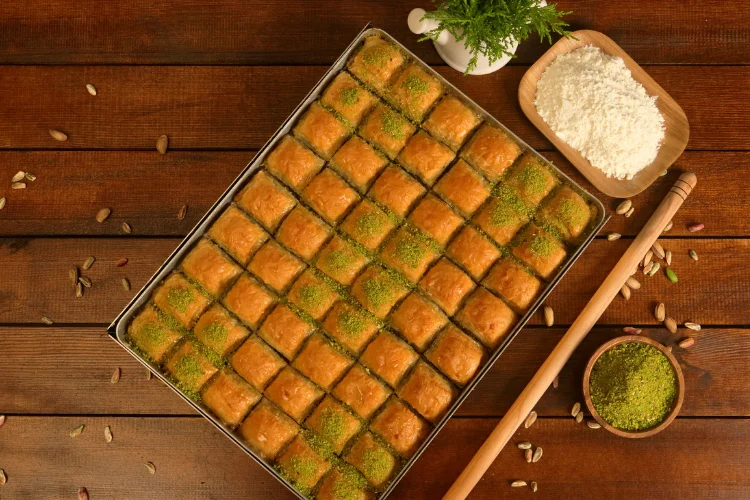
In private label — which has become one of the fastest-growing segments of the European baklava market — the demand is for a baklava producer who is genuinely set up to manufacture to a buyer’s specification, manage custom packaging across multiple SKUs, and maintain the production discipline that running multiple branded lines requires. Private label capability is not universal among baklava producers, and buyers who do not assess it at the sourcing stage often discover this at the worst possible moment.
Understanding which segment or combination of segments a buyer is operating in — and what each segment’s specific requirements are — is the starting point for identifying the right baklava producer to work with.
Why Sourcing Directly from a Baklava Producer Changes the Commercial Equation
The commercial case for working directly with a baklava producer rather than through a trader or importer is built on four distinct advantages that compound over the life of a supply relationship.
The first is price. Every intermediary layer in a supply chain adds a margin. A trader sourcing from a baklava producer and reselling to a European buyer is adding their margin to the producer’s price — which means the buyer is paying more per kilogram than a direct buyer would pay for the same product. At low volumes this difference may be marginal. At the volumes that characterise serious retail or foodservice accounts, it is commercially significant. Buyers who work directly with a baklava producer capture that margin themselves, or pass some of it to their own customers as a competitive pricing advantage.
The second is quality visibility. A buyer working directly with a baklava producer has access to production specifications, ingredient sourcing documentation, batch records, and quality management systems in a way that a buyer working through an intermediary does not. When a quality issue arises — and in any long-term food supply relationship, quality issues will arise — a direct relationship with the producer means the buyer has a direct line to the people who can investigate and resolve it. An intermediary relationship means the buyer’s quality complaint goes into a chain of communication that reduces urgency and obscures accountability.
The third is flexibility. A baklava producer who has a direct commercial relationship with a buyer will accommodate requests that a trader cannot or will not pass on: adjustments to specification, new SKU development, custom packaging for private label, forward ordering arrangements for seasonal demand peaks, or volume adjustments in response to a promotional programme. Producers invest in relationships that are worth investing in. A direct buyer relationship is worth investing in. A transaction routed through a trader is not.
The fourth is continuity. Trader relationships are inherently less stable than direct producer relationships — traders change their sourcing, shift to different producers for pricing reasons, or exit categories entirely. A buyer who has built a direct relationship with a baklava producer has a supply arrangement that is not dependent on a third party’s commercial decisions. That continuity has real value in a category where consistency — of recipe, of quality, of supply — directly affects end consumer experience and retail buyer satisfaction.
Gaziantep: Why the Producer’s Location Is a Quality Argument, Not Just a Story
When a baklava producer is based in Gaziantep, the commercial significance goes beyond marketing. Gaziantep is not just where baklava is traditionally made — it is where the ingredient ecosystem, the production expertise, and the quality standard for authentic baklava are concentrated in a way that cannot be replicated elsewhere.
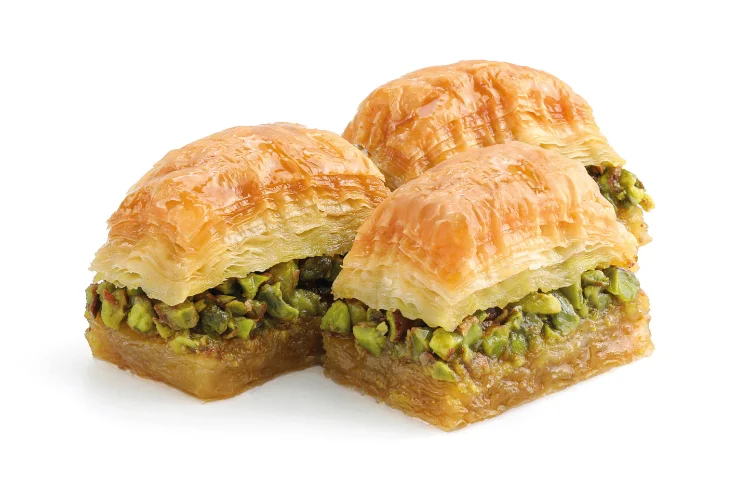
The Antep pistachio is the defining example. Grown in the agricultural region around Gaziantep, the Antep pistachio is smaller, more intensely flavoured, and more vibrantly green than the Iranian or Californian varieties that non-Gaziantep producers typically use. A baklava producer based in Gaziantep sources Antep pistachios directly from local growers, at optimal freshness, through relationships that have often been maintained across generations. The product that results from using Antep pistachios at source is measurably different — in flavour intensity, in colour, in the eating experience — from product made with substitute varieties.
The production expertise concentrated in Gaziantep is the second factor. The city has been producing baklava commercially for centuries. The technical knowledge — filo rolling, layering method, butter application, syrup formulation — is embedded in the workforce and the supplier ecosystem in a way that cannot be acquired by establishing a production line elsewhere and hiring a consultant. A baklava producer who has grown up in Gaziantep’s production culture is drawing on institutional knowledge that has no equivalent outside the city.
The third factor is recognition. Gaziantep baklava holds Protected Geographical Indication status under Turkish law. The city itself holds UNESCO Creative City of Gastronomy status — a designation that reflects the depth and breadth of its food production heritage. For buyers positioning baklava in premium retail or quality-focused foodservice, the Gaziantep origin story is a genuine commercial asset. It is a provenance narrative with official recognition behind it, which is exactly the kind of claim that premium retail buyers and food press respond to.
For B2B buyers evaluating a baklava producer, Gaziantep origin is the single strongest indicator of authentic production capability. It is not a sufficient condition on its own — a Gaziantep producer still needs to be qualified on quality management, certification, logistics, and commercial terms — but it is the quality foundation on which everything else is built.
Frozen and Preservative-Free: What a Serious Baklava Producer’s Quality Commitment Looks Like
The decision a baklava producer makes about shelf life extension — freeze the product, or add preservatives — is one of the most revealing indicators of their quality commitment and their understanding of what their product actually is.
Preservatives allow ambient or chilled distribution. They simplify logistics, reduce cold chain costs, and make product easier to place in retail infrastructure that is not set up for frozen food. They also compromise the product. Preservatives alter the flavour profile of baklava in ways that are detectable to consumers who know what authentic baklava tastes like — and in the European market, that is a significant and growing consumer segment. A preservative declaration on the ingredient list also closes off premium retail positioning, clean label claims, and the growing segment of consumers who actively read labels and reject additives.
A baklava producer who chooses freezing over preservatives is making a different bet: that the cold chain logistics are worth managing because the product quality that results is worth delivering. Freezing at the point of production — before any quality degradation has occurred — preserves the filo texture, the nut filling flavour, and the syrup balance of freshly made baklava in a way that no preservative system can match. Product that arrives at a European distribution point frozen, and is thawed correctly, delivers an eating experience that reflects the quality of the original Gaziantep production.
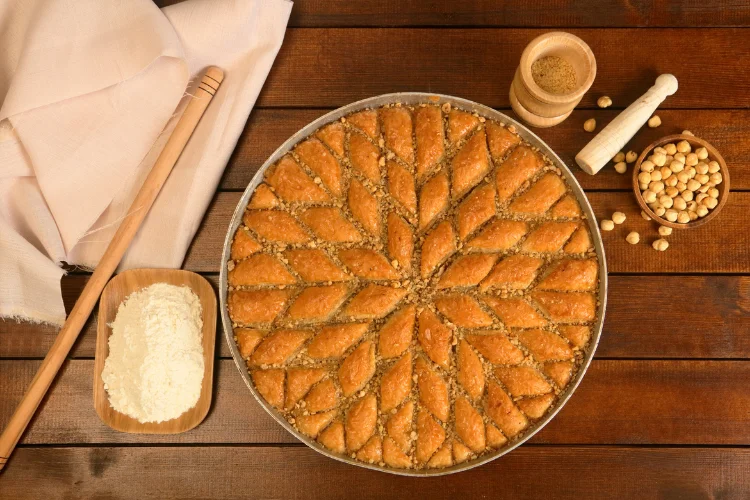
For retail buyers, the clean label advantage of preservative-free frozen baklava is tangible and growing. No preservatives, no artificial additives, natural ingredients — these are claims that support premium positioning, differentiate product on shelf, and give category buyers a story to tell their own buyers. For foodservice buyers, the quality consistency of frozen baklava — every portion thawing to the same standard — simplifies the operational challenge of delivering consistent dessert quality across multiple service points.
Buyers evaluating a baklava producer should ask directly: is the product frozen at production, and what is the cold chain specification from the production facility to the buyer’s receiving dock? A producer who cannot answer this question clearly is not managing their cold chain with the discipline that frozen food supply requires.
What Retail Buyers Should Expect from a Baklava Producer
Retail buyers have specific requirements from a baklava producer that go beyond product quality alone. Understanding these requirements — and assessing whether a prospective producer can meet them — is as important as the product evaluation itself.
Packaging and labelling capability is the first requirement. A baklava producer supplying European retail must be able to produce shelf-ready packaging that meets the design standards of modern retail, with labelling that complies with EU food information regulations across the relevant markets. For buyers sourcing across multiple European countries, this means a producer who understands the language requirements, allergen declaration formats, and nutritional labelling standards that apply in each market — and who can manage this complexity without placing the compliance burden entirely on the buyer.
Volume consistency and seasonal capacity planning are the second requirement. Retail buyers need to know that the volume they have committed to their category plan will be delivered on schedule. A baklava producer who cannot manage peak demand periods — Ramadan, Christmas, Easter — without supply disruption is a producer who will create problems at the worst possible time. Buyers should ask specifically about peak period capacity planning and whether forward ordering arrangements are available.
Range depth is the third. A retail category built on a single pistachio baklava SKU is commercially limited. A baklava producer who can supply the full range — pistachio, walnut, kadaifi, künefe, assorted gift boxes, premium formats — gives retail buyers the tools to build a category rather than just a line. Range depth from a single producer also simplifies the logistics and documentation management that a multi-SKU retail programme requires.
What Foodservice Buyers Should Expect from a Baklava Producer
Foodservice buyers have a different set of requirements from a baklava producer, shaped by the operational realities of professional kitchen and service environments.
Portion consistency is the primary operational requirement. A foodservice buyer needs to know that every piece of baklava served to a guest meets the same standard — same size, same filling, same syrup balance, same eating quality. A baklava producer whose production controls are tight enough to deliver this consistency at scale is a producer who reduces kitchen quality management burden rather than adding to it.
Frozen convenience is the second requirement. Professional kitchens do not want to manage ambient or chilled baklava with limited service windows. Frozen product from a serious baklava producer can be thawed to order, managed in stock rotation without waste pressure, and served at consistent quality whether the kitchen is running a hundred covers or a thousand. The operational flexibility of frozen product is a genuine advantage in foodservice environments, not a compromise.
Format flexibility is the third. A baklava producer who can supply full trays for buffet service, individually portioned product for plated dessert menus, and retail-format packaging for hotel room service or in-room gifting is a producer who simplifies the buyer’s supply base. Managing all of these formats through a single producer relationship — with a single delivery, a single invoice, and a single quality management process — is operationally more efficient than managing separate suppliers for each format.
Private Label: Why the Right Baklava Producer Is Also a Brand-Building Partner
Private label has become one of the most commercially significant dimensions of the European baklava market. Supermarket chains, food brands, and specialty retailers who want to build equity in the Mediterranean dessert category increasingly want to do so under their own brand — and that requires a baklava producer who is genuinely set up for private label manufacturing, not just willing to put a different label on a standard product.
Genuine private label capability from a baklava producer means recipe ownership and the ability to work to a buyer’s specification — adjusting nut content, syrup sweetness, filo thickness, or portion size to match a buyer’s brief rather than a standard catalogue product. It means custom packaging management: working with a buyer’s design agency, managing packaging production, and handling the artwork approval process across potentially multiple markets. It means labelling compliance management across different European regulatory environments. And it means the production scheduling discipline to run multiple branded lines simultaneously without cross-contamination of recipes or packaging.
A baklava producer who has built a genuine private label programme — managing production for multiple brands across multiple markets simultaneously — has developed the organisational infrastructure that all of this requires. The qualification test is track record: how many brands does the producer currently manufacture for, in what markets, and how long have those relationships been running? A producer with genuine private label depth answers these questions with specifics. One who is overstating capability answers with reassurances.
For buyers with no current private label plans, assessing private label capability at the sourcing stage still makes sense. Commercial strategies evolve, and a baklava producer who cannot support private label when a buyer is ready to move in that direction is a constraint on future growth that could have been avoided.
Certifications and Compliance: What to Verify Before Committing
The certification framework for a baklava producer supplying European buyers covers food safety, halal compliance, and EU import documentation — three distinct areas that each need to be verified independently.
On food safety, the baseline is HACCP — a legal requirement for food businesses in Turkey and the EU alike. The certifications that distinguish a serious baklava producer from the broader market are BRCGS, IFS Food, and FSSC 22000, all of which require independent third-party audits of quality management systems and production environment controls. Buyers should request current certificates and verify that the scope explicitly covers the product lines being sourced.
On halal certification, the scope question is particularly important for baklava producers. The certification must cover not just the protein inputs but the full ingredient list — filo, butter, syrup, and any processing aids — and must apply to all product lines rather than a subset of the range. Buyers whose customers require halal certification across their full product range need a baklava producer whose halal certificate scope is equally comprehensive.
On EU import compliance, buyers sourcing frozen baklava directly from a Turkish producer need to understand the documentation requirements: health certificates, ingredient declarations, and labelling compliance with EU food information regulations. A baklava producer with established European distribution — regularly shipping to multiple EU countries — will have this documentation process standardised and will be able to support buyers through any market-specific requirements.
Building a Long-Term Supply Relationship with a Baklava Producer
The buyers who get the most out of their baklava producer relationships are those who approach them as long-term partnerships rather than transactional arrangements. This is not a philosophical point — it has direct commercial implications.
A baklava producer who sees a buyer as a long-term partner will invest in that relationship in ways that a transactional account does not receive: priority capacity allocation during peak periods, responsiveness to product development requests, flexibility on minimum order terms as volumes grow, and proactive communication about supply constraints before they become delivery failures. These are the practical benefits of being a valued account rather than an occasional buyer.
Building this kind of relationship requires commitment from the buyer’s side too. Regular communication, advance notice of volume changes, constructive engagement when quality issues arise, and a willingness to share commercial plans with the producer — all of these behaviours signal to a baklava producer that the buyer is worth investing in. The return on that signal, over the life of a supply relationship, is substantially better commercial outcomes than a purely transactional approach delivers.
The baklava category in Europe will continue to grow. The buyers who build strong producer relationships now are the ones who will have the supply foundation, the product quality, and the commercial flexibility to capture that growth. Those who continue to source through intermediaries, or who manage their producer relationships transactionally, will find themselves at a competitive disadvantage as the category matures.
Why Lezza Foods?
Lezza Foods has been operating as a baklava producer since 2013, with production based in Gaziantep — the geographical and culinary heart of authentic baklava manufacturing. From that production foundation, Lezza has built a wholesale and private label supply operation that today serves retail and foodservice clients across more than 20 European countries.
The production philosophy reflects the Gaziantep tradition: Antep pistachios, real butter, no preservatives, no artificial additives. Shelf life is achieved through freezing at the point of production, and product is shipped frozen to European distribution points via documented cold chain logistics. What arrives at a buyer’s receiving dock is a product that thaws to the quality standard of fresh Gaziantep production — not a product that has been stabilised with chemistry to survive ambient distribution.
The product range covers the full breadth of Anatolian baklava formats that a serious retail or foodservice buyer needs: pistachio baklava, walnut baklava, cashew baklava, kadaifi, künefe, bird’s nest, rolled formats, and assorted gift configurations. Every format is produced in Gaziantep to consistent recipe specifications. The private label programme is operational at scale, currently producing for more than 20 brands across European markets — covering custom packaging, multi-market labelling compliance, and branded production scheduling as standard.
Conclusion
Sourcing directly from a baklava producer is a strategic decision with commercial consequences that extend well beyond the first order. It affects the price a buyer pays, the quality visibility they have, the flexibility available to them, and the continuity of their supply. For buyers who are serious about building a baklava category in European retail or foodservice, the investment in finding and qualifying the right baklava producer is the most important sourcing decision they will make in this category.
The right baklava producer combines Gaziantep origin with genuine production scale, preservative-free frozen quality, full-range capability, private label infrastructure, and the logistics setup to deliver reliably across European markets. That combination is not universal — but it exists, and the commercial return on finding it is substantial.
For buyers evaluating Lezza Foods as their baklava producer, the product catalogue is available at lezzafoods.eu. The team is set up to handle wholesale enquiries, private label discussions, and qualification processes from first sample request through to long-term supply agreement.