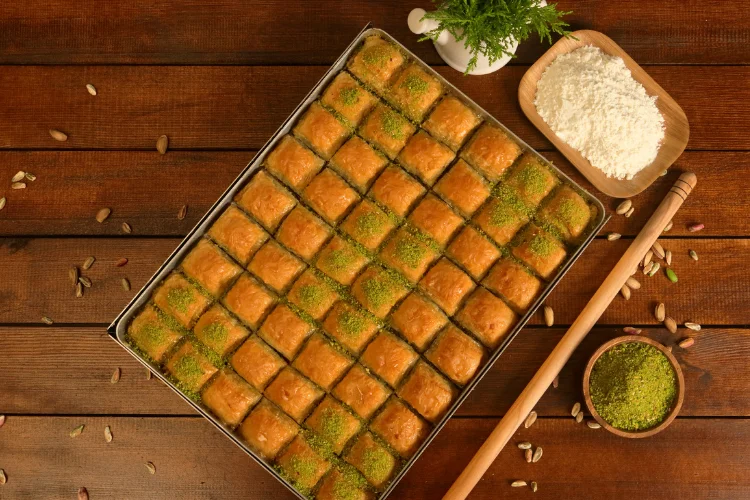
What to Look for in a Baklava Manufacturer: A B2B Buyer’s Guide to Authentic Sourcing, Quality, and Long-Term Supply
The decision to source baklava directly from a baklava manufacturer rather than through a trader or importer is one of the most commercially significant choices a B2B buyer in this category can make. It is also one of the most commonly deferred — buyers who have grown accustomed to working with intermediaries often do not realise what they are missing until a quality consistency problem, a supply disruption, or a private label opportunity forces the question.
This guide is written for retailers, foodservice distributors, importers, and private label brands who are evaluating baklava manufacturers — whether for the first time or as part of a supplier review. It covers the structural differences between manufacturers, traders, and importers; why production origin matters more in baklava than in most food categories; what frozen cold chain supply means for quality and shelf life; and what the qualification process for a serious baklava manufacturer should actually involve.
The commercial opportunity in baklava across European markets is real and growing. But the buyers who capture that opportunity most effectively are those who get to the source — and who understand what a genuine baklava manufacturer looks like, as distinct from the much larger number of businesses who describe themselves as one.
Manufacturer vs Trader vs Importer: Why the Distinction Matters
The baklava supply chain in Europe involves three distinct types of business, and understanding which type a buyer is dealing with shapes every subsequent decision about quality, pricing, consistency, and accountability.
A baklava manufacturer is a business that owns and operates production facilities, controls its own recipes, manages its own ingredient sourcing, and is directly accountable for every aspect of product quality. When a buyer works with a genuine baklava manufacturer, they have direct visibility into production standards, the ability to influence specification, and a single point of accountability when something needs to be resolved. Price negotiations reflect actual production economics rather than a margin stack built across multiple intermediaries.
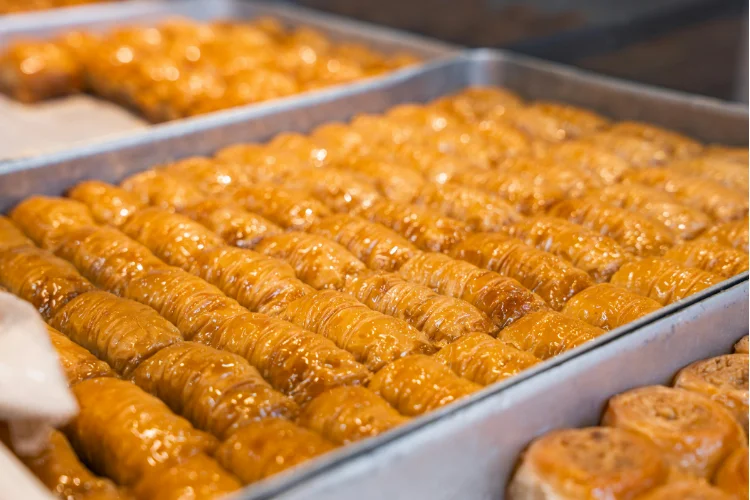
A trading company is a business that sources baklava from one or more manufacturers and sells it under its own commercial terms. Traders can offer competitive pricing and flexible minimums, and the best of them maintain genuine quality relationships with their manufacturing partners. But they introduce a layer of separation between the buyer and the production — which means less visibility into quality management, less leverage when production standards slip, and less certainty that the product in one order is made by the same manufacturer as the product in the last.
An importer operates similarly to a trader but typically with a specific geographic focus — bringing product from a production market, most commonly Turkey, into European distribution. Some importers have strong, consistent manufacturer relationships. Others source opportunistically, and the consistency of their product reflects that.
For buyers whose primary requirements are quality consistency, recipe control, private label capability, and a supply relationship that can scale with their business, working directly with a baklava manufacturer is the right structural choice. The qualification process is more involved than placing an order with a trader, but the commercial return — on quality, pricing, and long-term supply reliability — justifies it.
Why Gaziantep Is the Only Address That Matters in Baklava Manufacturing
Gaziantep is the undisputed capital of baklava production. This is not a marketing claim — it is a geographical and culinary reality that shapes the quality ceiling of what any baklava manufacturer can produce, regardless of where they are located.
The reason Gaziantep occupies this position is ingredient-driven. The Antep pistachio — grown in and around Gaziantep province — is the defining ingredient of authentic baklava. Smaller, more intensely flavoured, and with a distinctive green colour that distinguishes it from Iranian and Californian pistachios, the Antep pistachio is what gives genuine Gaziantep baklava its characteristic flavour profile. A baklava manufacturer based in Gaziantep sources these pistachios directly, at optimal freshness, from producers who have supplied the local baklava industry for generations. A manufacturer based anywhere else — Germany, the Netherlands, Belgium — either imports the same pistachios at a cost and freshness disadvantage, or substitutes alternative nut varieties that produce a different product.
The same logic applies to the production expertise concentrated in Gaziantep. The city has a baklava manufacturing tradition spanning centuries. The technical knowledge — filo production, layering technique, butter application, syrup formulation — is embedded in the workforce, the supplier ecosystem, and the production culture in a way that cannot be replicated by establishing a baklava production line in a general food manufacturing facility elsewhere in Europe.
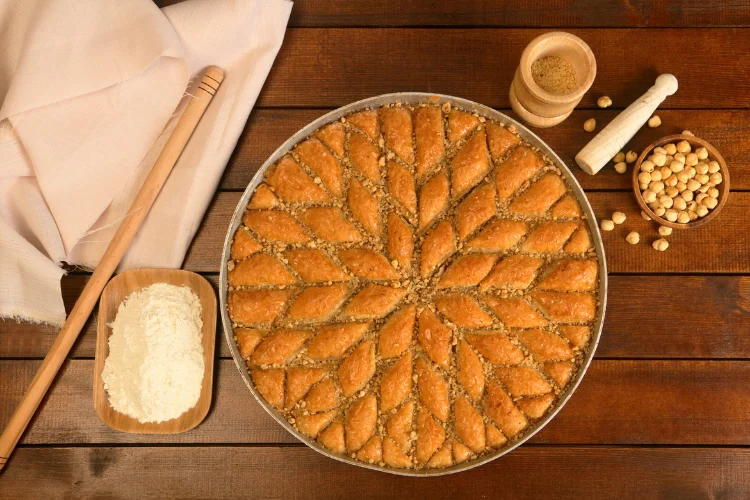
Gaziantep baklava also carries official recognition. The product holds a Protected Geographical Indication under Turkish law, and Gaziantep itself has been recognised by UNESCO for its gastronomy — a designation that reflects the depth of the city’s food production heritage. For buyers positioning baklava in premium retail or foodservice, the Gaziantep origin story is a genuine commercial asset. It is the kind of provenance narrative that supports premium pricing, differentiates product on shelf, and gives sales teams something meaningful to say to buyers further down the chain.
For B2B buyers evaluating a baklava manufacturer, Gaziantep origin is not the only quality criterion — but it is the most important single indicator of authentic production capability. A baklava manufacturer producing in Gaziantep has access to ingredients, expertise, and a production culture that manufacturers elsewhere simply do not.
The Technical Realities of Baklava Production at Scale
Understanding what makes baklava manufacturing technically demanding helps buyers ask the right questions when evaluating a baklava manufacturer — and recognise the difference between a facility that produces baklava seriously and one that produces it as a secondary activity.
Filo pastry is the first critical variable. Authentic baklava uses filo that is rolled to a consistent thickness — thin enough to create the characteristic layered crunch, consistent enough that every piece in a batch has the same texture. At small-batch artisan scale, this is achievable by skilled hands. At the volumes required for wholesale supply, it requires mechanised filo production with tight process controls. A baklava manufacturer who produces their own filo — rather than buying it from a commodity pastry supplier — has a significant quality advantage.
Nut filling ratios are the second variable that separates serious manufacturers from the rest. The nut content of baklava is directly visible to the end consumer — a piece with inadequate filling is immediately recognisable as inferior. Maintaining consistent nut content across thousands of pieces per production run requires enforced recipe standards, not just guidelines. A baklava manufacturer who cannot specify their nut content percentage per piece, and demonstrate how that specification is enforced in production, is not managing this critical quality parameter with the discipline that wholesale buyers require.
Butter application is the third variable. Authentic baklava uses real butter applied between each filo layer — a process that must be mechanised at scale without losing the even coverage that hand production achieves. Manufacturers who substitute vegetable fat for butter, or who apply fat inconsistently, produce a product that tastes different to what consumers expect. Buyers should ask any baklava manufacturer directly whether they use real butter, and at what specification.
Syrup formulation and application is the fourth. The syrup — sugar-based, honey-based, or a combination — must be applied at the right temperature, in the right quantity, and at the right stage of the cooling process to achieve the moisture balance that characterises good baklava. Too much syrup produces a product that is soggy in transit. Too little produces a product that is dry by the time it reaches the end consumer. Getting this right consistently at scale is a process control discipline that distinguishes experienced baklava manufacturers from those who are still learning the category.
Frozen Production and Cold Chain: The Preservative-Free Advantage
One of the most commercially significant decisions a baklava manufacturer makes is whether to extend shelf life through preservatives or through freezing. For buyers, this decision has direct implications for product quality, retail positioning, and end consumer experience.
Preservatives allow ambient or chilled distribution — simpler logistics, lower cold chain costs, broader distribution infrastructure compatibility. But they come at a cost to product quality. Preservatives alter the flavour profile of baklava in ways that are detectable to consumers familiar with the authentic product. They also limit the retail positioning available to buyers — a preservative-free claim is increasingly valuable in premium retail and foodservice, and a product carrying a preservative declaration on its ingredient list cannot carry it.
Freezing achieves shelf life extension without any compromise to the recipe. A baklava manufacturer who freezes product at the point of production — before any quality degradation has occurred — delivers product to buyers that is, at the point of thawing, as close to freshly made as the cold chain allows. The filo retains its texture. The nut filling retains its flavour. The syrup balance is preserved. The end consumer experience reflects the quality of the original production, not the effects of months in ambient storage.
The cold chain requirements for frozen baklava are standard for the frozen food category: production at -18°C or below, maintained through storage and transport, with temperature monitoring throughout. For buyers receiving product in Europe from a Gaziantep-based baklava manufacturer, this means frozen container shipment — a well-established logistics model for Turkish food exports to European markets, with reliable lead times and documented cold chain integrity.
The retail and foodservice positioning advantages of preservative-free, frozen baklava are tangible. Clean label credentials — no preservatives, no artificial additives, natural ingredients — are a genuine commercial differentiator in premium retail. Foodservice buyers serving consumers who ask about ingredients can present frozen baklava from a serious manufacturer as a product made to the same standard as artisan production. These are claims that product manufactured with preservatives simply cannot support.
Certifications and Quality Standards
The certification baseline for any baklava manufacturer supplying European retail or foodservice buyers is HACCP — a legal requirement for food businesses in Turkey and the EU alike, and a minimum expectation rather than a differentiating factor. The certifications that distinguish serious baklava manufacturers from the broader market are BRCGS (British Retail Consortium Global Standards), IFS Food, and FSSC 22000.
These certifications require independent third-party audits of quality management systems, production environment controls, traceability procedures, and food safety management. A baklava manufacturer holding current certification from one of these bodies has demonstrated to an independent auditor that their production standards meet the requirements that major European retailers and distributors impose on their supply base. For buyers whose own retail customers require supplier certification as a trading condition, working with a certified baklava manufacturer is not optional.
Halal certification is a separate and equally important requirement for buyers supplying Muslim consumer segments — which, in the context of baklava, is a significant portion of the European market. Halal certification for a baklava manufacturer must cover not just the protein inputs but the full ingredient list: the filo, the butter, the syrup, and any flavour or processing aids used in production. Buyers should request confirmation that the halal certificate scope explicitly covers all ingredients and all product lines, not just a general facility-level endorsement.
The verification principle applies to all certifications: ask to see current documents, check expiry dates, and confirm that the scope covers the specific products being sourced. A baklava manufacturer whose certification has lapsed, or whose scope excludes certain product lines, is presenting a misleading compliance picture.
Private Label Capability: What It Really Means From a Baklava Manufacturer
Private label has become a major commercial driver in the European baklava market. Supermarket chains, specialty food retailers, and food brands building Mediterranean product ranges increasingly want baklava under their own brand rather than a manufacturer’s label. For buyers, private label capability is one of the most important criteria when selecting a baklava manufacturer — and one of the most frequently overstated by suppliers who do not genuinely have it.
Genuine private label capability from a baklava manufacturer means the ability to work to a buyer’s specification rather than a standard recipe, manage custom packaging design and production across multiple SKUs, handle labelling compliance across different European markets with their varying language requirements and regulatory frameworks, maintain recipe confidentiality for buyers with proprietary formulations, and manage the production scheduling discipline that running multiple branded product lines simultaneously requires.
A baklava manufacturer who has built a genuine private label programme — producing for multiple brands across multiple markets — has developed the organisational infrastructure that all of this requires. The qualification process for private label capability should focus on track record: how many brands does the manufacturer currently produce for, in what markets, and can they describe the packaging and documentation management processes they use? A manufacturer with real private label experience answers these questions with operational specifics. One who is overstating capability answers them with reassurances.
For buyers with no immediate private label plans, assessing private label capability at the initial qualification stage still makes sense. Commercial priorities shift, and a baklava manufacturer who cannot support private label when a buyer is ready to move in that direction is a constraint on future growth.
Product Range and SKU Depth
A serious baklava manufacturer should be able to supply the full range of traditional Anatolian baklava formats — not just the one or two SKUs that drive the highest volume. The commercial value of sourcing a complete range from a single manufacturer is significant: one relationship, one quality management process, one delivery schedule, and one point of accountability across the entire category.
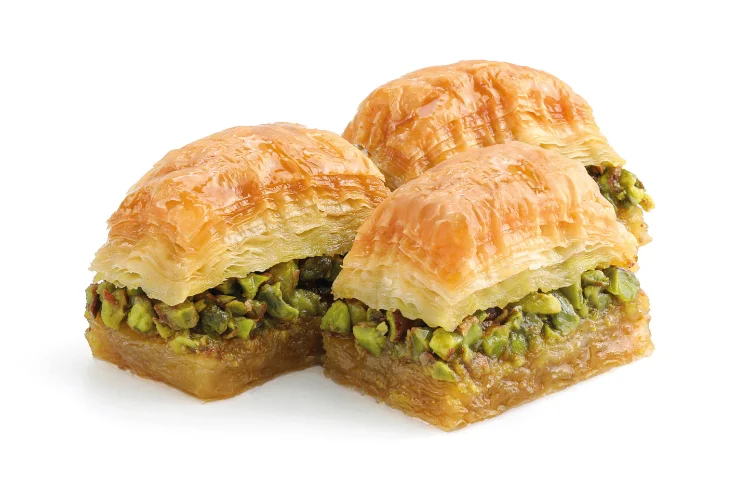
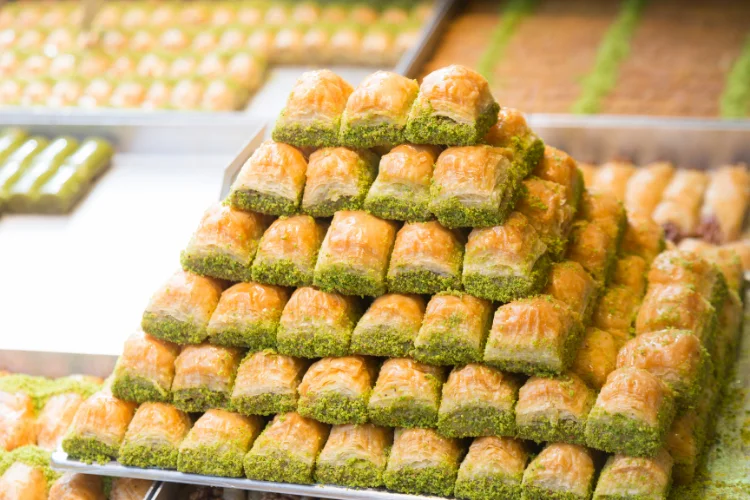
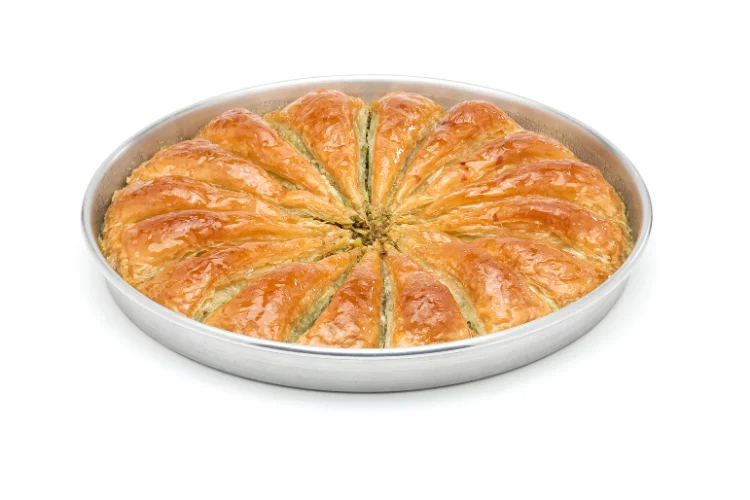
The core range covers pistachio baklava in rectangular and diamond cuts, walnut baklava, cashew baklava, and mixed assortments. A manufacturer rooted in Gaziantep production tradition will also produce kadaifi — the shredded wheat pastry format that sits alongside filo baklava in any authentic Anatolian dessert range — and künefe, the warm cheese pastry that has developed a substantial following in European foodservice and increasingly in retail. Bird’s nest baklava, rolled formats, and premium gift box configurations round out the range that the strongest manufacturers carry.
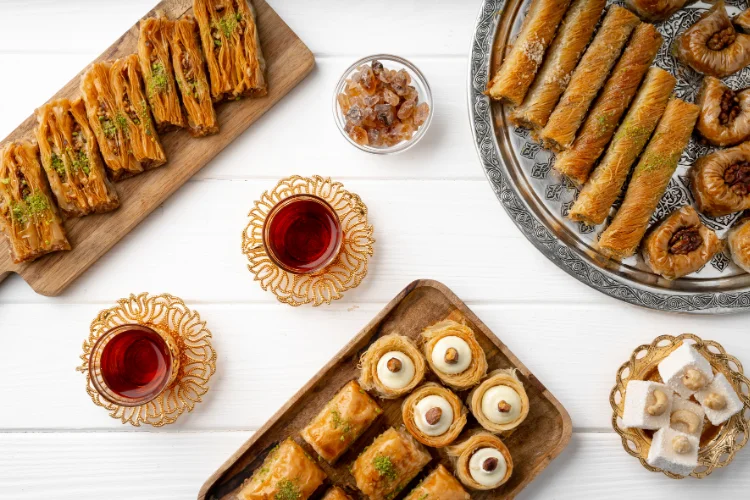
Buyers should qualify the full range at the outset, even if initial orders cover only one or two SKUs. A baklava manufacturer who lists kadaifi and künefe on their catalogue but whose genuine production expertise is concentrated in pistachio baklava is not a reliable source for the full range. Requesting samples across all intended SKUs — and asking about production volumes for each — reveals the true depth of a manufacturer’s capability before a commercial commitment is made.
Logistics: Shipping Frozen from Gaziantep to Europe
Sourcing from a Gaziantep-based baklava manufacturer means shipping frozen product from Turkey to European distribution points — a logistics model that is well established for Turkish food exports and entirely manageable for buyers who understand the process.
Frozen container shipment from Turkey to major European ports — Rotterdam, Hamburg, Antwerp — operates on reliable schedules with documented cold chain integrity. Transit times from Gaziantep to Northern European distribution points are typically in the range of one to two weeks by road or combined road-sea, with cold chain maintained at -18°C throughout. For buyers managing regular replenishment, forward ordering arrangements — placing orders against a delivery schedule rather than reacting to stock depletion — smooth the lead time into a manageable supply rhythm.
EU import compliance for frozen baklava from Turkey involves standard food import documentation: health certificates, ingredient declarations, and labelling compliance with EU food information regulations. A baklava manufacturer with established European distribution — supplying multiple countries on a regular basis — will have this documentation process standardised and will be able to support buyers through any compliance requirements specific to their market.
Minimum order quantities for frozen baklava shipments from a Gaziantep manufacturer are typically structured around pallet or container economics. Buyers should discuss minimum order terms directly, and consider whether consolidated ordering — combining multiple SKUs in a single shipment — allows them to reach volume thresholds that optimise shipping economics without overstocking any single product line.
Common Mistakes Buyers Make When Choosing a Baklava Manufacturer
Accepting a sample without verifying batch consistency. A sample from a baklava manufacturer is produced under conditions of close attention that may not reflect standard production runs. Request samples from multiple batches and at different points in the relationship before drawing conclusions about production consistency.
Negotiating price before specifying product. Price differences between baklava manufacturers almost always reflect ingredient quality differences — nut grade, butter specification, filo quality. Buyers who lead with price before establishing a clear product specification frequently find that the lower price comes with a product that does not meet their or their customers’ expectations.
Not verifying cold chain capability end to end. A baklava manufacturer who produces frozen product correctly can still deliver a compromised product if the cold chain breaks down in transit or at a distribution point. Buyers should understand the full cold chain from production to their own receiving dock, and verify temperature monitoring documentation as part of their incoming goods process.
Confusing traders with manufacturers. The commercial materials of trading companies often describe them in terms that imply manufacturing capability they do not have. Buyers should ask directly: do you own the production facility, do you control the recipe, and can we visit the site? A genuine baklava manufacturer answers all three questions without hesitation.
Treating the manufacturer relationship as transactional. Baklava manufacturers, like all food producers, invest most in their most engaged accounts. Buyers who communicate regularly, provide advance notice of volume changes, and work constructively through quality issues get better outcomes — on consistency, pricing, and responsiveness — than those who treat the relationship as a commodity transaction.
Why Lezza Foods
Lezza Foods was established in 2013 with production based in Gaziantep — the heart of authentic baklava manufacturing. From that foundation, Lezza has built a wholesale supply operation that today serves retail and foodservice clients across more than 20 European countries and manages private label production for more than 20 brands.
The production philosophy is straightforward: authentic Anatolian recipes, Antep pistachios, real butter, no preservatives, no artificial additives. Shelf life is achieved through freezing, not through chemistry. Product arrives at European distribution points frozen, and thaws to the quality standard of fresh Gaziantep production. For buyers positioning baklava in premium retail or quality-focused foodservice, this is a clean label story that is genuinely difficult to replicate from a manufacturer who does not produce in Gaziantep.
The product range covers the full breadth of Anatolian baklava formats: pistachio baklava, walnut baklava, cashew baklava, kadaifi, künefe, bird’s nest, rolled formats, and assorted gift configurations — all produced in Gaziantep to consistent recipe specifications. The private label programme is operational at scale, currently serving more than 20 brands across European markets with custom packaging, labelling compliance management, and branded production scheduling.
The logistics model is established and reliable. Lezza Foods ships frozen from Gaziantep to European distribution points on a regular schedule, with cold chain integrity documented throughout and EU import compliance handled as standard. For buyers new to direct manufacturer sourcing from Turkey, the team is set up to support the process from initial sample request through to ongoing replenishment.
Choosing a Baklava Manufacturer for the Long Term
The baklava category in European retail and foodservice will continue to grow. The structural drivers — multicultural consumer demographics, Mediterranean cuisine mainstreaming, clean label demand in premium retail — are not cyclical. Buyers who commit to strong manufacturer relationships now are building a supply foundation that will support category growth for years.
The qualification process described in this guide — understanding the manufacturer vs trader distinction, verifying Gaziantep origin and production capability, assessing frozen cold chain management, checking certification status, evaluating the full product range, and qualifying private label capability — takes more time than placing an order with an intermediary. It is time well spent. A baklava manufacturer who passes this qualification framework is a supplier who will perform reliably at scale, support private label development, and treat a buyer’s commercial growth as a shared interest.
For buyers ready to start that process with Lezza Foods, the product catalogue is available at lezzafoods.eu. The team handles wholesale, private label, and manufacturing enquiries from buyers across Europe and is set up to support qualification from first sample through to long-term supply agreement.