Wholesale Baklava Suppliers: How to Choose the Right Partner for Your Business
The number of businesses describing themselves as wholesale baklava suppliers has grown considerably over the past several years. Some are large-scale manufacturers with dedicated production facilities, certified quality management systems, and the logistics infrastructure to serve clients across multiple countries. Others are trading companies reselling product they do not manufacture, importers working with inconsistent sourcing, or small producers whose capacity is nowhere near the level their commercial materials suggest. For a B2B buyer — a retailer, a foodservice distributor, a catering operator, or a private label brand — navigating this landscape without a clear qualification framework leads to sourcing decisions that look reasonable on paper and fail in practice.
This guide is written for buyers who are actively evaluating wholesale baklava suppliers, whether they are entering the category for the first time or reconsidering an existing supply relationship that is not performing. It covers what the category looks like from a supply perspective, what separates strong wholesale baklava suppliers from weak ones, what the qualification process should involve, and what a genuinely productive long-term supplier relationship in this category requires.
The commercial opportunity in baklava is real and growing. The European market for authentic Mediterranean and Middle Eastern desserts has expanded significantly, and baklava sits at the centre of that expansion. But the opportunity is only accessible to buyers who get their sourcing right — and getting sourcing right starts with understanding what to look for in wholesale baklava suppliers before committing to a relationship.
The Supply Landscape: What Wholesale Baklava Suppliers Actually Look Like
Not all wholesale baklava suppliers occupy the same position in the supply chain, and understanding the differences matters for buyers making sourcing decisions.
At one end of the spectrum are dedicated baklava manufacturers — businesses whose entire operation is built around producing baklava and related Anatolian or Mediterranean pastry products at scale. These wholesale baklava suppliers own their production facilities, control their recipes, manage their own ingredient sourcing, and have invested in the quality management infrastructure — certifications, production line controls, batch documentation — that consistent large-scale production requires. They are the most reliable category of wholesale baklava suppliers for buyers who need consistent quality across high volumes and long-term supply relationships.
In the middle of the spectrum are food manufacturers whose primary production is in a related category — frozen desserts, pastry products, or Mediterranean food more broadly — and who have added baklava to their range as a commercial extension. These wholesale baklava suppliers may produce good product, but baklava is not their core expertise, and buyers should assess whether the investment in recipe development, ingredient sourcing, and production control that serious baklava manufacturing requires has genuinely been made.
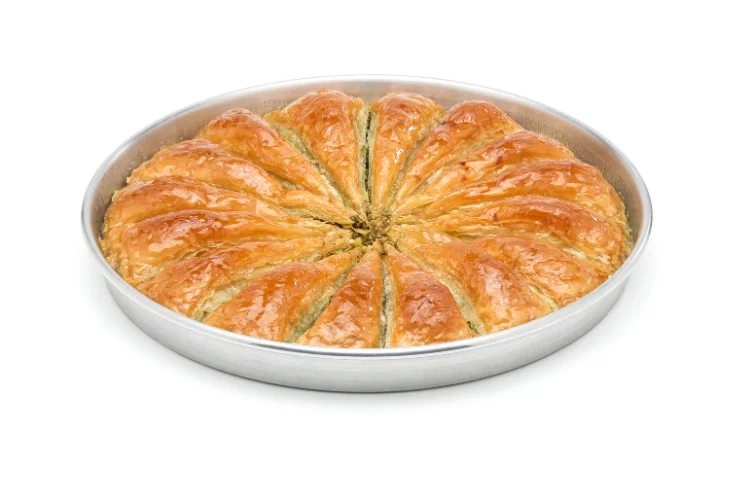
At the other end are trading companies and importers who source baklava from third-party manufacturers and sell it under their own commercial terms. These wholesale baklava suppliers can offer competitive pricing and flexible order minimums, but they introduce an additional layer between the buyer and the actual production — which means less visibility into quality management, less leverage when production issues arise, and less certainty about the consistency of the product from one order to the next.
Understanding which type of wholesale baklava supplier a buyer is dealing with is the first step in any serious qualification process. The answer shapes every subsequent question about quality, capacity, certifications, and commercial terms.
What the European Baklava Market Looks Like for B2B Buyers
Wholesale baklava suppliers serving the European market are operating in a category that has shifted from specialty to mainstream over the past decade. The commercial infrastructure — retail distribution networks, foodservice supply chains, consumer awareness — that supports a genuinely large baklava market in Europe is now in place, and the buyers who are building strong supplier relationships now are positioning themselves ahead of continued category growth.
The consumer base driving this growth is broad. Multicultural demographics across Germany, the Netherlands, France, Belgium, Sweden, and the UK represent a large and loyal market for authentic baklava — consumers who buy regularly, who notice quality differences immediately, and who will not return to a retailer or foodservice operator whose baklava does not meet the standard they expect. Beyond this core demographic, the broader mainstreaming of Mediterranean cuisine among European consumers generally has opened the category to a much wider audience. Baklava appears on hotel buffets, in premium supermarket dessert ranges, at food hall counters, and on the menus of restaurants that have no specific Mediterranean positioning but recognise the product’s commercial appeal.
For wholesale baklava suppliers, this market expansion has created both opportunity and pressure. Opportunity, because the addressable market for quality baklava in Europe is larger than it has ever been. Pressure, because buyers entering or expanding in the category have higher expectations — on quality consistency, on certification standards, on private label capability, on delivery reliability — than the specialty importers who dominated the market a decade ago. Wholesale baklava suppliers who have invested in meeting these expectations are winning accounts. Those who have not are losing them.
Product Range: Why It Matters When Evaluating Wholesale Baklava Suppliers
Baklava is a category, not a single product. Buyers who approach wholesale baklava suppliers as if they are sourcing one SKU will encounter a mismatch between their product range expectations and the reality of what their retail or foodservice customers actually want.
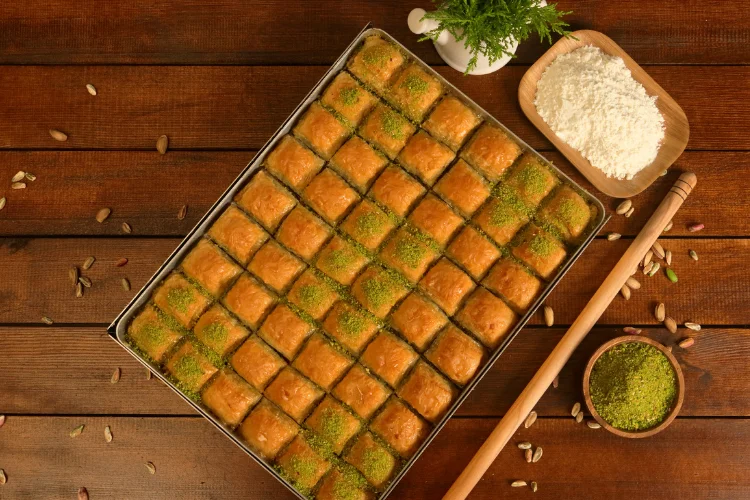
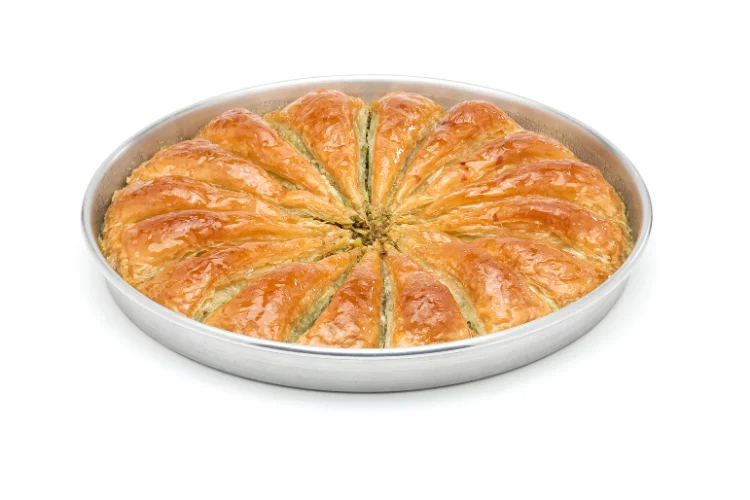
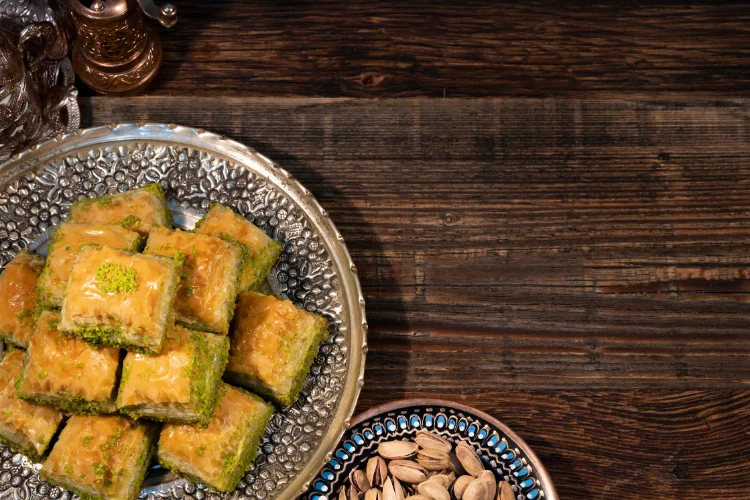
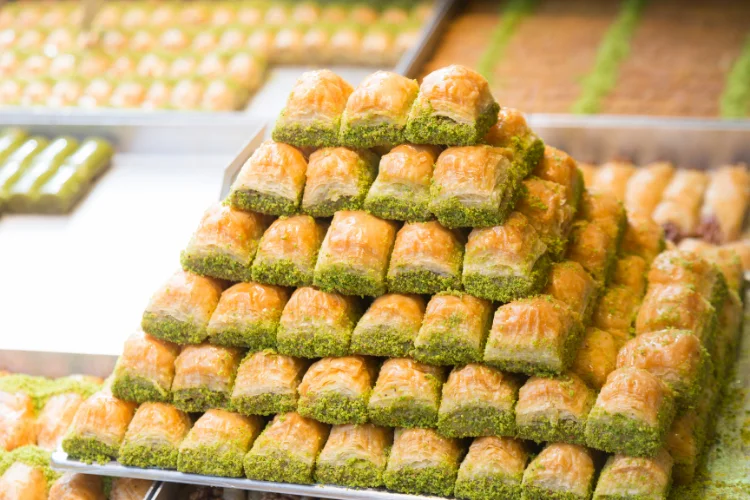
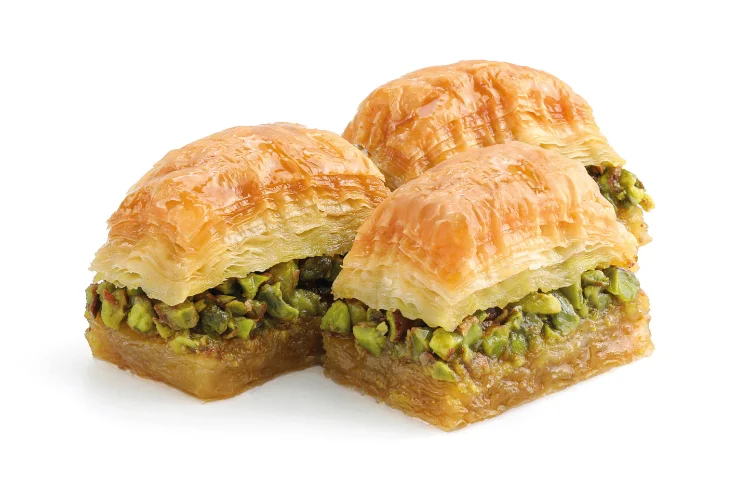
The core baklava range that serious wholesale baklava suppliers should be able to provide covers pistachio baklava in rectangular and diamond cuts, walnut baklava, cashew variants, and the mixed assortments that perform strongly in retail gifting. Beyond the classic filo-based formats, authentic wholesale baklava suppliers should also offer kadaifi — the shredded wheat pastry format that is a staple of any genuine Anatolian dessert range — and künefe, the warm cheese pastry that has developed a significant following in European foodservice and increasingly in retail. Bird’s nest baklava, rolled formats, and premium gift box configurations round out the range that strong wholesale baklava suppliers carry.
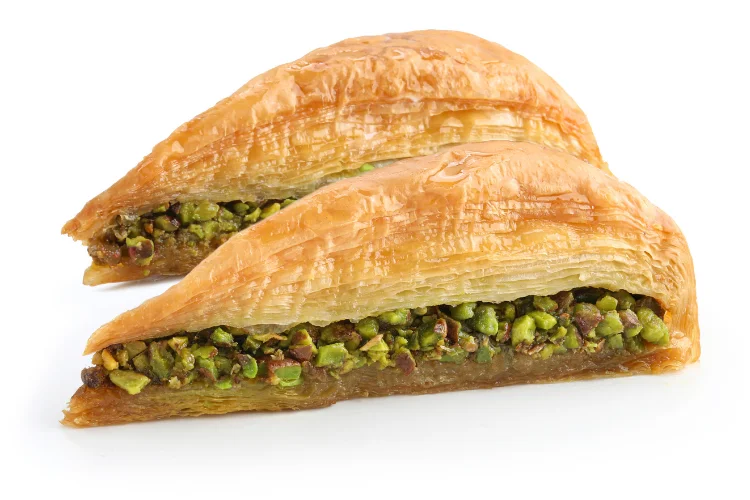
The commercial case for sourcing this full range from a single supplier is straightforward: one relationship, one quality management process, one delivery, one invoice. For distributors managing a customer base that spans kebab shops, Middle Eastern restaurants, and mainstream supermarkets, the ability to source the complete baklava range from one of their wholesale baklava suppliers rather than managing three or four separate relationships for different product formats has real operational and commercial value.
The qualification implication is equally straightforward. Wholesale baklava suppliers who list a full range on their website but whose genuine production capability is concentrated in one or two SKUs are not full-range suppliers. Buyers should request samples across every format they intend to stock — not just the flagship pistachio baklava — and ask directly about production volumes for each SKU before treating a supplier as a reliable source for the full range.
Private Label Capability: Separating Genuine Wholesale Baklava Suppliers from the Rest
Private label has become a significant part of the baklava market in European retail. Supermarket chains, discount retailers, and food brands building Mediterranean or Middle Eastern product ranges increasingly want baklava under their own brand rather than a manufacturer’s label. For wholesale baklava suppliers, private label capability is a commercial differentiator — and for buyers, it is a qualification criterion that separates suppliers who can support long-term brand development from those who cannot.
Genuine private label capability in wholesale baklava suppliers means more than the ability to put a different label on a standard product. It means working to a buyer’s specification rather than a standard recipe, managing custom packaging across multiple SKUs, handling labelling compliance across different European markets with their different language and regulatory requirements, maintaining recipe confidentiality for buyers who have developed proprietary formulations, and managing the production scheduling discipline that separate branded product lines require.
Wholesale baklava suppliers who have built genuine private label programmes — serving multiple brands across multiple markets — have developed the organisational infrastructure to do this reliably. Buyers evaluating private label capability should ask how many brands a supplier currently produces for, what markets those brands are sold in, and how the supplier manages the production scheduling and documentation separation that multiple branded lines require. Wholesale baklava suppliers with real private label experience answer these questions with specifics. Those who are overstating their capability answer them with generalities.
What to Look for When Qualifying Wholesale Baklava Suppliers
The qualification framework for wholesale baklava suppliers covers several areas that each need to be assessed independently.
Food Safety Certification
The certification baseline for wholesale baklava suppliers serving European retail and foodservice clients is HACCP — a legal requirement for EU food businesses, not a differentiating factor. The certifications that distinguish serious wholesale baklava suppliers are BRCGS, IFS Food, and FSSC 22000. These require independent third-party audits of quality management systems, production controls, and food safety procedures, and they are the certifications that major European retailers require from their suppliers as a condition of trading.
Buyers should request current certificates and verify their scope. A certificate that has lapsed, or whose scope does not explicitly cover baklava production, does not provide the assurance it appears to. Wholesale baklava suppliers who hold current, in-scope certification from a recognised body have demonstrated a level of quality management commitment that uncertified suppliers have not.
Ingredient Quality and Transparency
The quality difference between wholesale baklava suppliers who use premium ingredients and those who do not is immediately apparent in the product. High-quality Turkish or Iranian pistachios, real butter rather than vegetable fat substitutes, and properly made filo pastry produce a product that tastes authentically of what it is. Lower-grade nuts, fat substitutes, and mass-produced filo produce a product that looks like baklava but does not eat like it.
Buyers should ask wholesale baklava suppliers directly about their ingredient sourcing: where nuts come from, what specification the filo is produced to, whether the syrup is sugar-based or honey-based or a combination. Suppliers who manage ingredient quality seriously can answer these questions clearly. Those who cannot are managing ingredient quality downward in ways that will become visible to end consumers.
Production Capacity and Peak Period Management
The capacity question for wholesale baklava suppliers is not just about total output — it is about how output is managed during peak demand periods. Baklava demand in European markets concentrates around Ramadan, Christmas and New Year, and Easter. Wholesale baklava suppliers who have not planned for these peaks — through production scheduling, ingredient pre-procurement, and capacity reservation — will fail to deliver reliably precisely when buyers most need reliable supply.
Buyers should ask wholesale baklava suppliers how they manage peak period demand, what their lead times look like at different volume levels, and whether they offer forward order arrangements for predictable seasonal demand. The answers reveal a great deal about how professionally a supplier operates.
EU-Based Logistics and Delivery Infrastructure
Wholesale baklava suppliers operating from EU-based production and distribution facilities offer buyers a significant practical advantage over third-country sourcing: no import compliance complexity, no customs delays, and a logistics network that can respond quickly to demand changes. For buyers managing multiple European distribution points or frequent replenishment schedules, EU-based wholesale baklava suppliers reduce the operational friction of the supply relationship considerably.
Common Mistakes Buyers Make With Wholesale Baklava Suppliers
Committing based on a single sample. Wholesale baklava suppliers can — and do — produce excellent samples under conditions that do not reflect standard production. Buyers should request samples from multiple batches before committing to a supply relationship.
Prioritising price before specifying product. Price differences between wholesale baklava suppliers almost always reflect ingredient quality differences. Buyers who negotiate price before establishing a clear product specification with agreed nut content, butter specification, and filo quality will frequently find that the cheaper product is cheaper for a reason.
Not testing the full range before it is needed. Buyers who qualify a supplier on one or two SKUs and assume the rest of the range is equally strong often discover otherwise when a customer asks for a product they have not tested. Qualify the full range upfront.
Overlooking private label potential at the qualification stage. Even buyers with no immediate private label plans should assess wholesale baklava suppliers for private label capability at qualification. The commercial landscape changes, and a supplier who cannot support private label when a buyer is ready to move in that direction is a constraint on future growth.
Managing the relationship transactionally. Wholesale baklava suppliers, like all food manufacturers, prioritise their most engaged accounts. Buyers who communicate regularly, provide advance notice of volume changes, and work constructively through quality issues get better service, better pricing, and more responsive support than those who treat the relationship as a pure commodity transaction.
Why Lezza Foods Stands Out Among Wholesale Baklava Suppliers in Europe
Lezza Foods has been operating as a wholesale baklava supplier serving European markets since 2018, with production foundations established in Turkey in 2013. The business today supplies retail and wholesale clients across more than 20 European countries and manages private label production for more than 20 brands — a scale of operation that reflects genuine investment in the manufacturing, logistics, and quality management infrastructure that serious wholesale baklava suppliers require.
The product range covers the full breadth of Anatolian and Mediterranean baklava formats: pistachio baklava, walnut baklava, cashew baklava, kadaifi, künefe, bird’s nest, rolled formats, and assorted gift configurations. Every product is produced to recipe specifications rooted in authentic Anatolian tradition, with nut content, butter specification, and filo quality maintained consistently across production runs. Lezza Foods does not manage ingredient quality downward when input cost pressure increases — a discipline that distinguishes serious wholesale baklava suppliers from those who treat recipe consistency as a variable rather than a standard.
The private label programme is operational at scale. Lezza Foods currently produces for more than 20 brands across European markets, managing custom packaging, labelling compliance, and branded production scheduling as a standard part of its wholesale operation. For buyers evaluating wholesale baklava suppliers for private label capability, Lezza Foods offers access to an established programme rather than a theoretical one.
EU-based logistics infrastructure supports reliable delivery across Northern, Western, and Southern Europe without the import compliance complexity that third-country sourcing introduces. For buyers managing frequent replenishment at multiple distribution points, this operational reliability is as commercially important as product quality.
Lezza Foods also operates across a broader Mediterranean and Anatolian food range — cakes, börek, lahmacun, pide, kibbeh, mantı, and Maraş-style ice cream — making it a viable consolidated sourcing partner for distributors whose customer base spans multiple Mediterranean food categories.
Choosing the Right Wholesale Baklava Supplier for the Long Term
The baklava category in Europe is growing, and the wholesale baklava suppliers who are building strong buyer relationships now are the ones who will be best positioned to support that growth. For buyers, the qualification process described in this guide — assessing production capability and type, verifying certification status, evaluating the full product range, testing private label infrastructure, and understanding logistics capability — is the foundation of a sourcing decision that holds up over time.
Wholesale baklava suppliers who meet this standard are not the most common type of supplier in the market. But they exist, and the commercial return on finding and committing to one is substantial: consistent product quality, reliable supply, private label flexibility, and a supplier relationship that supports business growth rather than constraining it.
For buyers ready to evaluate Lezza Foods as their wholesale baklava supplier, the product catalogue is available at lezzafoods.eu. The team handles wholesale and private label enquiries from buyers across Europe and is set up to support the qualification process from sample request through to commercial agreement.